Dehydrating and Rehydrating a Sourdough Starter
Learn how easy it is to dehydrate and rehydrate your sourdough starter.
Equipment
Ingredients
To Dehydrate:
- 100-200 grams of active sourdough starter
To Rehydrate:
- 5-10 grams dehydrated sourdough starter
- 100 grams water
- 100 grams unbleached all-purpose or bread flour
Instructions
To Dehydrate
- First, it is important to use an active and mature sourdough starter. Ideally, you want to use a starter that has been recently fed and is at its peak.
- Take about 30-50 grams of your active starter and spread it out very thin on a baking tray lined with parchment paper or a silicone baking mat. The thicker it is the longer it will take to dry so be sure to get it as thin as you can.
- Place a second sheet of parchment paper overtop and use your hands to continue to spread the starter out or use a spatula.
- Then, leave the starter to dry (about 24-48 hours). You can also use a dehydrator to speed up the process. Just make sure the temperature is below 98.6F so you don’t kill the good bacteria.
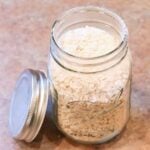
- Once dried, break up the starter. I like to run it through the blender to break it up into very small pieces as that makes it easier when I’m rehydrating it. You want to blend it until it is a powder consistency.
- Store in an airtight container in a cool, dark, and dry place. I recommend making a new dehydrated starter about once a year to ensure it is fresh.
To Rehydrate:
- Mix 5 grams of dried starter and 20 grams of water in a jar.
- Let it sit covered for at least 30 minutes or longer to let the starter dissolve. Sometimes the bigger chunks won't completely dissolve, and that is totally fine.
- Add 20 grams of unbleached flour and stir until combined.
- Cover (not airtight) and leave for 24 hours in a warm spot on the counter. Ideally between 77-85F. It most likely is not going to have any activity.
- Discard all but 10 grams of starter and feed it 20 grams each of flour and water.
- Cover and repeat the process every 24 hours until the starter is doubling in size and bubbling. This may take about a week or so.
