
This post may contain affiliate links . Read my full Disclosure Policy.



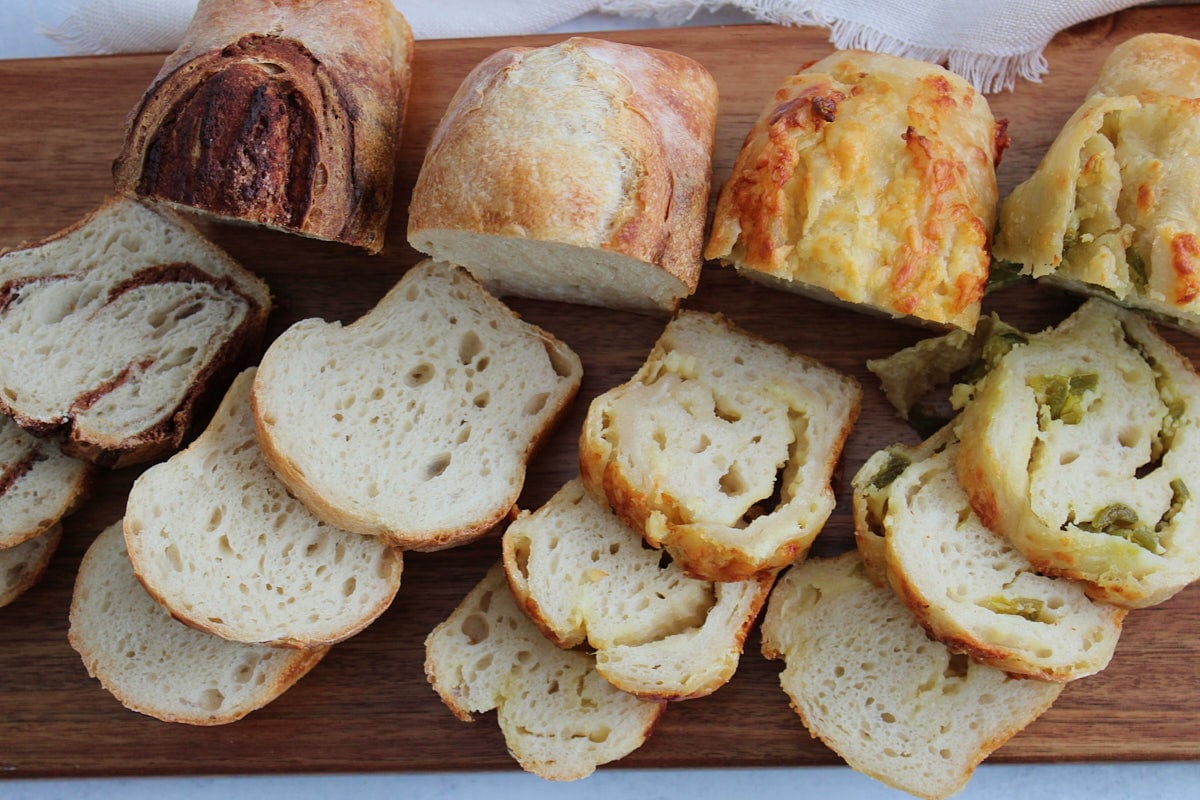
Sourdough Mini Loaves are a fun twist on my Same Day Sourdough Bread recipe using mini loaf pans! With this method, you can try out multiple add-in flavor combinations or bake mini loaves to give as gifts.
Save & Summarize
I wanted an easy way to make several sourdough flavors at once without having to bake multiple full-size loaves, so I pulled out my mini loaf pans and gave it a try. I love how simple they are to make, and the smaller size is perfect for experimenting with different sourdough add-ins. They also make the cutest homemade gifts, especially paired with a jar of jam.
Table of Contents
- Why you will love this recipe
- Ingredients for Mini Sourdough Loaves
- How to make Mini Sourdough Loaves
- Mini Sourdough Loaves Top Tips
- Sample baking schedule
- Mini Sourdough Loaves Variations
- How to Store and Freeze Mini Sourdough Loaves
- How to gift sourdough mini bread loaves
- Sourdough mini loaves FAQ
- Recipe updates
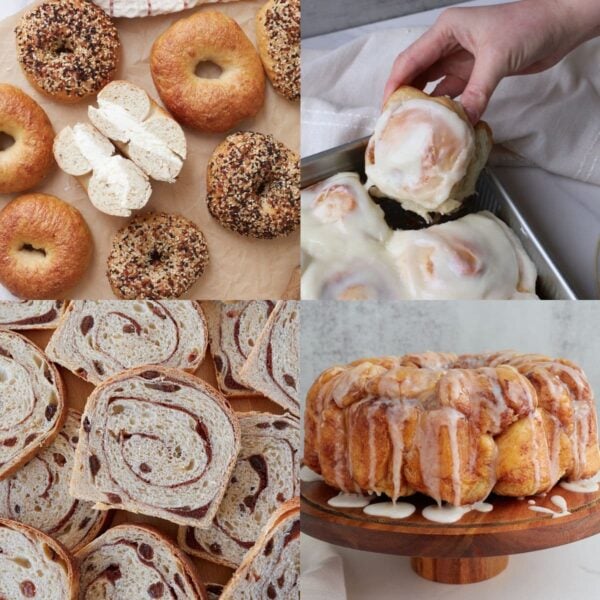
- More sourdough Bread recipes
- Small Sourdough Loaf Recipe
Why you will love this recipe
- Same-day recipe – This mini sourdough bread recipe can be made start to finish in just one day.
- Different flavors – You can use whatever mix-ins you’d like for the mini loaves! Switch things up and make a different flavor for each loaf.
- Great for gifting – These mini loaves are the perfect size to gift for holidays, as teacher gifts, or any other special occasion.
Ingredients for Mini Sourdough Loaves
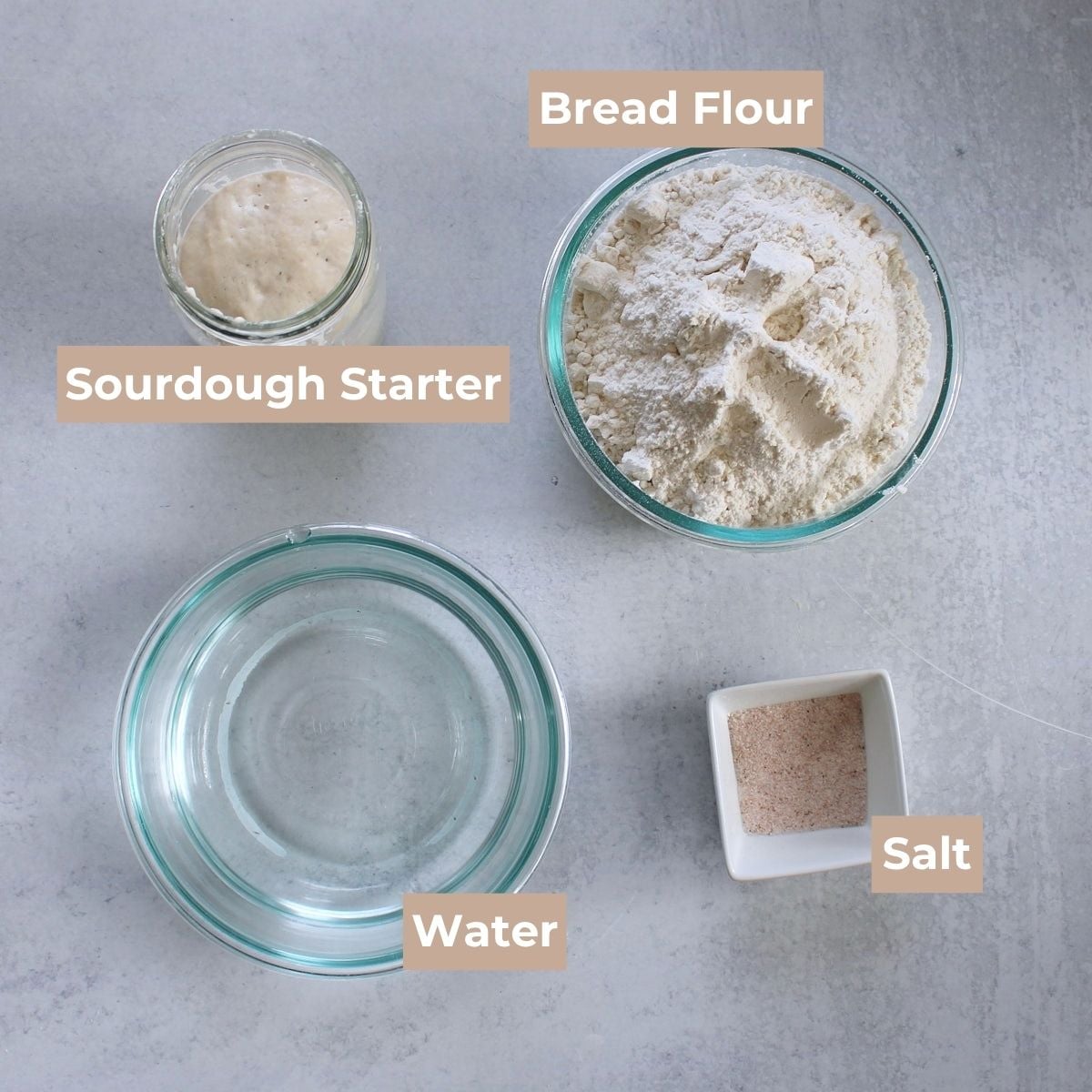
- Sourdough Starter – You’ll need an active starter that has doubled in size and is bubbly.
- Bread Flour- Bread flour has a higher protein content and is preferred for sourdough bread but in a pinch you can use all-purpose flour just reduce the water by 25 grams.
- Water- You can use filtered or tap water, either works fine for me!
- Salt- Any type of salt you prefer.
- Your choice of add-ins – Get creative! Or see this list of 21 Unique Sourdough Add-ins.
How to make Mini Sourdough Loaves
Step 1: Feed your sourdough starter
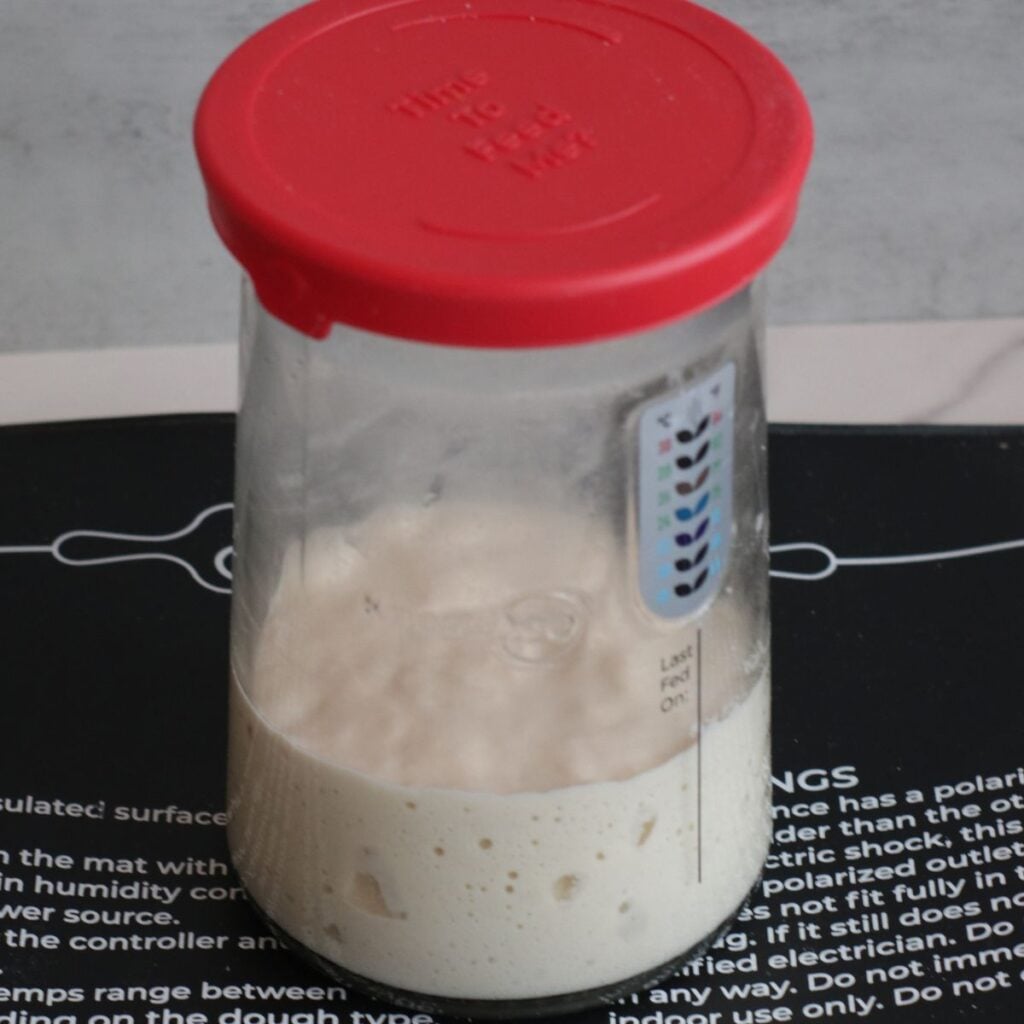
About 4 hours before making the loaf, build a levain or feed your sourdough starter at a 1:1:1 ratio (50 grams sourdough starter: 50 grams flour: 50 grams water). Cover and let it rest at 77–80°F (25-27°C) until bubbly and doubled in size.
If you don’t have extra starter, add an extra 5–10 grams to each portion (starter, flour, and water) so you have enough to bake with and still keep your starter going.
Skip this step if your starter is already activated and ready to bake with.
Note: If you want to start the loaf in the morning, you can feed your starter a 1:5:5 ratio (15 grams active sourdough starter, 75 grams flour, 75 grams water) the night before and leave it covered for about 10 hours at 70-72℉. (21-22°C)
Step 2: Mix ingredients
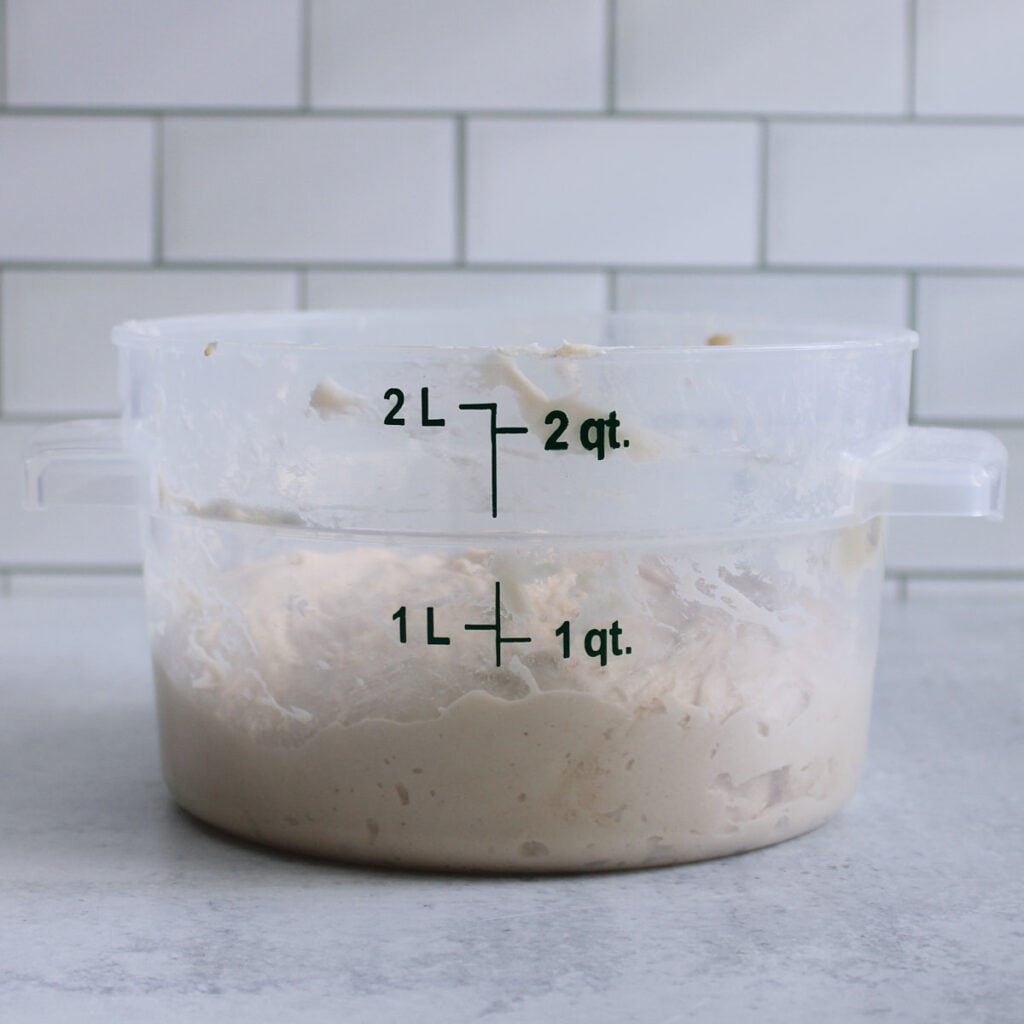
With a danish dough whisk (10% off with link) hands, or large spoon mix together active starter, water, and salt in a container with straight sides or a medium clear bowl. Add the flour and mix until the dough is shaggy and the flour is incorporated. Cover with a lid or dinner plate so the dough doesn’t dry out and let sit for 30 minutes in a a warm spot. For a similar timeline as listed below keep the dough temperature at 75°F (24°C).
Step 3: Stretch and fold
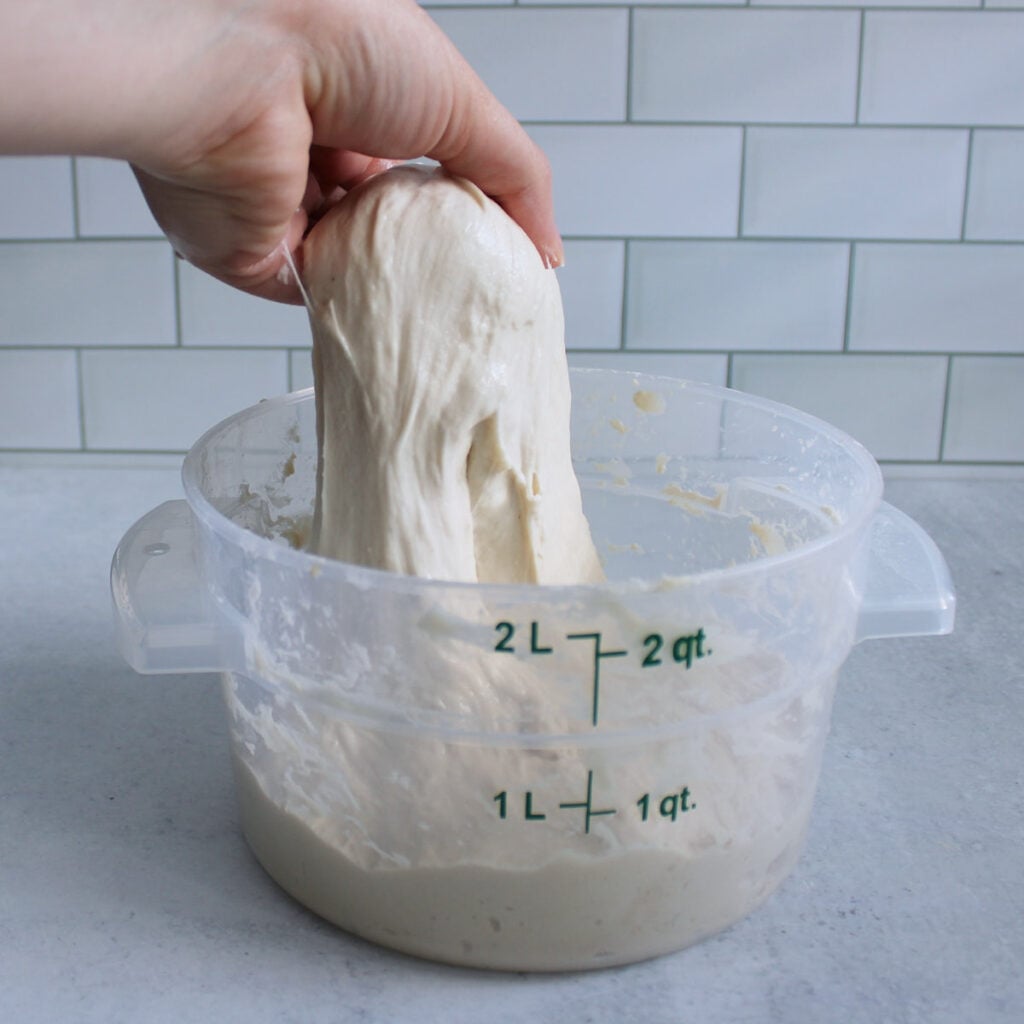
Perform a set of stretch and folds every 30 minutes. It is ok if it is not exact but try to get 3 sets in with a break in between each set. To stretch and fold, grab one side of the dough with a damp hand and gently shimmy the dough up, and then fold it on itself. Repeat this 3 more times rotating the bowl 90 degrees each time. If you are adding mix-ins you can add them during the first stretch and fold.
The goal is to get the dough to pass the “windowpane test”. To perform the windowpane test gently spread a piece of the dough between your pointer fingers and thumbs. You want it thin enough to see light through without it tearing. This tells you the gluten is developed. If it is not passing windowpane after 3 set of stretch and folds I recommend adding a 4th set.
Step 4: First rise
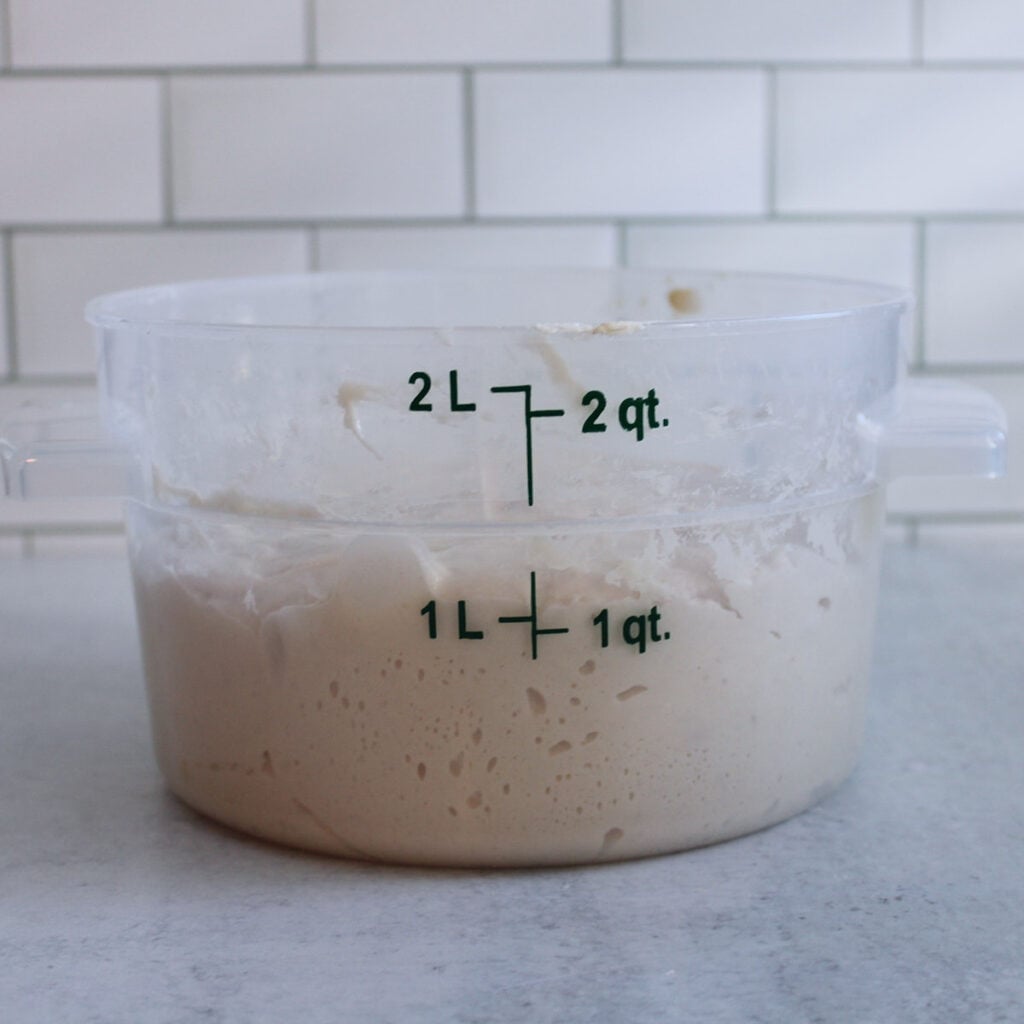
Let the dough rest on the counter in a warm spot to finish bulk fermentation. Bulk fermentation is done when the dough is jiggly, domed on top, bubbly on the sides, and risen 50%. If it does not show these signs, continue to let the dough rise, to finish bulk fermentation. At a dough temperature of 75°F (24°C) my dough is ready in 4 hours from the time it is mixed.
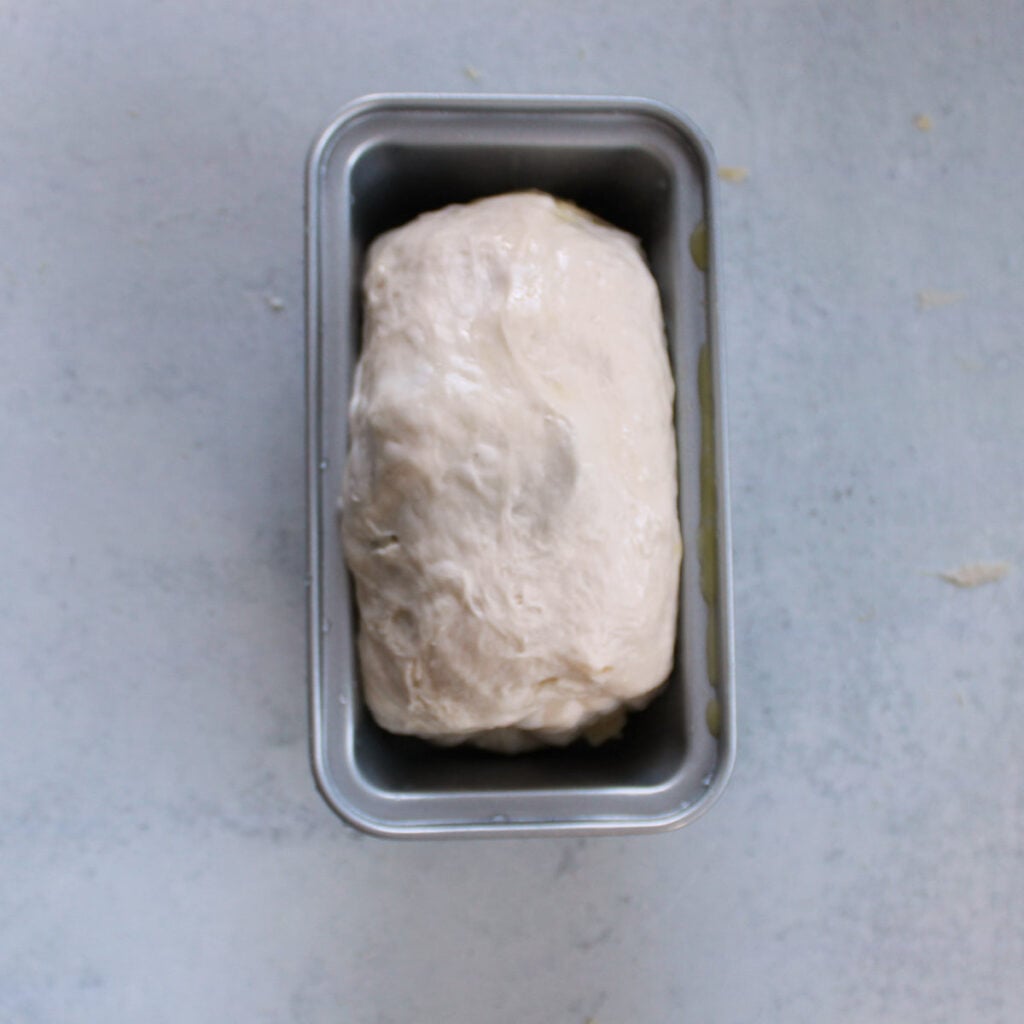
Step 5: Shape the dough
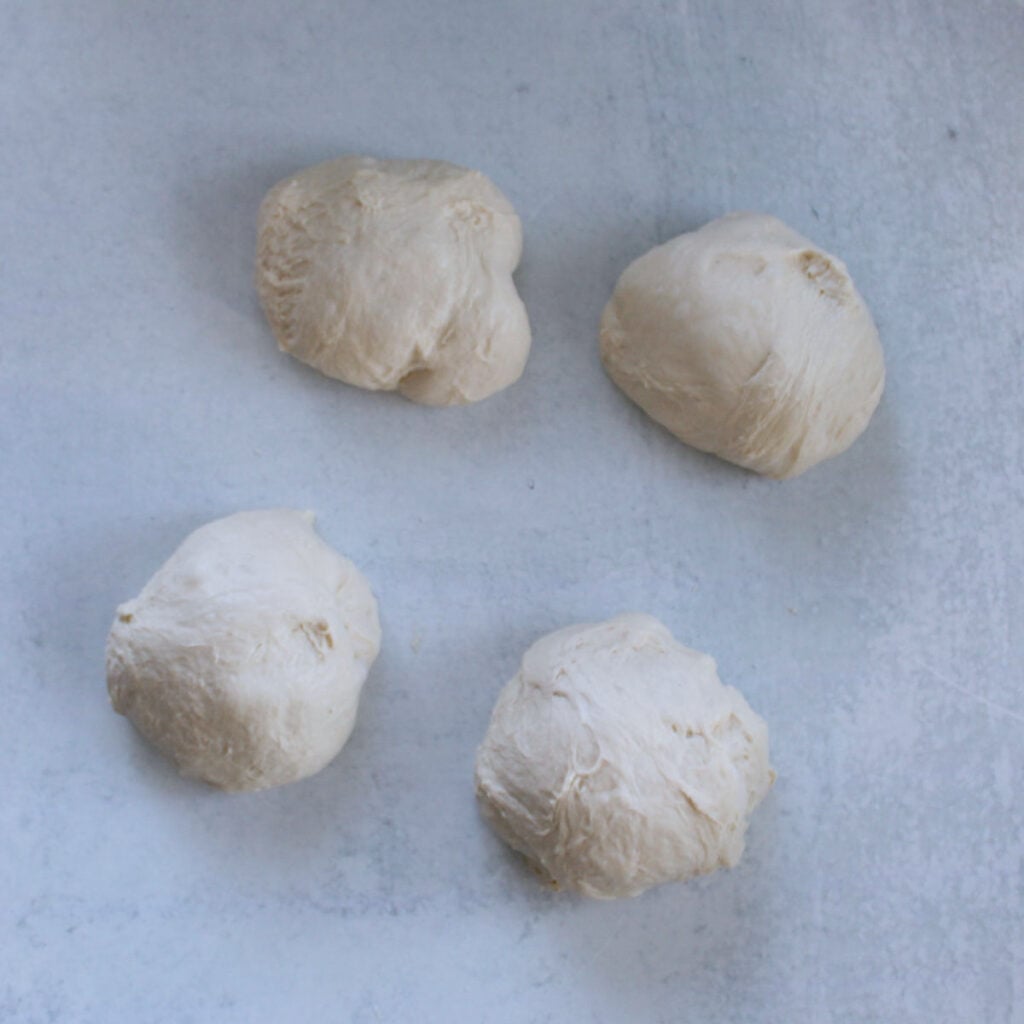
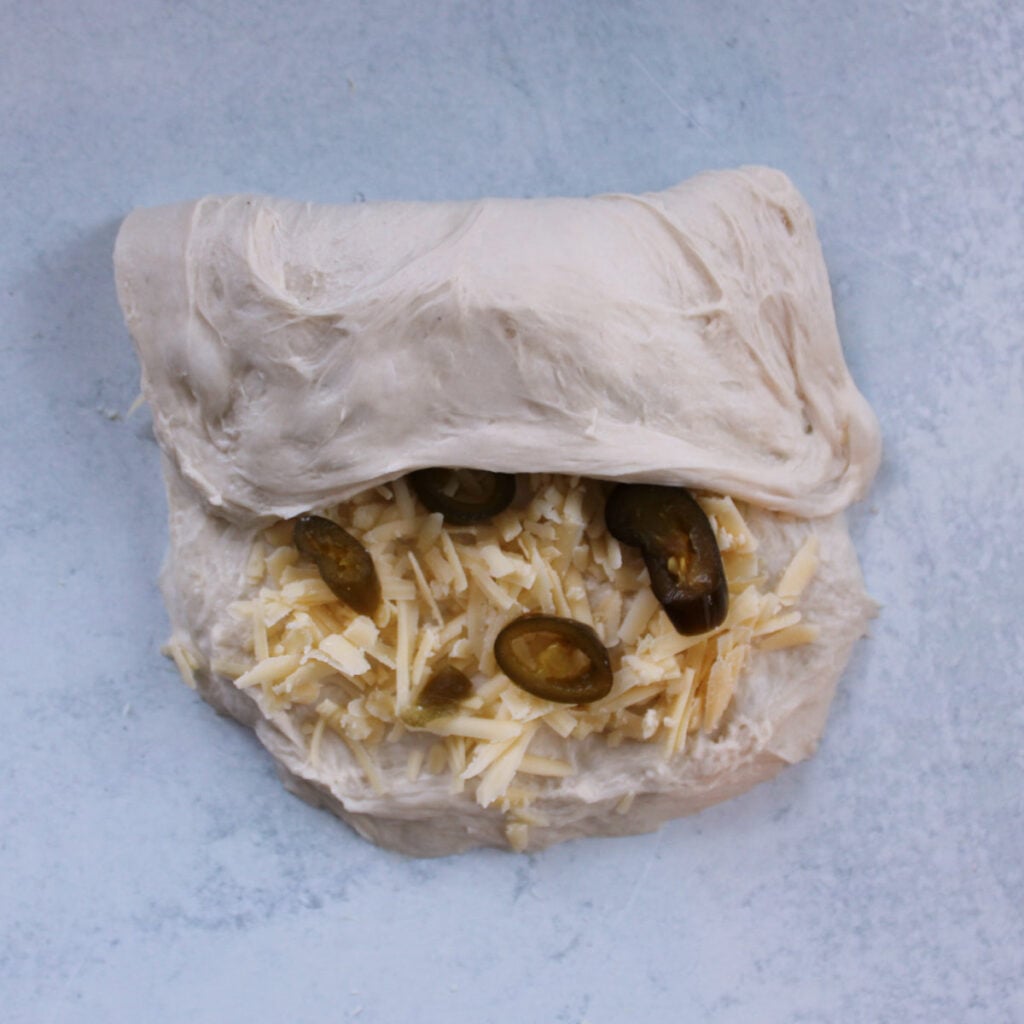
This is the step where you will divide the dough into mini loaves, and incorporate your add-ins. Shaping the dough is important to create a taut outer skin to create tension and help the dough hold its shape while baking.
How to shape the mini loaves:
- Dump the dough onto an unfloured surface and cut it into four equal parts.
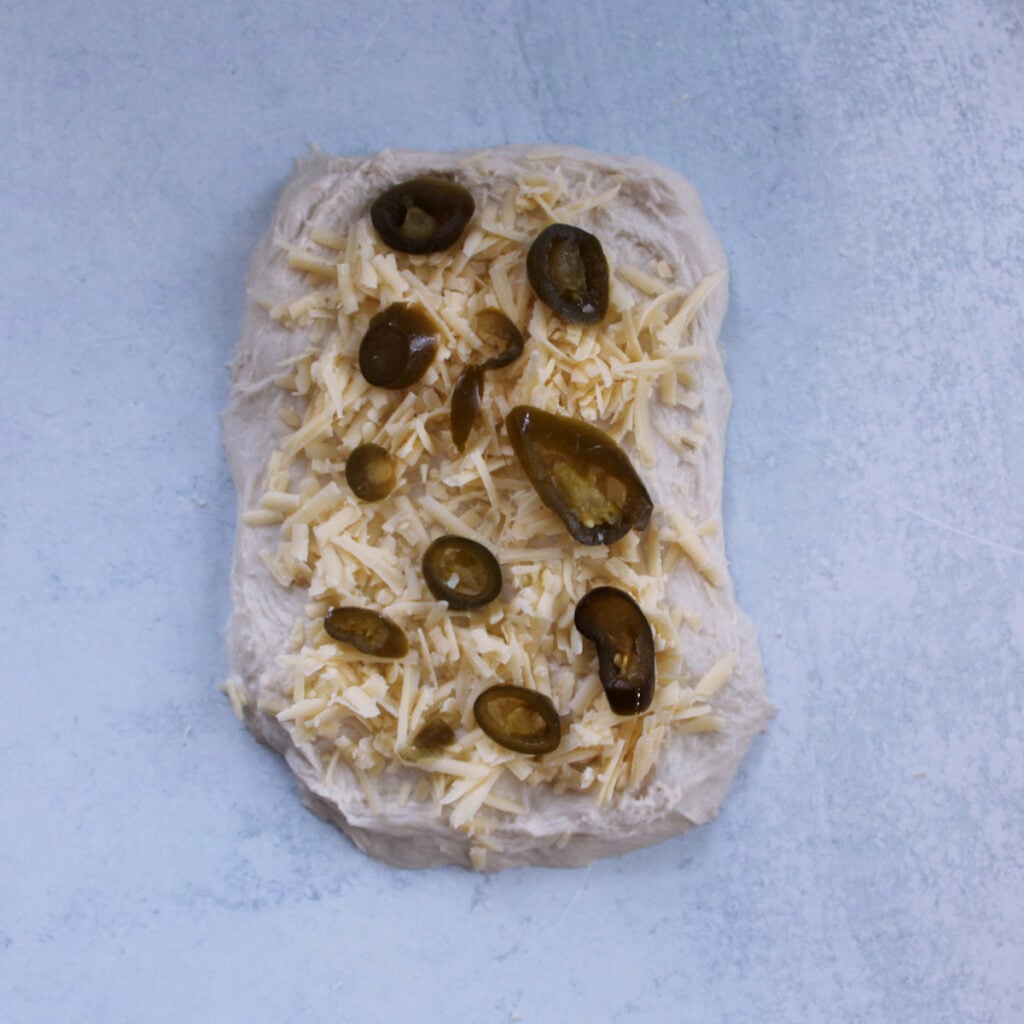
- Take one-third of the dough and gently spread it into a chubby rectangle. If you are adding mix-ins you can add them at this point to the dough.
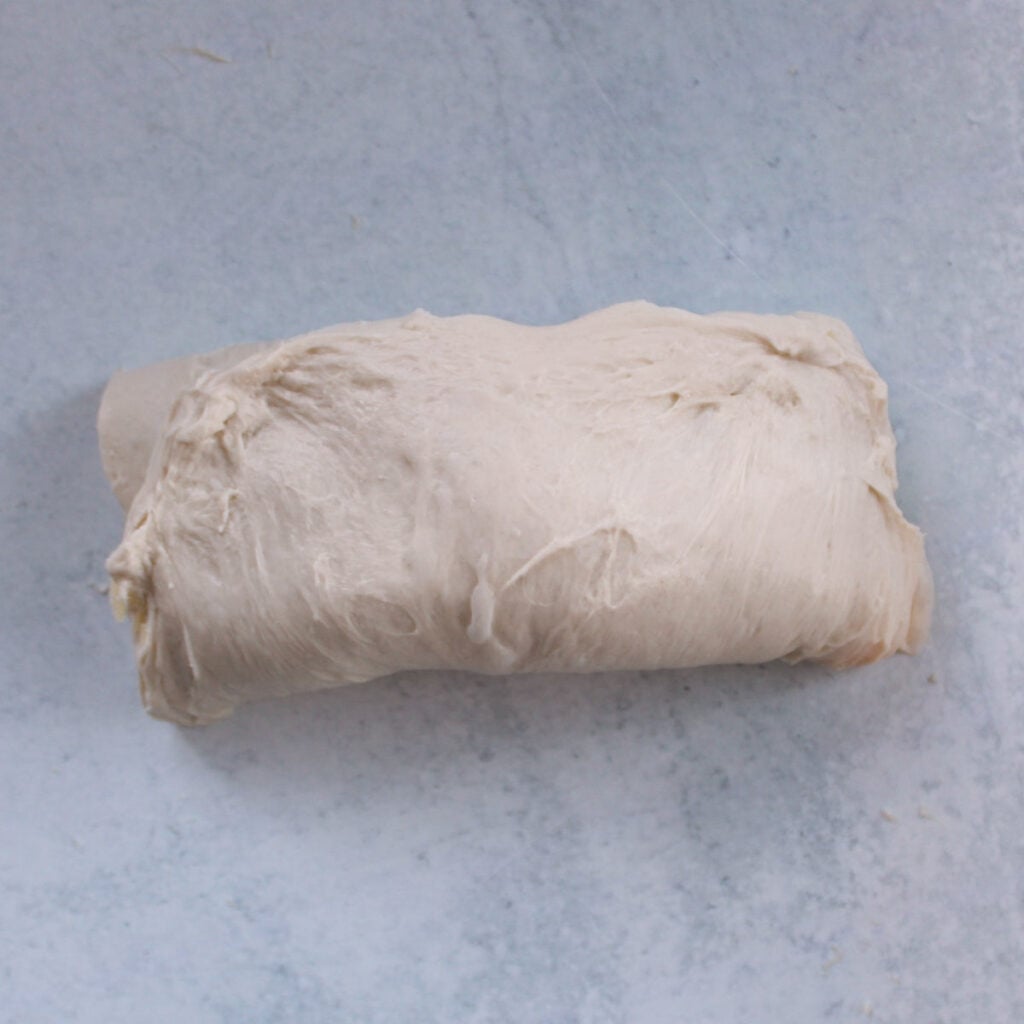
- Gently pull the bottom of the dough up on top of itself, about ⅓ of the way, and then pull the other side of the dough up on top of both layers (folding it like a letter for an envelope).
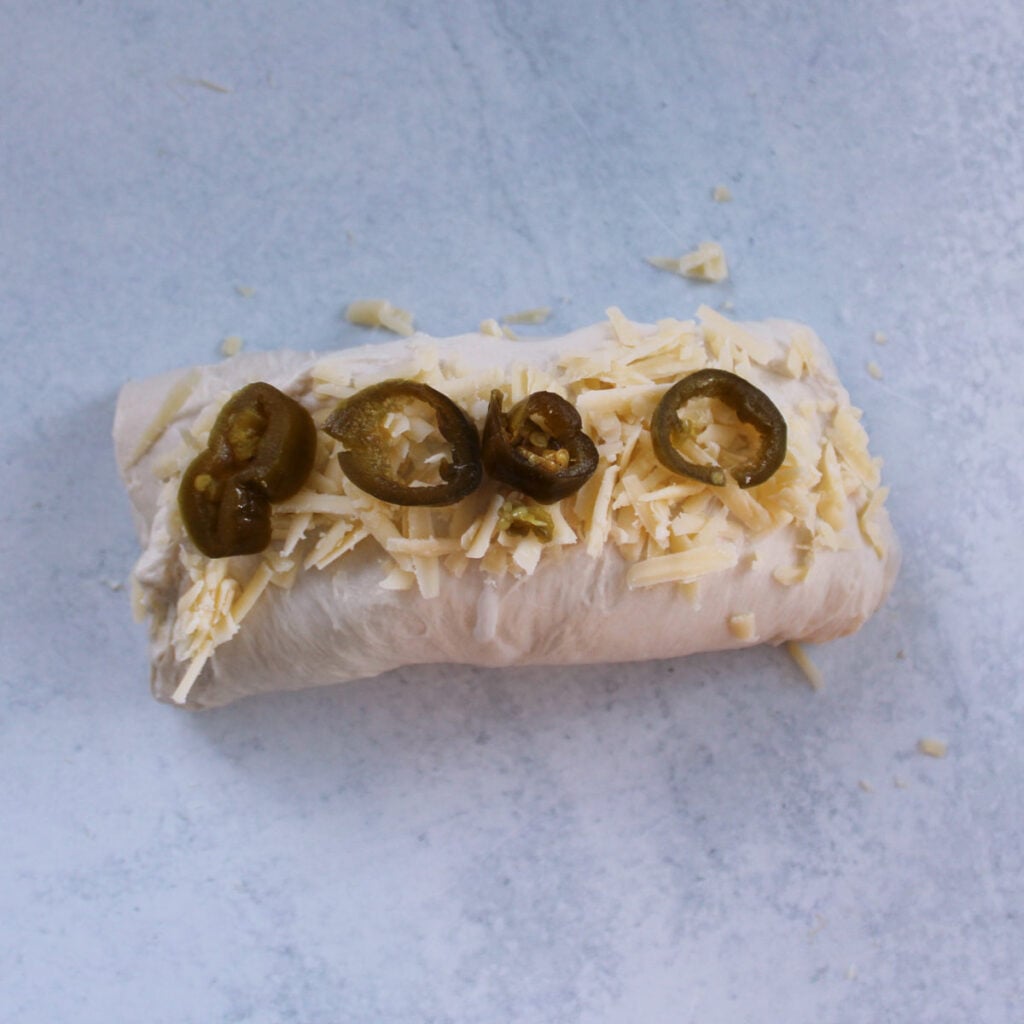
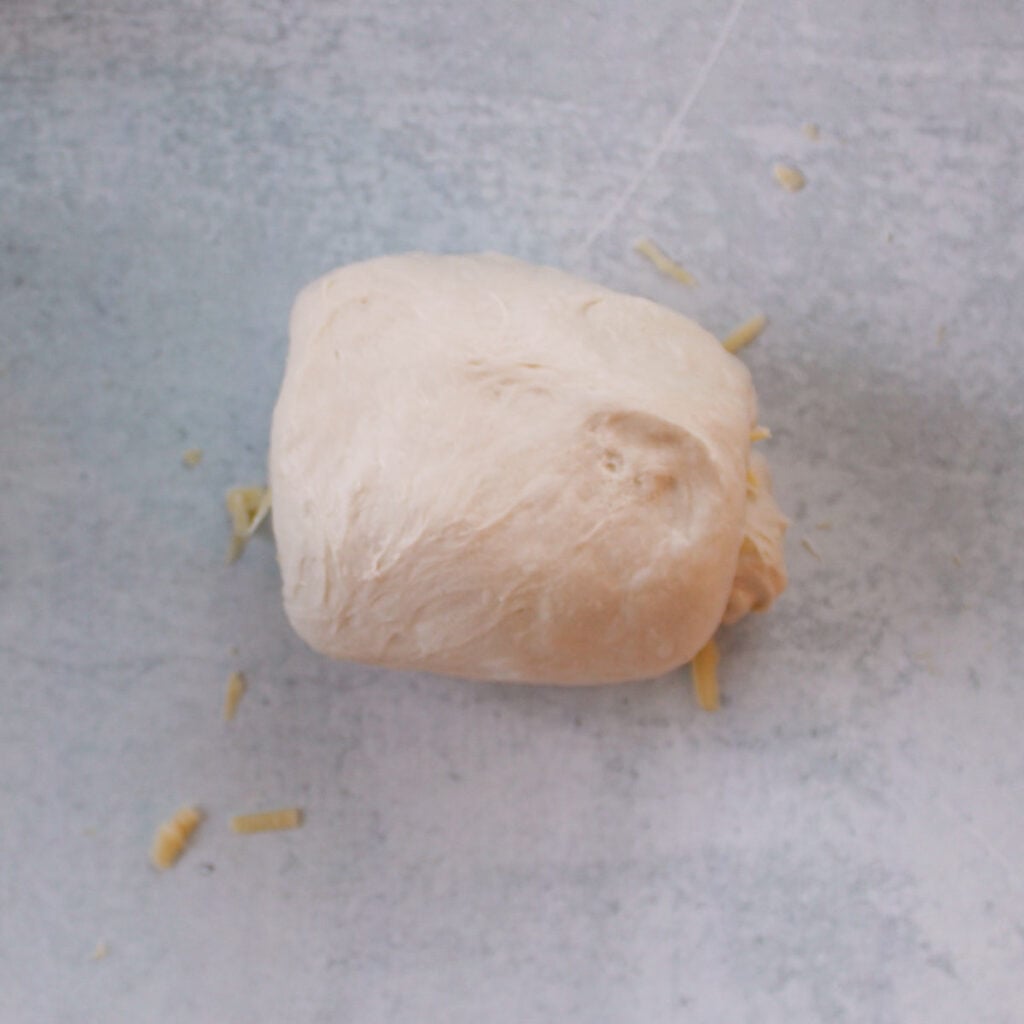
- Add an additional layer of your add-ins on top of the folded dough. Then starting from one side roll the dough on top of itself into an oblong shape.
- With your hands cupped pull the rolled up dough towards your body to smooth out the surface.
- Using a bench scraper or your hands, gently lift the dough and add to the lightly greased mini loaf pan.
- Repeat steps 2-6 for all three parts of the dough to create four mini loaves.
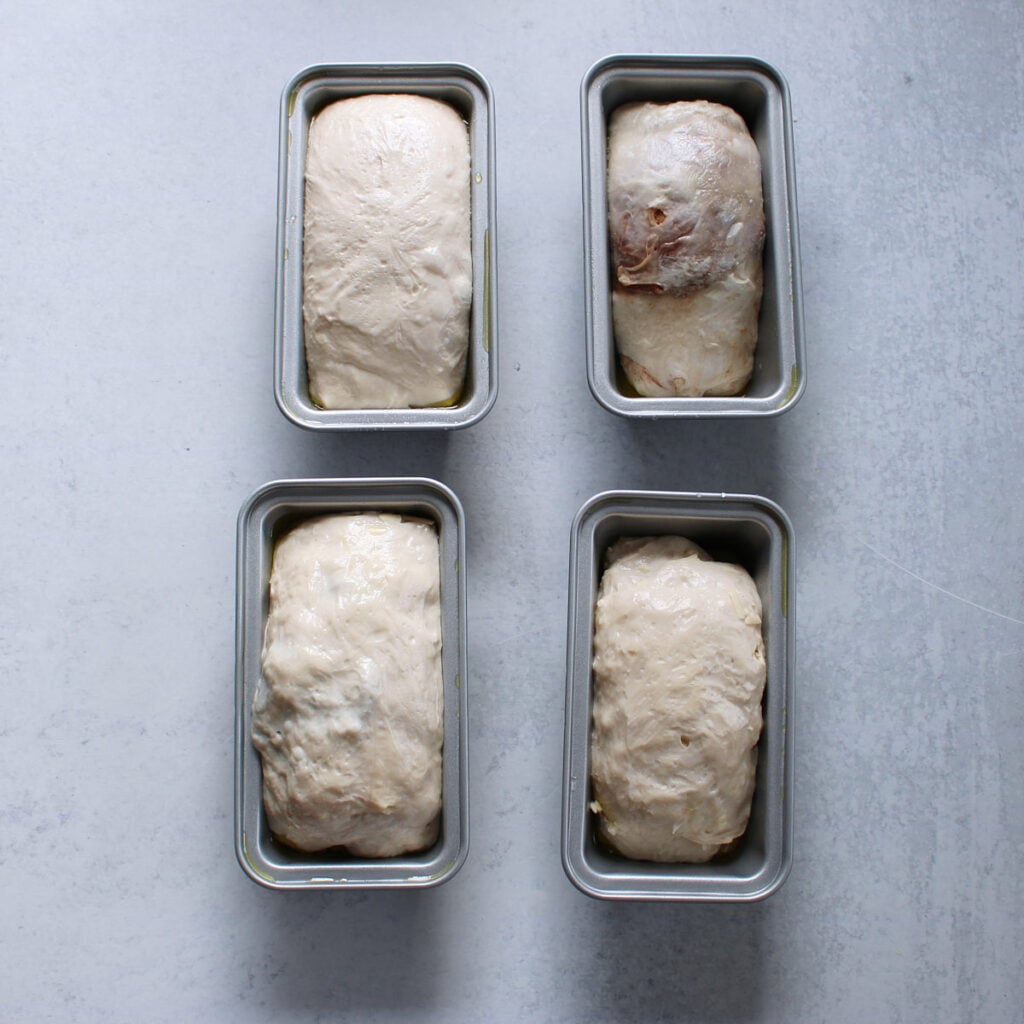
Step 6: Second proof
Same Day Option
Leave the dough on the counter for 1–3 hours. The exact timing will vary depending on the temperature of your kitchen and the strength of your starter.
To check if it’s ready, use the poke test: lightly flour your finger and gently press into the dough. If the indentation slowly fills back in, it’s ready to bake. If it springs back immediately, it needs more time. If the indentation doesn’t fill back in at all, it’s overproofed and should be baked right away.
Overnight Option
Place the dough in the fridge overnight for 8-12 hours. Bake directly from the fridge.
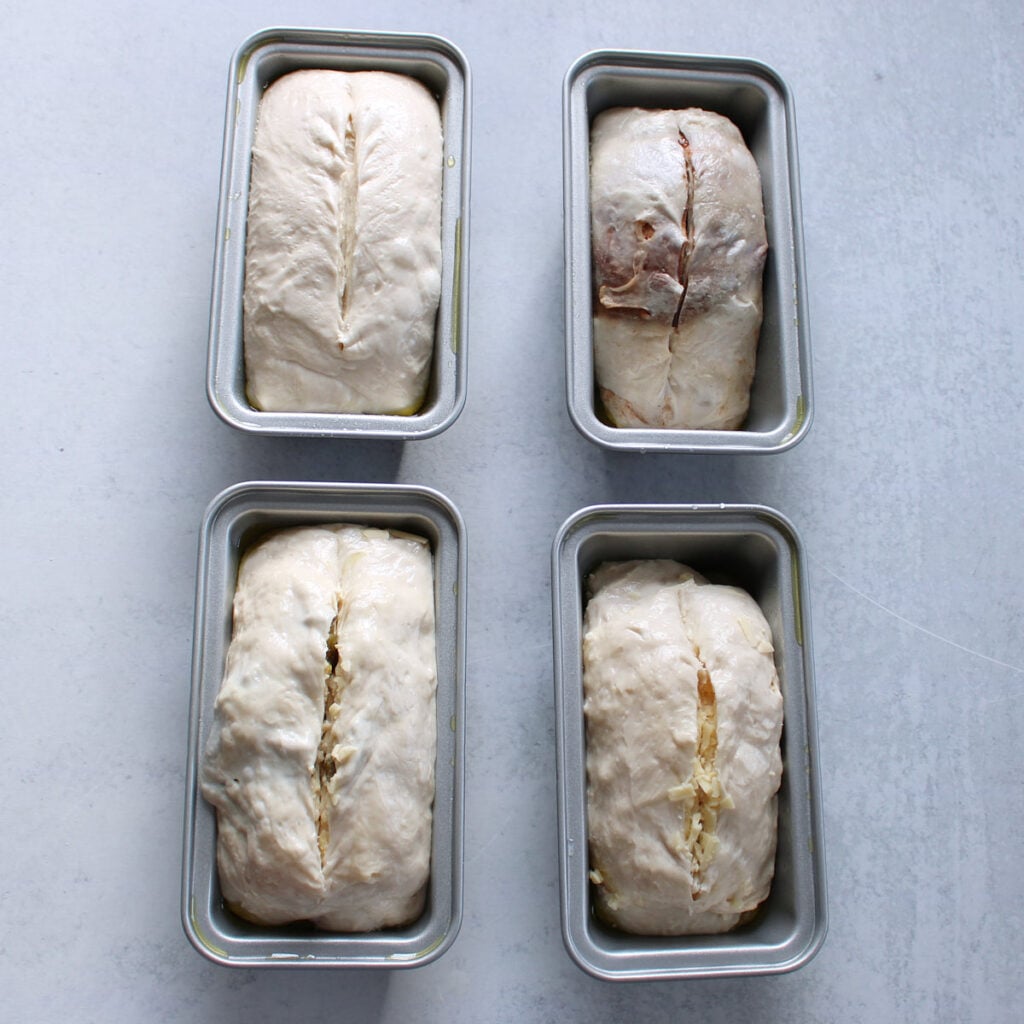
Step 7: Score
When you are ready to bake, preheat the oven to 450°F (232°C). Score the top of the dough with your bread lame or sharp knife.
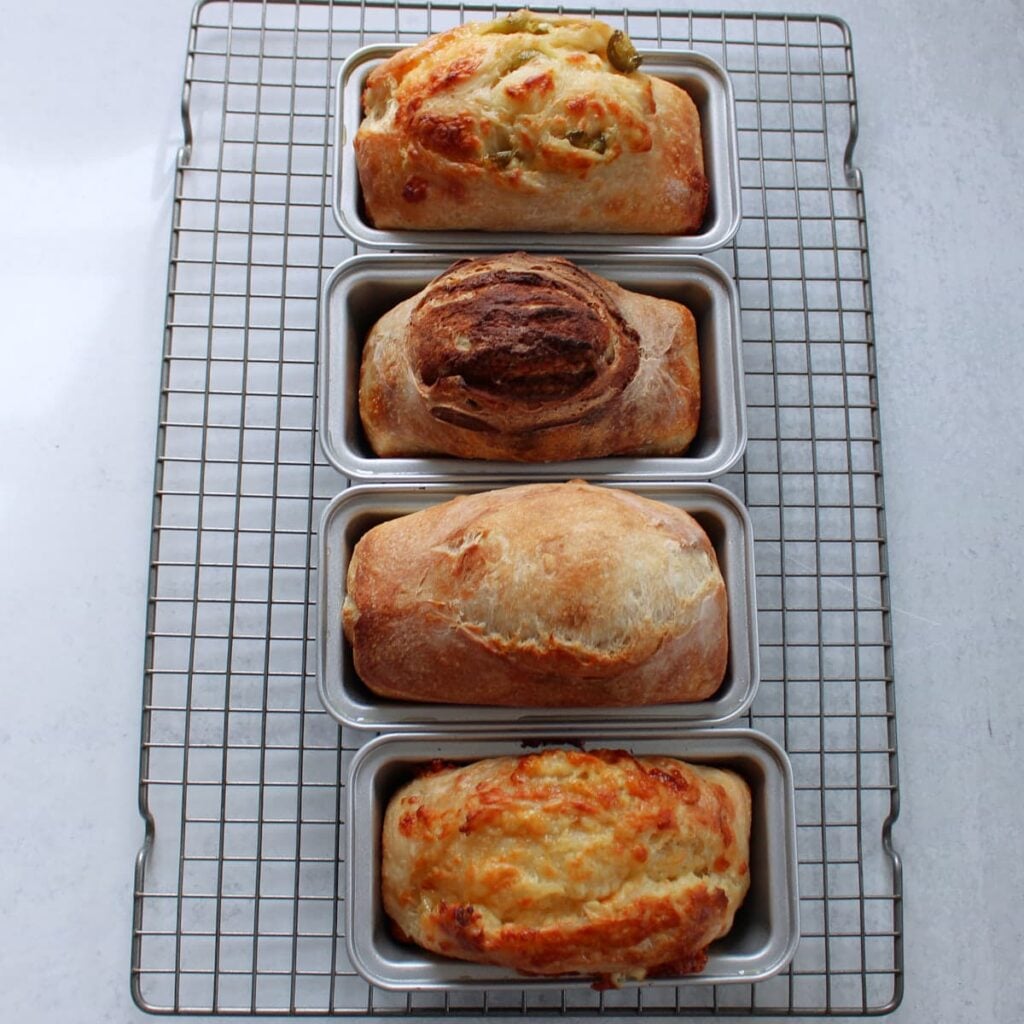
Step 8: Bake
When the oven is preheated, add the pans to the oven and on the rack below, add a small pan with about 10-12 ice cubes on it and a cup of water and bake for 15 minutes. After 15 minutes, remove the pan with water, decrease the temperature to 425°F (218°C), and then bake for an additional 15 minutes or until the internal temperature is 205°F (96°C). Once baked, remove the bread from the pan immediately and let cool on a cooling rack. I like to use my lanon heat protective gloves (use code countryroads15 for 15% off) to get the bread out of the pans easily.
When cooled, cut with a bread knife and enjoy!
Mini Sourdough Loaves Top Tips
- This recipe uses an open baking method. You will place a sheet pan with ice on the rack underneath the bread in the oven for the first part of the baking. This is done because the ice adds steam, which helps the crust stay soft at the high heat and allows the loaf to fully rise.
- If you have a gas stove you will have to experiment a little as gas stoves vent the steam quicker than electric ovens. If you have a gas stove and it doesn’t work baking these, you can place 1 or 2 mini loaf pans at a time, depending on the size, in your Dutch oven instead.
- Use a kitchen scale to measure the ingredients rather than measuring with cups and spoons. This will yield more accurate results. Plus, as a bonus, you will have fewer dishes to clean afterward!
- I recommend using a straight-edge container so you can visually see how much the dough has risen. A 2-quart container is big enough for 1 loaf. If you are doubling the recipe, use a 4-quart container.
- Keep your dough at a temperature around 75°F (24°C) to match the timeline listed. Use a bread mat (use code country10 for 10%) or proofing box to keep the dough warm, or see more tips on how to keep your dough warm.
Sample baking schedule
Many different factors can affect your sourdough bread, such as the temperature of your dough, kitchen, humidity, and the strength of your starter, so this baking schedule is based on rough estimates. It is more important to look for the visual cues of the bread to know when it is ready.
Same-Day Method
This method is great to use to bake your sourdough bread within one day. Before scoring, add the dough to the freezer while the oven preheats so it is easier to make your cuts in the dough. This schedule is based on a dough temperature of 75°F (24°C).
Note: If you want to start the loaf in the morning, you can feed your starter a 1:5:5 ratio (15 grams active sourdough starter, 75 grams flour, 75 grams water) the night before and leave for about 10 hours at 22℉ (24°C).
| Steps | Time |
| Feed starter a 1:1:1 ratio and leave at 77°F (25°C) (50 grams sourdough starter: 50 grams flour: 50 grams water) *If you do not have extra starter be sure to feed your starter a little more so you have leftover | 8 am |
| Mix dough | 12 pm |
| Stretch & folds | 12:30 pm – 1:30 pm |
| First Rise | 1:30 pm – 4 pm |
| Shape & second Rise | 4 pm – 5:30 pm |
| Freeze dough while oven preheats | 5:30 pm |
| Bake | 6 pm |
Overnight Method
This is my favorite method! It always turns out, it has more time to develop flavor, and the dough is cold so it is easier to score. This schedule is assuming dough temperature of 75°F (24°C).
| Steps | Time |
| Feed starter a 1:1:1 ratio and leave at 77°F (25°C) (50 grams sourdough starter: 50 grams flour: 50 grams water) *If you do not have extra starter be sure to feed your starter a little more so you have leftover | Day One: 1:00 pm |
| Mix dough | 5:00 pm |
| Stretch & folds | 5:30 pm – 6:30 pm |
| First rise | 6:30 – 9 pm |
| Shape & second rise in fridge | 9:30 pm |
| Bake | Day two: Between 6-10 am |

Mini Sourdough Loaves Variations
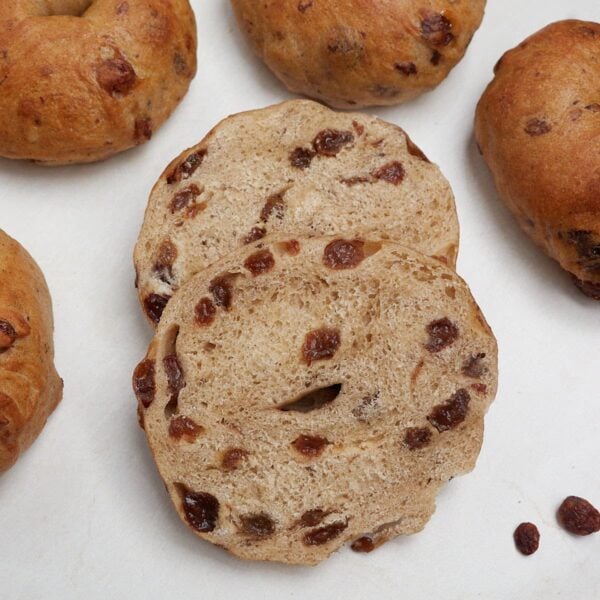
For sourdough add-ins, you can go savory or sweet, and there are so many different possibilities to try! My favorite combinations are jalapeño and cheddar, and everything but the bagel seasoning and cheese, but feel free to get creative! Making mini loaves is a great opportunity to do some sweet and some savory. Or, try a flavor combination that you want to experiment with on just one mini loaf.
Here are 21 Unique Sourdough Add-ins for you to try in your mini loaves!
How to Store and Freeze Mini Sourdough Loaves
You can store a whole mini loaf on the counter with a tea towel over it for up to 2 days. If the inside of the loaf is exposed, you can store it cut side down and cover with a tea towel, or store it in a bread box or ziplock bag.
The great thing about Mini Sourdough Loaves is that you can freeze them to save for later! Add a whole, or half loaf to a freezer-safe bag and store for later.
To thaw, remove the bag from the freezer and let defrost on the counter for several hours, or if you are in a pinch you can use the defrost setting on your microwave. Once thawed, you can revive the sourdough by popping it in the oven to get the signature sourdough crispy crust again. Run the loaf quickly under running water and then place it in a 450-degree oven until the crust is crispy, about 8-10 minutes.
How to gift sourdough mini bread loaves
I love gifting mini sourdough bread loaves because they make such thoughtful, homemade gifts! You can gift a single loaf or put together a variety of flavors for someone to enjoy. They’re perfect for the holidays, teacher appreciation gifts, housewarming presents, or just because! Pair a mini loaf with a small jar of jam for an extra special touch.
There are so many cute ways to package mini sourdough loaves for gifting! One of my favorite options is to add it to a brown paper bread bag. You can also use clear bread bags tied with a long piece of twine or ribbon and a gift tag. Another option is to place it in a reusable fabric bread bag or wrap it in a tea towel that they can continue to use.
Sourdough mini loaves FAQ
Not only are mini loafs cute and fun to make, but they also are a great way to get creative! Mini sourdough loaves allow you to try different flavors and add-ins without having to make multiple loaves. Want to share your sourdough love with your friends and family? Make mini loaves to share or to give as gifts! They are also the perfect solution for someone who lives alone or who doesn’t eat as much bread to eat a loaf now and freeze the rest for later.
To make the mini loaves you will use the same base recipe as regular sourdough bread, we will be using my Same Day Sourdough Bread recipe. It only changes when we go to shape the dough and bake it!
The ice creates steam while the mini loaves bake. This keeps the crust from setting too quickly, giving the loaves more time to rise and expand in the oven. If you don’t want to use ice, you can place the mini loaf pan inside a Dutch oven or cover it with another mini loaf pan to trap the steam while baking.
I use mini loaf pans that are 5.75 x 3 inches.
I typically don’t measure on my mini loaves I just add what seems about right for each loaf. But as a general rule of thumb you want to keep mix-ins at about 20% or less of your overall dough weight.
If you do not have mini pans but want to make mini loaves, you can follow my recipe for Sourdough Bread Bowls.
I recommend using bread flour because it absorbs more liquid than all-purpose. However, in a pinch you can use all-purpose flour, but I recommend reducing the amount of water added by 25 grams.
If your loaves rise quite a bit in the fridge, your fridge may run a little warm, so be careful not to leave them too long or they might overproof. On the other hand, if they don’t rise much, you can extend the chill time. I recommend baking within 24 hours for best results.
There are 3 common reasons your sourdough bread did not turn out as you hoped.
1. A Weak Starter
If you made a starter from scratch it should be at least 10 days old, bubbly and doubling consistently, before baking with it. No matter the age of your starter if it is not doubling and getting bubbly with each feeding it is best to strengthen it before baking with it. To strengthen it leave it on the counter and feed it daily until it is doubling.
This is when your dough does not have long enough to ferment. This is especially common in the winter months because fermentation is slower in cooler temperatures.
2. Underproofing
Your loaf may be underproofed if the dough does not rise, the crumb is dense and gummy, the crust is pale with a doughy center even with long bake times, or has large holes at the top with dense areas surrounding it.
If your loaf is underproofed extend the time your dough is on the counter for the first proof. Use a bread mat (use code country10 for 10% off) or proofing box to keep the dough warm to ensure it will rise properly. You can also try leaving the dough in the oven with the light on, above the refrigerator, or near a heating vent.
3. Overproofing
This happens when the dough is left for too long to rise. The gluten bonds begin to wear out and the loaf rises too much resulting in the loaf collapsing.
Your loaf may be overproofed if the dough won’t hold shape, puffy and sticky dough, flat loaf with lots of small holes through out. If your loaves are overproofing, shorten the time your dough is on the counter for the first proof or find a cooler temperature.
Recipe updates
This recipe was updated on 10/12/26 to change from my overnight sourdough bread recipe to my same-day sourdough recipe. The amount of sourdough starter was increased from 50 grams to 150 grams, and the temperature the dough rises at was increased for a faster rise time. This recipe now makes 4 sourdough bread mini loaves instead of 3.
More sourdough Bread recipes
Sourdough Artisan Bread Recipes
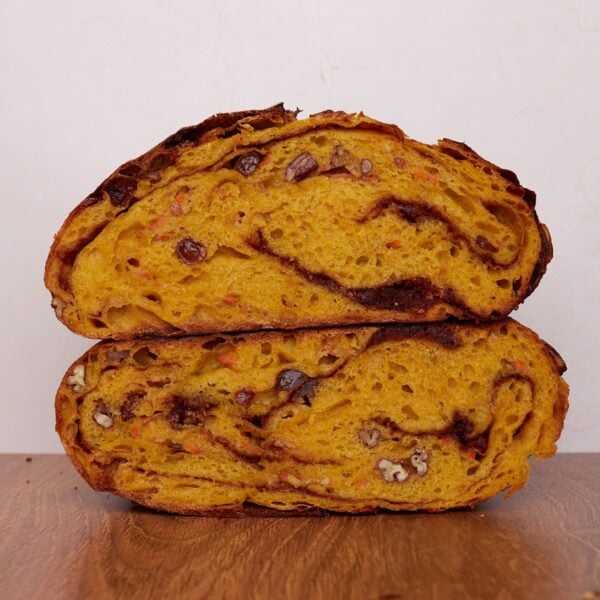
Carrot Cake Sourdough Bread
Sourdough Bread Recipes
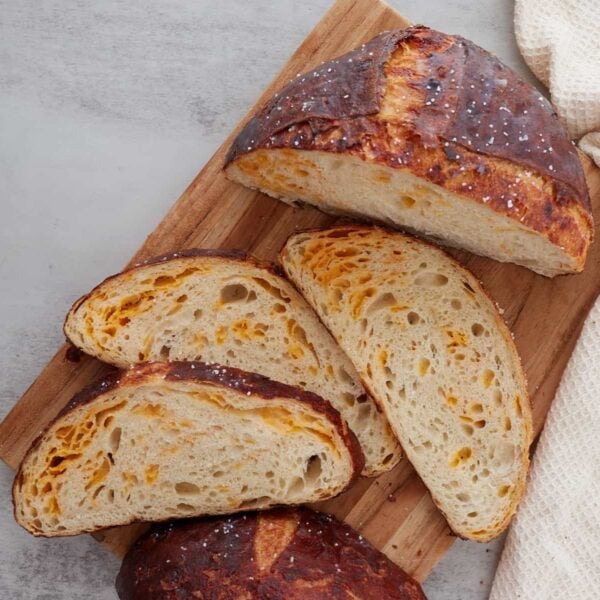
Cheesy Sourdough Pretzel Bread
Same Day Sourdough Recipes
37+ Same Day Sourdough Recipes (with active starter)
Same Day Sourdough Recipes
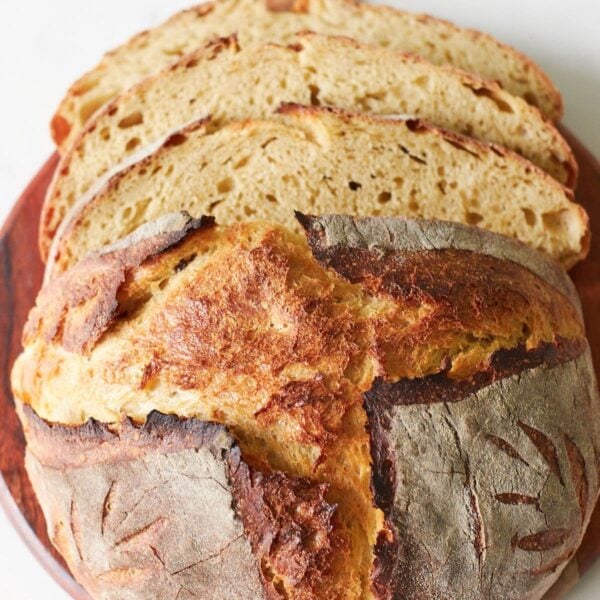
Einkorn Sourdough Bread Recipe
Tried these Sourdough Mini Loaves or another recipe from the site? I’d love to hear about it! Drop a star rating and share your thoughts in the comments—can’t wait to see what you’re baking!

Small Sourdough Loaf Recipe
Equipment
Ingredients
Feed sourdough starter
- 50 grams active sourdough starter, ¼ cup
- 50 grams warm water, ¼ cup
- 50 grams all-purpose or bread flour, ⅓ cup
Dough
- 150 grams sourdough starter, doubled in size and bubbly, ⅔ cup
- 500 grams bread flour, 3 ¾ cups
- 350 grams water, 1 ½ cups
- 10 grams salt, ½ Tablespoon
- Optional: mix-in ingredients
Instructions
- Feed your sourdough starter: About 4 hours before making the loaf, build a levain or feed your sourdough starter at a 1:1:1 ratio (50 grams sourdough starter: 50 grams flour: 50 grams water). Cover and let it rest at 77–80°F (25-27°C) until bubbly and doubled in size. If you don’t have extra starter, add an extra 5–10 grams to each portion (starter, flour, and water) so you have enough to bake with and still keep your starter going. 50 grams active sourdough starter, 50 grams warm water, 50 grams all-purpose or bread flourSkip this step if your starter is already activated and ready to bake with. Note: If you want to start the loaf in the morning, you can feed your starter a 1:5:5 ratio (15 grams active sourdough starter, 75 grams flour, 75 grams water) the night before and leave it covered for about 10 hours at 70-72℉. (21-22°C)
- Mix ingredients: With a danish dough whisk, hands, or large spoon mix together active starter, water, and salt in a container with straight sides or a medium clear bowl. Add the flour and mix until the dough is shaggy and the flour is incorporated. Cover with a lid or dinner plate so the dough doesn’t dry out and let sit for 30 minutes in a a warm spot. For a similar timeline as listed below keep the dough temperature at 75°F (24°C).150 grams sourdough starter, doubled in size and bubbly, 500 grams bread flour, 350 grams water, 10 grams salt
- Stretch and fold: Perform a set of stretch and folds every 30 minutes. It is ok if it is not exact but try to get 3 sets in with a break in between each set. To stretch and fold, grab one side of the dough with a damp hand and gently shimmy the dough up, and then fold it on itself. Repeat this 3 more times rotating the bowl 90 degrees each time. If you are adding mix-ins you can add them during the first stretch and fold. The goal is to get the dough to pass the “windowpane test”. To perform the windowpane test gently spread a piece of the dough between your pointer fingers and thumbs. You want it thin enough to see light through without it tearing. This tells you the gluten is developed. If it is not passing windowpane after 3 set of stretch and folds I recommend adding a 4th set.
- First rise: Let the dough rest on the counter in a warm spot to finish bulk fermentation. Bulk fermentation is done when the dough is jiggly, domed on top, bubbly on the sides, and risen 50%. If it does not show these signs, continue to let the dough rise, to finish bulk fermentation. At a dough temperature of 75°F (24°C) my dough is ready in 4 hours from the time it is mixed.
- Shape the dough: This is the step where you will divide the dough into mini loaves, and incorporate your add-ins. Shaping the dough is important to create a taut outer skin to create tension and help the dough hold its shape while baking.How to shape the mini loaves:1. Dump the dough onto an unfloured surface and cut it into four equal parts. 2. Take one-third of the dough and gently spread it into a chubby rectangle. If you are adding mix-ins you can add them at this point to the dough. 3. Gently pull the bottom of the dough up on top of itself, about ⅓ of the way, and then pull the other side of the dough up on top of both layers (folding it like a letter for an envelope).4. Add an additional layer of your add-ins on top of the folded dough. Then starting from one side roll the dough on top of itself into an oblong shape. 5. With your hands cupped pull the rolled up dough towards your body to smooth out the surface.6. Using a bench scraper or your hands, gently lift the dough and add to the lightly greased mini loaf pan. Repeat steps 2-6 for all three parts of the dough to create four mini loaves.
- Second proof: Same Day Option- Leave the dough on the counter for 1–3 hours. The exact timing will vary depending on the temperature of your kitchen and the strength of your starter. To check if it’s ready, use the poke test: lightly flour your finger and gently press into the dough. If the indentation slowly fills back in, it’s ready to bake. If it springs back immediately, it needs more time. If the indentation doesn’t fill back in at all, it’s overproofed and should be baked right away. Overnight Option- Place the dough in the fridge overnight for 8-12 hours. Bake directly from the fridge.
- Bake: When you are ready to bake, preheat the oven to 450°F (232°C). Score the top of the dough with your bread lame or sharp knife. When the oven is preheated, add the pans to the oven and on the rack below, add a small pan with about 10-12 ice cubes on it and a cup of water and bake for 15 minutes. After 15 minutes, remove the pan with water, decrease the temperature to 425°F (218°C), and then bake for an additional 15 minutes or until the internal temperature is 205°F (96°C). Once baked, remove the bread from the pan immediately and let cool on a cooling rack. When cooled, cut with a bread knife and enjoy!
Notes
- This recipe uses an open baking method. You will place a sheet pan with ice on the rack underneath the bread in the oven for the first part of the baking. This is done because the ice adds steam, which helps the crust stay soft at the high heat and allows the loaf to fully rise.
- If you have a gas stove you will have to experiment a little as gas stoves vent the steam quicker than electric ovens. If you have a gas stove and it doesn’t work baking these, you can place 1 or 2 mini loaf pans at a time, depending on the size, in your Dutch oven instead.
- Use a kitchen scale to measure the ingredients rather than measuring with cups and spoons. This will yield more accurate results. Plus, as a bonus, you will have fewer dishes to clean afterward!
- I recommend using a straight-edge container so you can visually see how much the dough has risen. A 2-quart container is big enough for 1 loaf. If you are doubling the recipe, use a 4-quart container.
- Keep your dough at a temperature around 75°F (24°C) to match the timeline listed. Use a bread mat (use code country10 for 10%) or proofing box to keep the dough warm, or see more tips on how to keep your dough warm.
Nutrition
Nutrition information is automatically calculated, so should only be used as an approximation.



Can I bake with pizza pan under with no water or ice?
The ice/water create steam to keep the crust soft while the dough rises. If you don’t add anything, your loaves likely won’t rise as high.
Do you cover them when baking? If so, what do you use so they still rise?
Hi Cindy no they don’t need to be covered while baking.
Aren’t you not supposed to put this kind of pan in an oven they hot?
I don’t preheat the pans and they turn out just fine 🙂
this looks great! are there any baking adjustments I need to make if I’m using a stoneware mini loaf pan?
Yes it may need a few extra minutes to bake. I would check them at the original time and see what the thermometer reads. You want the middle of the loaf to reach 205 degrees Fahrenheit.
I love my mini’s. They are are at baked temp of 210’-213’
Why won’t they brown on top !!!! HELP !!
That is likely a proofing issue. Under or overproofed dough will bake up pale.
What size pans do you use for the minis?
5.75 x 3 inches
Might want to make changes for those who follow precisely recipes.
Section 1:
1:1:1 ratio (1 part starter, 1 part flour, 1 part flour): This ratio will rise in about 4-6 hours
I believe water should be placed
Thanks for catching that I’ve updated it!
Soooooo I decided to triple your recipe and left it sitting in my stove overnight and when I woke up this morning, it looked like sourdough Zilla threw up in my oven 😂😂😂 so I cleaned up the mess and still had a huge bowl left of dough but it’s really sticky so I’m trying my best to shape it into mini loaves and I’m adding add ins to a few!!! Praying they turn out ok 👌
Oh no!! The good news is when they bake in the loaf pan it forces them to rise up. When you double or triple the recipe the rise times go quicker and with the warmer temps outside it probably just got warm and went quicker than anticipated.
If you are giving these as a gift what is the best wrap and store them? Can you make a few days in advance? Thank you!
They will get stale if they sit out for a few days so if you want to gift them later, I would freeze them and then you can defrost them overnight the day before you gift them. When you freeze them, you could wrap in heavy-duty foil or Saran Wrap and then put them in a freezer-safe bag. Then, to get them to crisp up again, I would just tell them to preheat the oven to 400°F and then quickly run the loaf under water and bake for 5-10 minutes until the loaf crisps up. It will taste good as new.
Made three mini loaves adding jalapeño & cheddar to one, and black olives & fresh parmesan (not your favorite!) to another. First time baking with steam. They all turned out amazing and delicious!
So happy to hear that! Glad you liked them!
Hi Emily,
Will you please advise me suggestions for add-ins and the total amount that I can add to the mini loaves?
I love your same day sourdough bread and have successfully made until yesterday!
I totally skipped the step about the step of proofing the dough in the proofing basket!!
The loaf still looks turned out okay, but it’s texture changed and it was much more “hollier” than usual!
Thank you for all of your fabulous recipes!!
I bought another of your stellar books, Same Day Sourdough, and had it shipped to my life long friends who’s also a Sourdough baker and she adores it as much as I do!!!
Thank you again Emily! I truly appreciate you and all of your recipes ❤️ ♥️
Thanks so much, Lori! For mix-ins, I typically don’t measure on my mini loaves I just add what seems about right for each loaf. But as a general rule of thumb you want to keep mix-ins at about 20% or less of your overall dough weight.