
This post may contain affiliate links . Read my full Disclosure Policy.



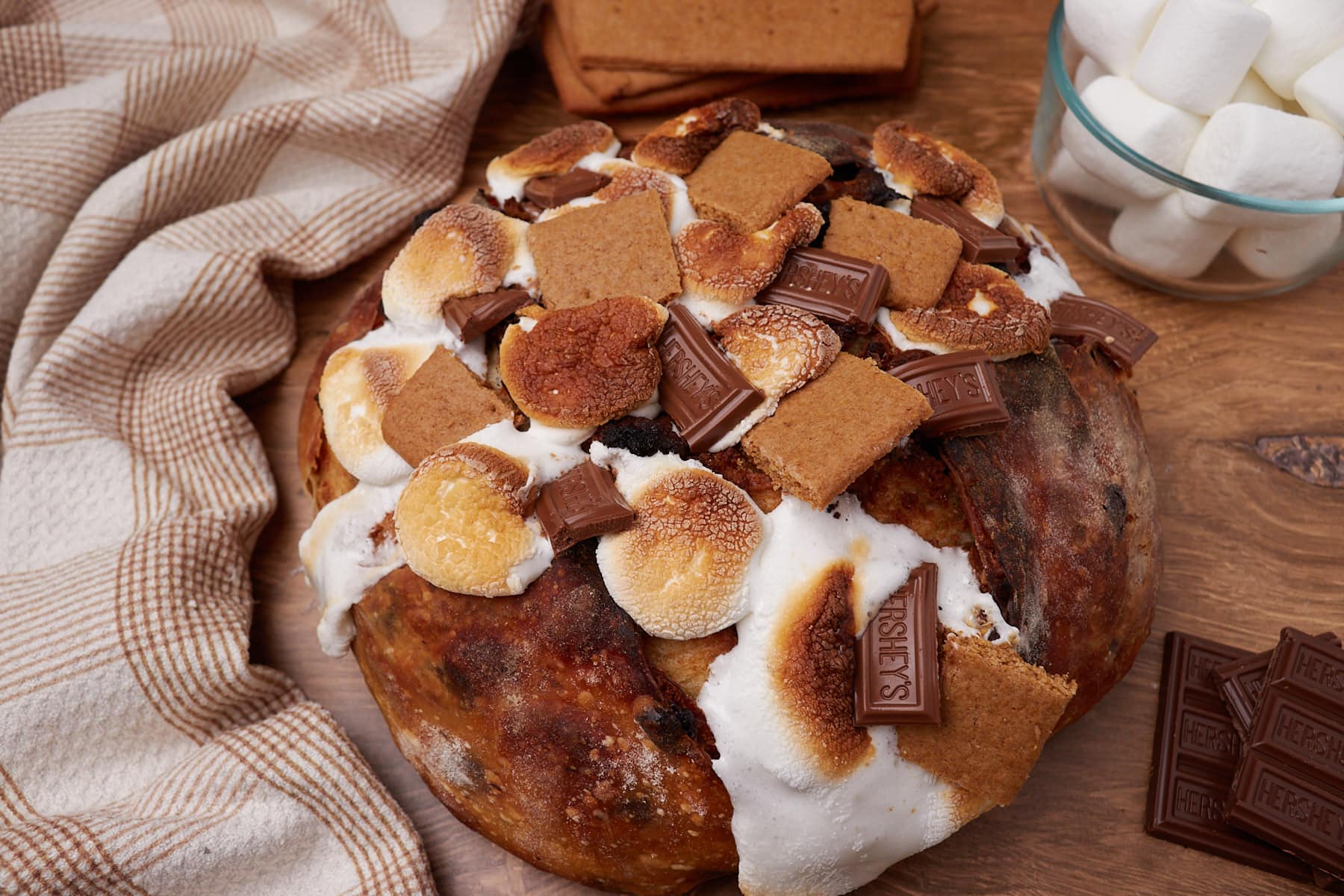
This S’mores Sourdough Bread is filled with melty chocolate, buttery sourdough graham crackers, and topped with toasty marshmallows. It’s everything you love about s’mores baked to perfection in a same-day sourdough loaf.
Save & Summarize
“There are three words for this recipe. TO DIE FOR!” – Lise
I set out to make a S’mores Sourdough Loaf, and after plenty of testing, it’s finally just right. It starts with my Same Day Sourdough Bread, with chocolate chips and a touch of sugar in the dough. Graham crackers are swirled in at the end so you can really taste them, and it’s finished with marshmallows on top for that gooey, sticky s’mores crust.
And if you love s’mores you need to try s’mores sourdough focaccia for a gooey, delicious treat and s’mores cookie bars made with my sourdough chocolate chip cookie dough.
Why you will love this recipe
- Beginner friendly – This recipe starts with the base of my Same Day Sourdough Bread recipe, which is a reliable, beginner’s friendly recipe that can be made in just one day.
- Flexible timeline – Bake it start to finish the same day, or let it ferment overnight in the fridge and bake when you’re ready. Find more same day sourdough recipes.
- The perfect summer recipe – This S’mores Sourdough Bread tastes like a summer night around the campfire.
Important Ingredients and Substitutions
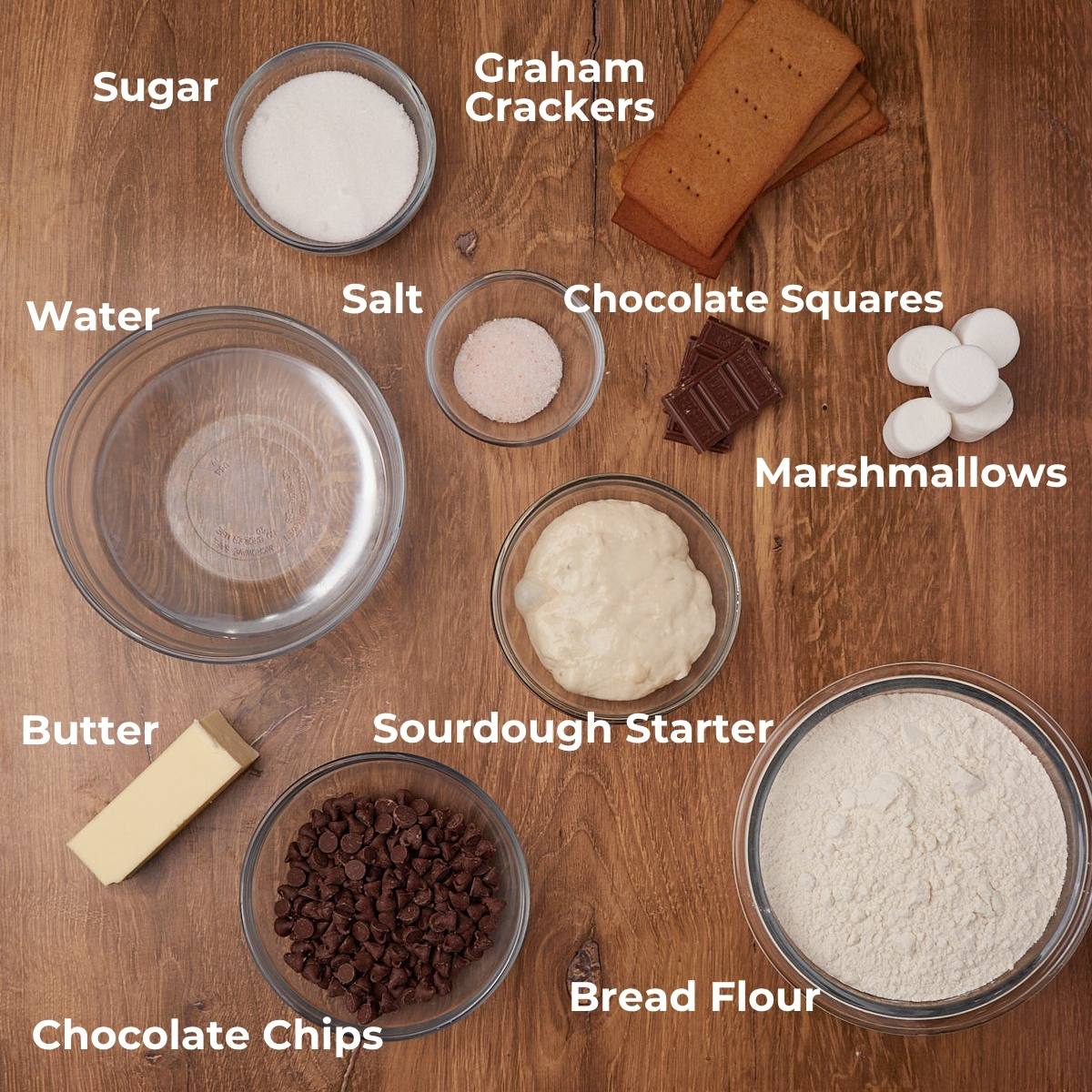
- Bread flour- Sourdough bread is a higher hydration dough, so using flour that is efficient at absorbing water is ideal. Bread flour has a high protein content and works well for that purpose. You can use all-purpose flour, but I recommend reducing the water by 25 grams.
- Chocolate chips or chunks– Depending on what you want you can go for smaller bits of chocolate or big chunks.
- Graham Crackers– You can use honey or cinnamon-flavored graham crackers for this recipe. I love to use homemade Sourdough Graham Crackers. To crush them up I just place them in a plastic bag and start pounding on it with a rolling pin or you can buy graham cracker crumbs.
- Marshmallows- When adding the marshmallows into the dough as a mix-in, they would dissolve into the dough, so instead, I add them on top of the baked loaf and broil them to get them all melty and toasty. You could also slice the bread and then add a layer of marshmallow fluff on top of the slice and broil to toast the marshmallow fluff.
See the full recipe and measurements in the recipe card below.
Instructions to make S’mores Sourdough Bread
Make the Bread
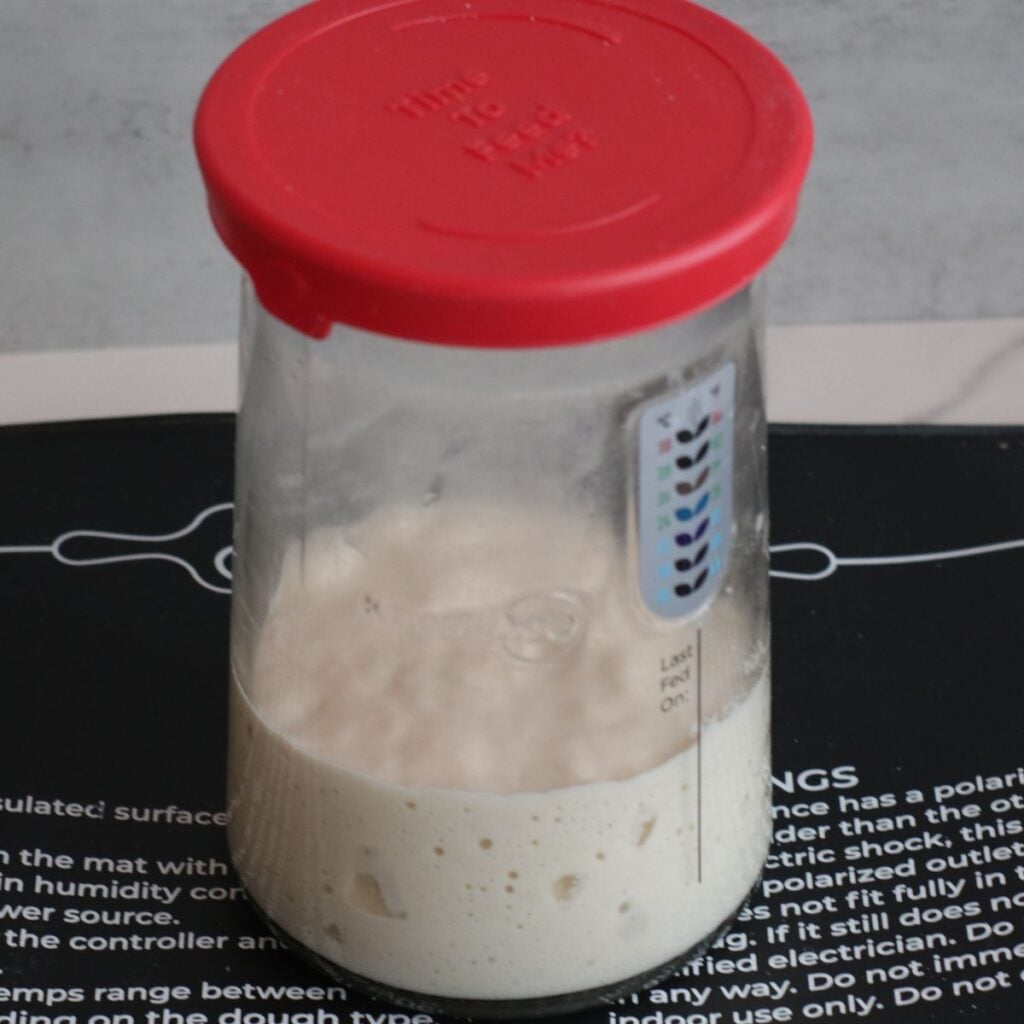
Feed Sourdough Starter: About 4 hours before making the loaf, feed your sourdough starter a 1:1:1 ratio (50 grams starter: 50 grams flour: 50 grams water). Cover and let it rest at 77–80°F until bubbly and doubled in size.
If you don’t have extra starter, add an extra 5–10 grams to each portion so you have enough to bake with and still keep your starter going.
Note: If you want to start the loaf in the morning, you can feed your starter a 1:5:5 ratio (15 grams active sourdough starter, 75 grams flour, 75 grams water) the night before and leave for about 10 hours at 72℉.

Mix dough: In a 2-quart straight-sided container or a medium clear bowl, mix water, sourdough starter, sugar, salt, and bread flour with your hands, danish dough whisk (10% off with link), or a spoon until all the ingredients are well incorporated about 1-2 minutes. Cover and let rest for 30 minutes in a warm spot.
To follow the suggested timing, keep the dough temperature at 75°F.
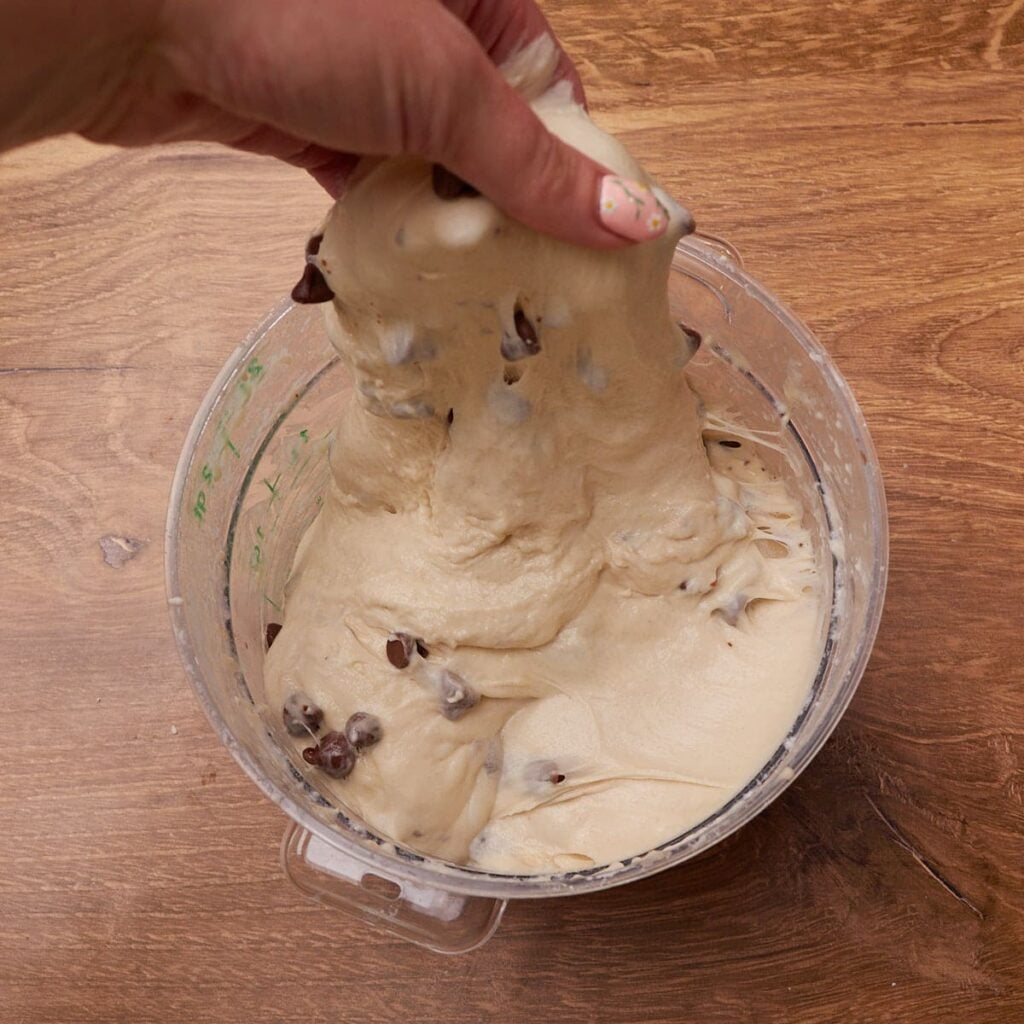
Stretch and folds: Perform 3 sets of stretch and folds with a 30-minute rest in between each set. Add the chocolate chips during the first set of stretch and folds.
To stretch and fold the dough, grab one side with a damp hand and gently shimmy the dough up, and then fold it on top of itself. Repeat this 3 more times, rotating the bowl 90 degrees each time.
Cover and keep the dough warm between each set.
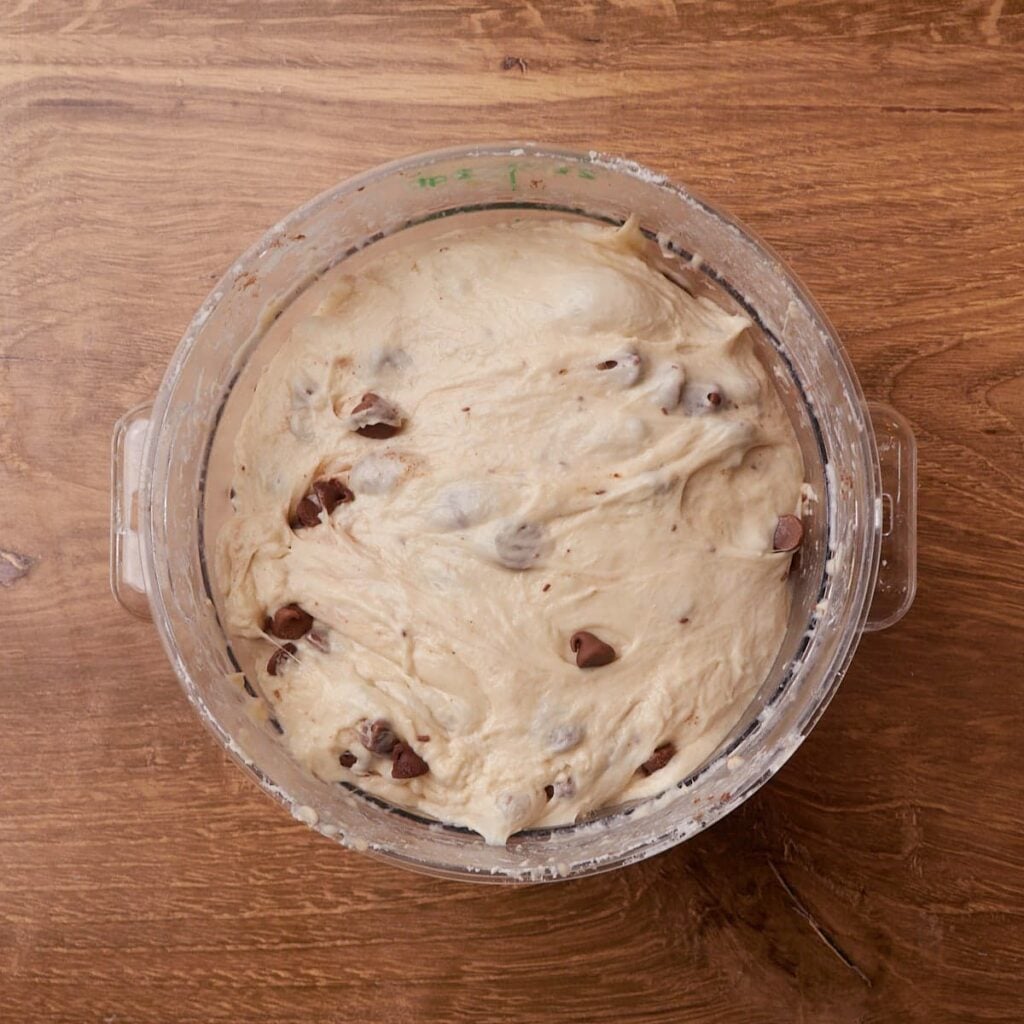
First rise: Let the dough rest on the counter in a warm spot to finish bulk fermentation. Bulk fermentation is done when the dough is jiggly, domed on top, bubbly on the sides, and risen 50%. If it does not show these signs, continue to let the dough rise.
At a dough temperature of 75ºF, my dough is ready about 4 hours after mixing the dough.
Shaping
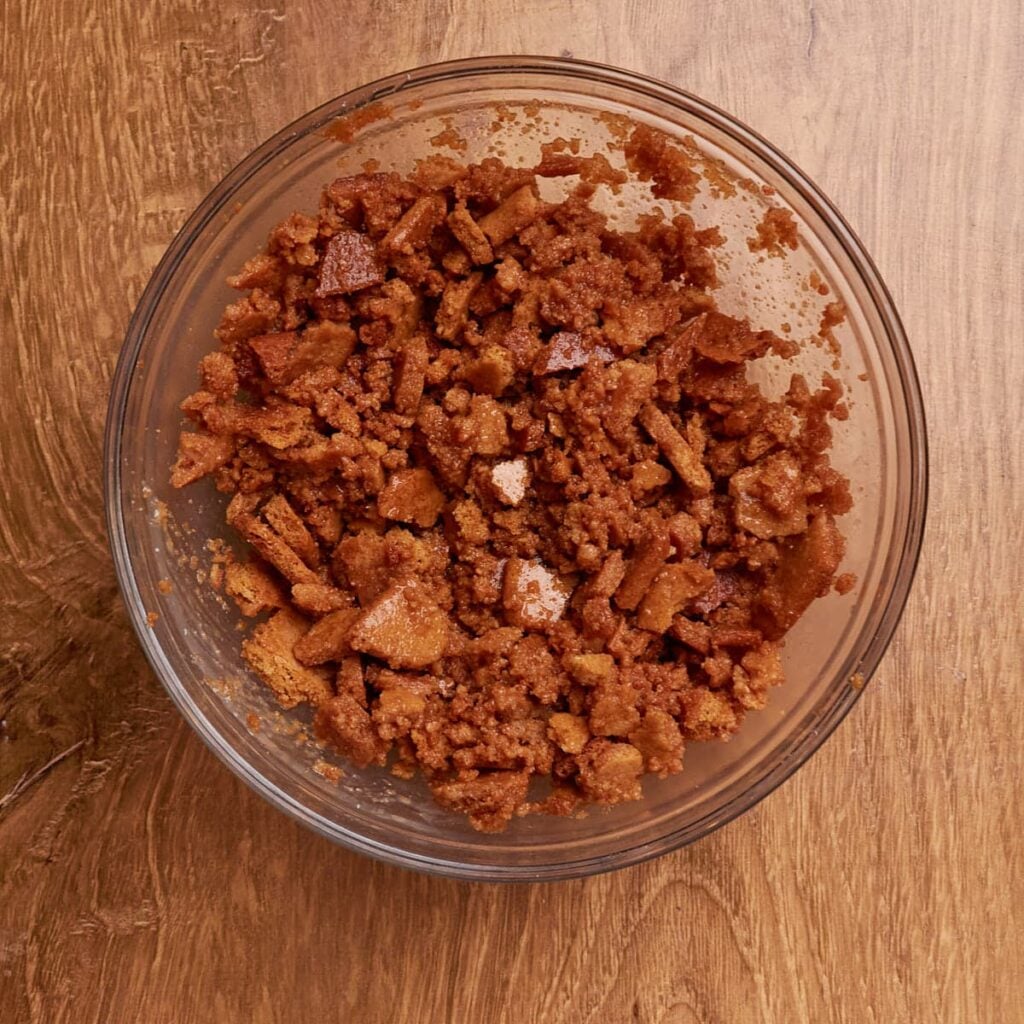
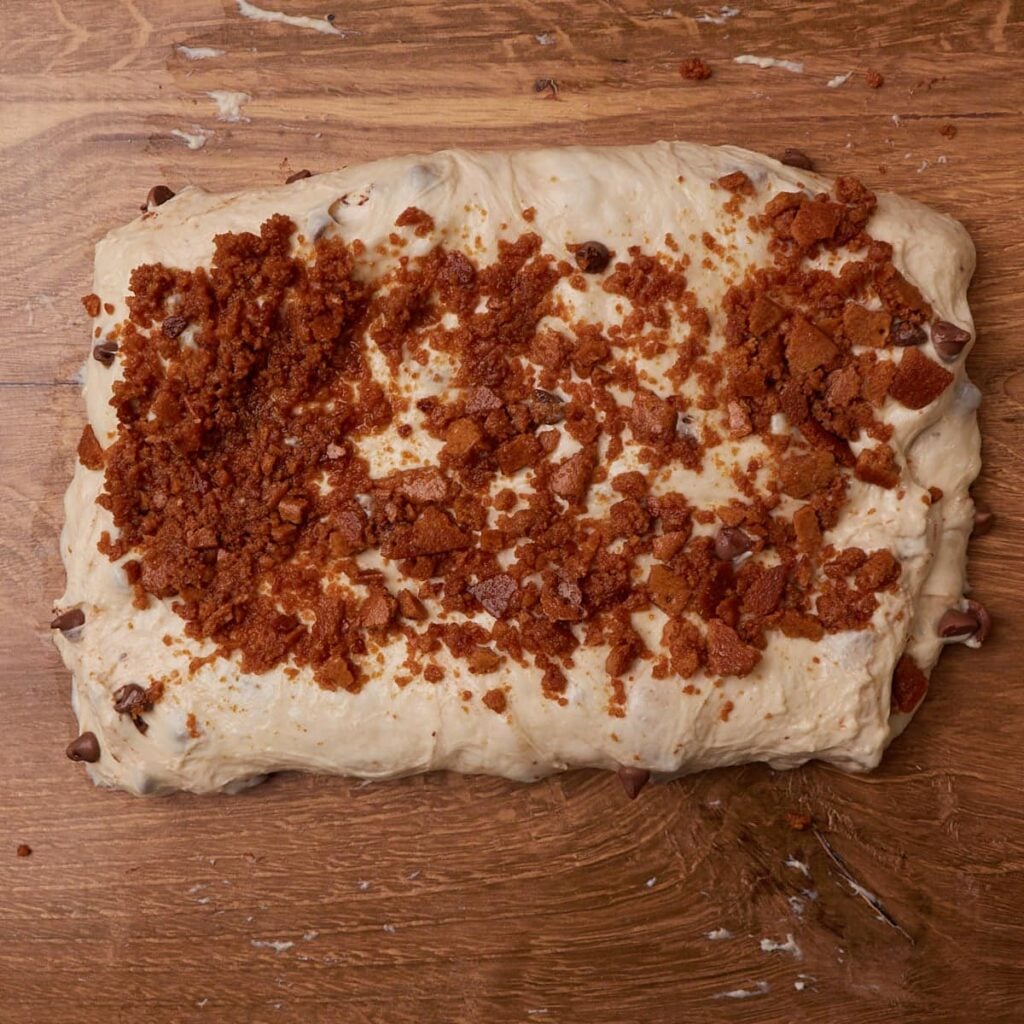
Make filling: In a bowl, mix together the crushed graham crackers and melted butter.
Prep basket: Lightly flour an 8-10-inch round or oval proofing basket with all-purpose flour or rice flour. If you don’t have a round proofing basket, line a medium bowl with a lightly floured tea towel.
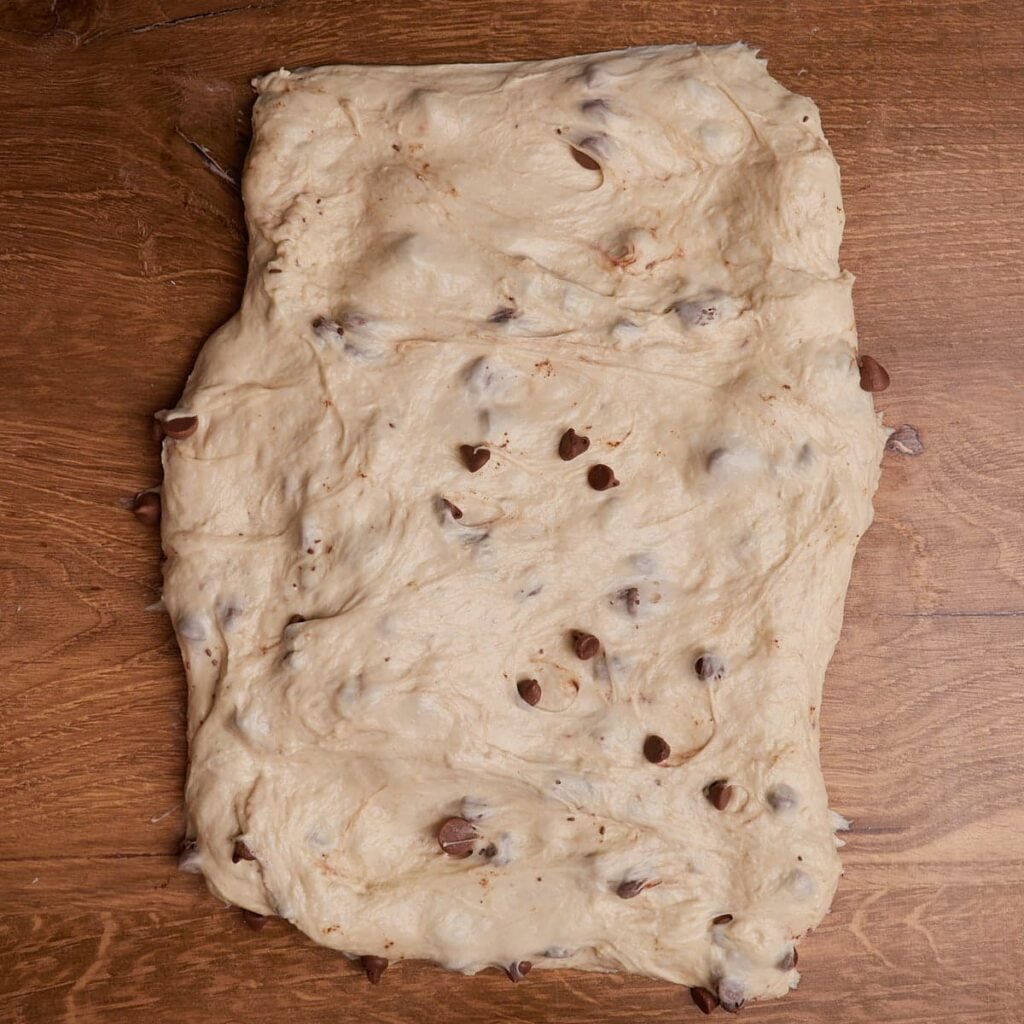
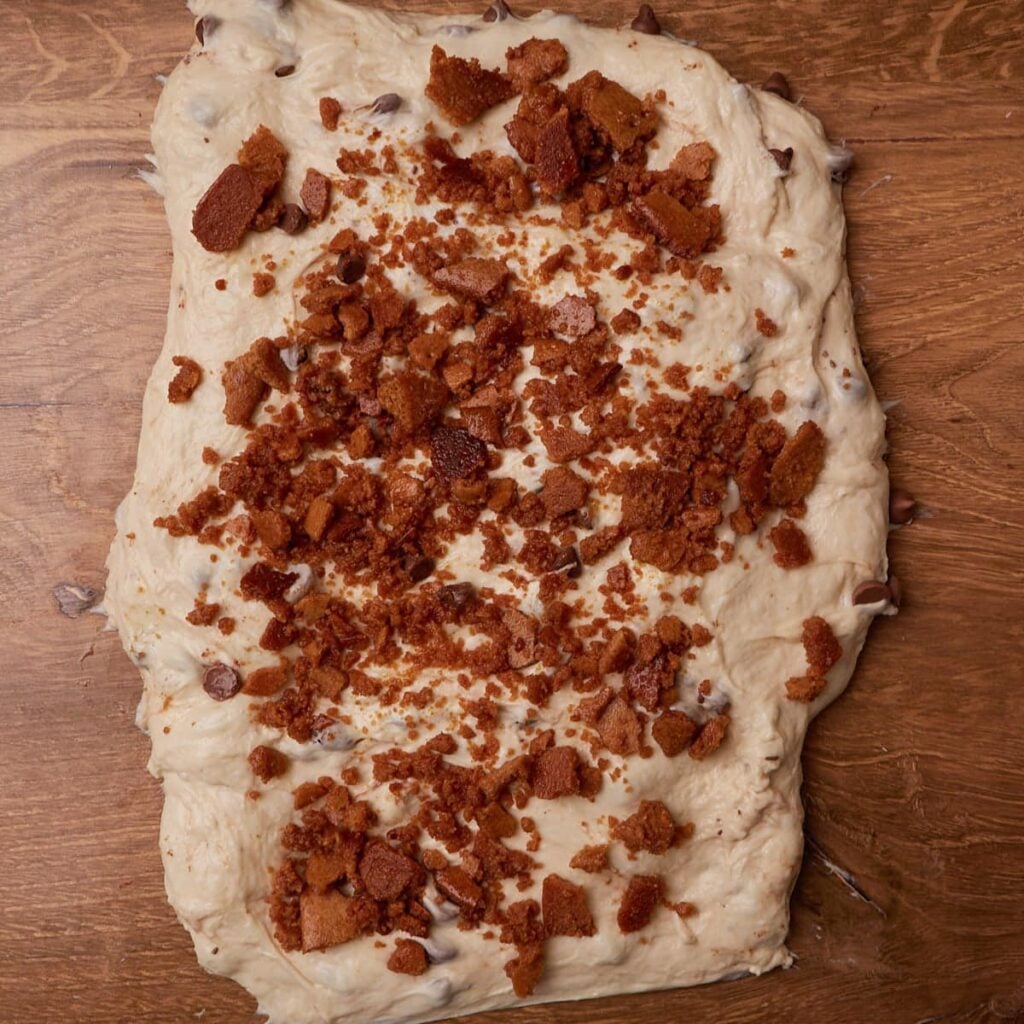
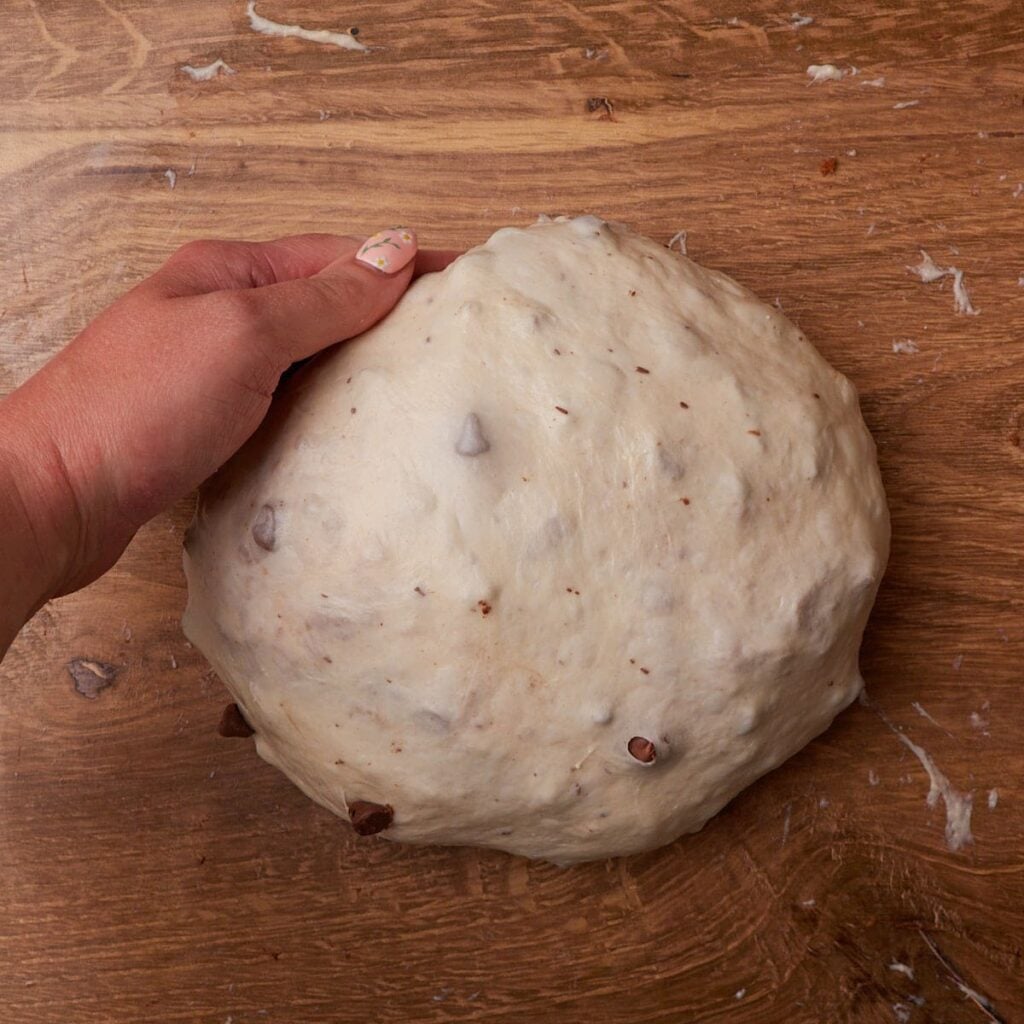
Shape dough: Turn the dough out onto an unfloured surface and gently stretch it into a 12 x 9-inch rectangle. Spread half of the filling evenly over the dough. Fold the bottom third of the dough up toward the center. Then fold the top third down so the edges meet in the middle, like folding a letter. Spread the remaining filling over the folded dough and roll up the dough into a log. If you are using an oval proofing basket flip the dough seam-side up into the basket. If you are making a round loaf, cup your hands around the dough and gently rotate it counter-clockwise toward you to tighten the surface and create a smooth, round shape. Place the dough seam-side up in the floured proofing basket and cover.
Second Rise & Bake
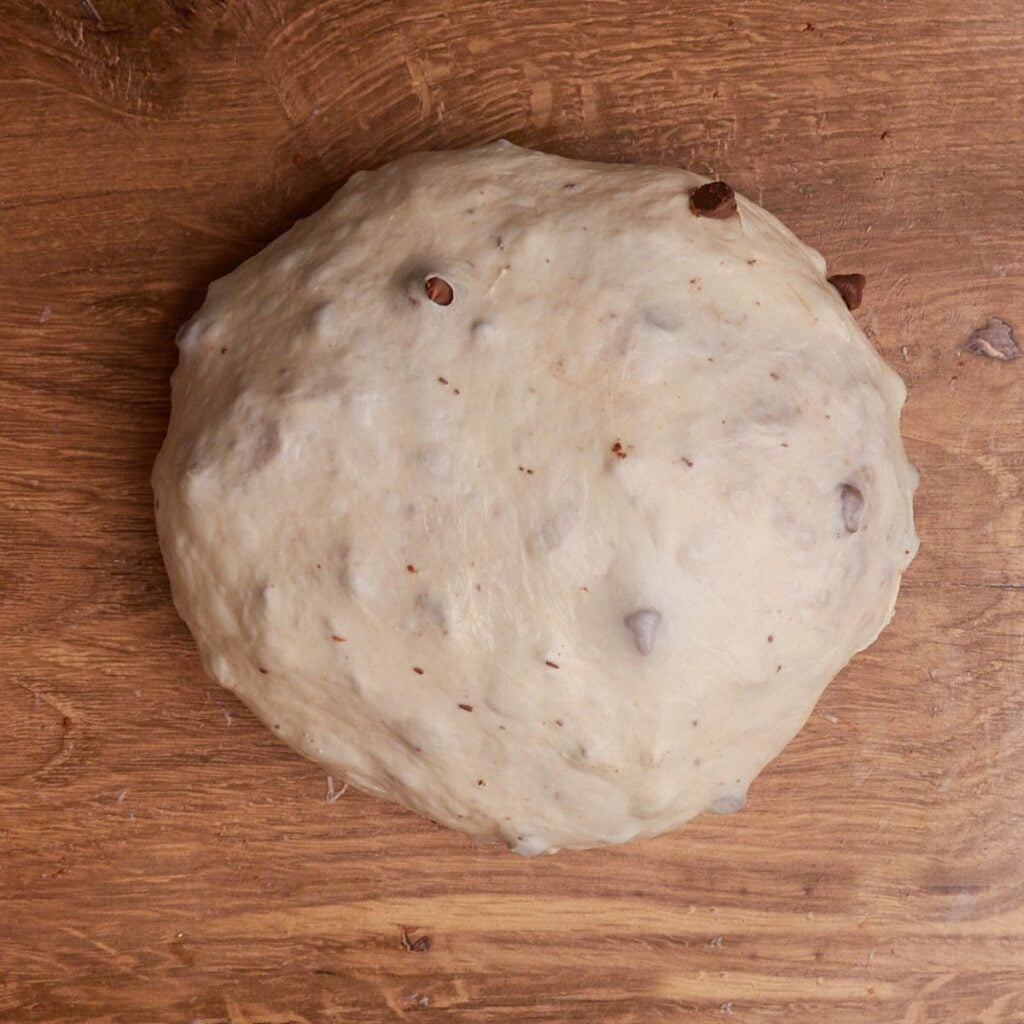
Final rise same-day (option 1): Let the dough rest on the counter for 1–2 hours at 75°F.
To check for readiness, perform the poke test: gently press the dough with a lightly floured finger. If the indentation slowly springs back, it’s properly proofed and ready to bake. If it bounces back right away, it needs more time. If the indentation doesn’t spring back at all, the dough is overproofed and should be baked right away.
Once the dough is ready, place it in the freezer for 20-30 minutes.
Final rise overnight (option 2): Place the dough in the fridge overnight for 8-12 hours until ready to bake. No need to test if the dough is ready, just bake it straight from the fridge.
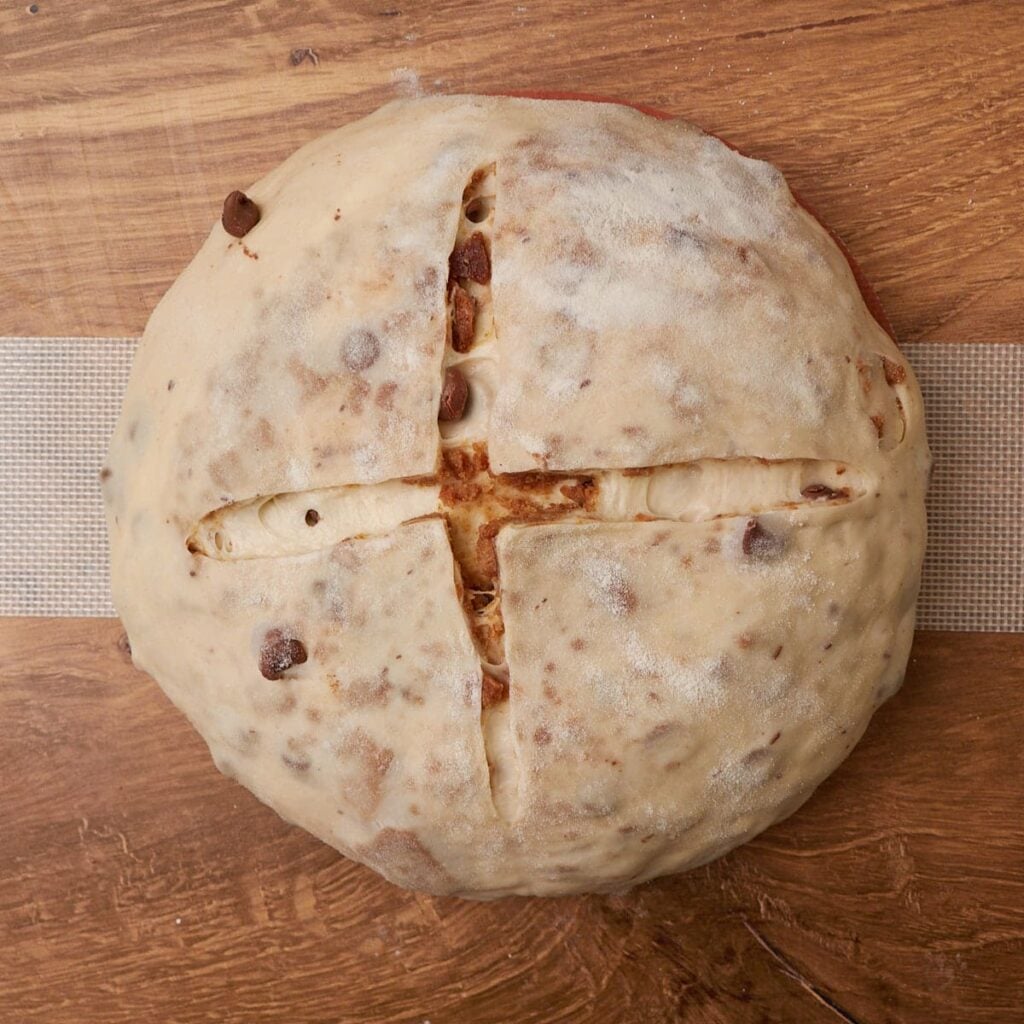
Score: Place a piece of parchment paper or a silicone bread sling over the top of the basket. Flip the dough out onto your surface and remove the basket.
Using a bread lame or a sharp knife held at about a 45-degree angle, quickly score one long slash along the length of the loaf.
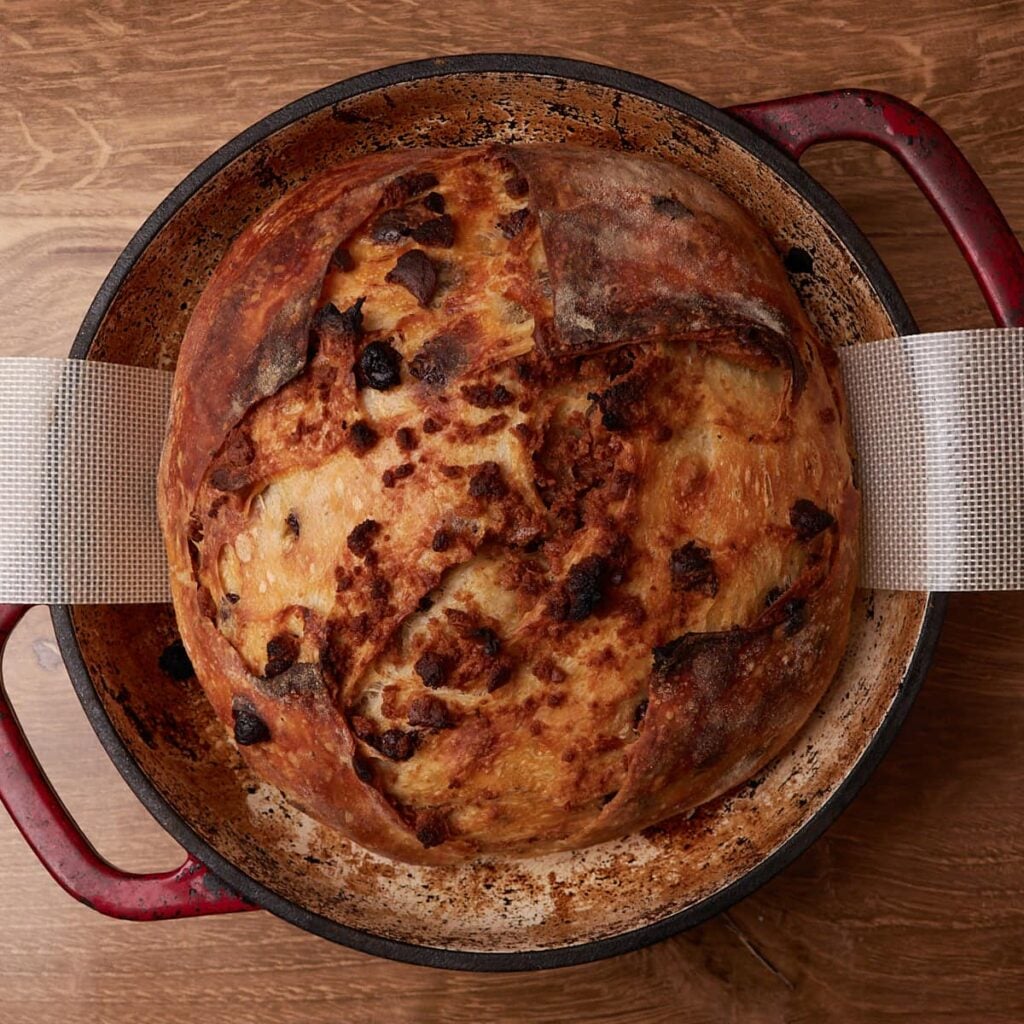
Bake: Transfer the dough to the 425℉ preheated Dutch oven and cover with the lid. Bake for 40 minutes. Remove the lid and continue baking for an additional 10 minutes, or until the crust is golden brown. The loaf is done when the internal temperature reaches 205°F.
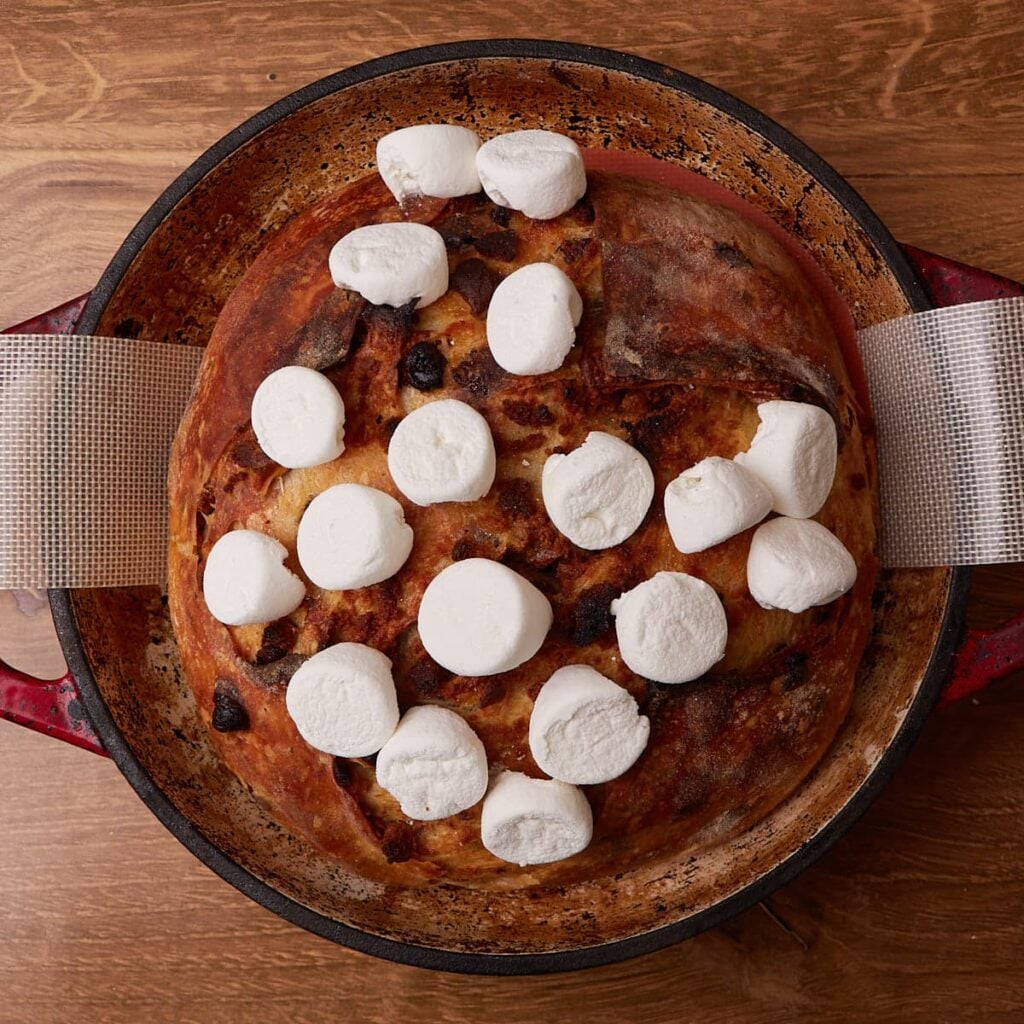
Add toppings: Cut marshmallows in half and then place them all over the top of the loaf. Broil for an additional 2 minutes until marshmallows are golden. Then quickly stick in graham crackers pieces and chocolate squares if desired around the warm marshmallows.
Note: If you won’t be eating the loaf right away or plan on freezing the loaf, wait to add the toppings until you are ready to eat.

Cool: Place the loaf on a cooling rack and let cool for at least 30 minutes before cutting.
Recipe Tips
- Chill before scoring. If baking the same day, place the shaped loaf in the freezer for 20–30 minutes right before baking. It makes scoring easier and helps the loaf hold its shape.
- Use a kitchen scale to measure the ingredients rather than measuring with cups and spoons. This will yield more accurate results. Plus, as a bonus, you will have fewer dishes to clean afterward!
- I recommend using a straight-edge container so you can visually see how much the dough has risen.
- If you are not going to eat the bread right away, wait to add the toppings. Instead, add them later when you reheat the loaf.
- This bread is also really yummy with marshmallow fluff on top of slices, and then broiled to make it warm and toasty.
- This loaf is delicious turned into French toast or Sourdough French Toast Casserole.
Sample Baking Schedule
This is based on the dough temperature being at 75°F when on the counter, although timing can vary so make sure to watch the dough, not the clock.
Same-day method
| Steps | Time |
| Feed starter a 1:1:1 ratio and leave at 77-80°F (50 grams sourdough starter: 50 grams flour: 50 grams water) *If you do not have extra starter be sure to feed your starter a little more so you have leftover | 8 am |
| Mix dough | 12 pm |
| Stretch & folds | 12:30 – 1:30 pm |
| First rise | 1:30pm – 4 pm |
| Shape & second rise | 4 pm – 5 pm |
| Freeze dough | 5 pm |
| Bake | 5:30 pm |
Overnight method
| Steps | Time |
| Feed starter a 1:1:1 ratio and leave at 77°F (50 grams sourdough starter: 50 grams flour: 50 grams water) *If you do not have extra starter be sure to feed your starter a little more so you have leftover | Day One: 1:00 pm |
| Mix dough | 5:00 pm |
| Stretch & folds | 5:30 pm – 6:30 pm |
| First rise | 6:30 – 9 pm |
| Shape and into the fridge | 9 pm |
| Bake | Day two: 8 am |
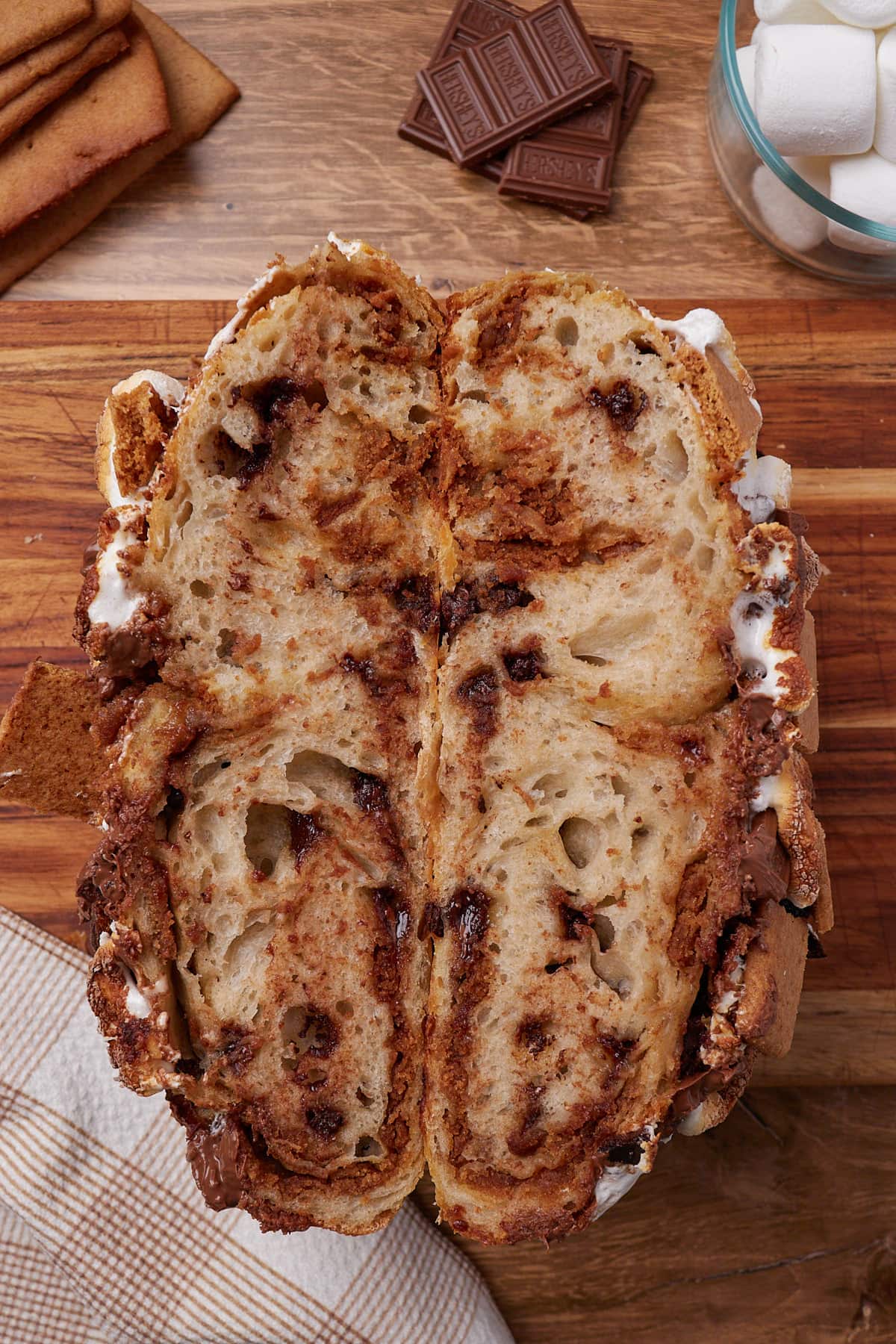
Storing S’mores Sourdough Bread
Store a whole loaf, or a side that can be placed cut side down with only the crust exposed, on the counter up to 2 days with just a tea towel over it. If the inside of the loaf is exposed I store it in a bread box or in a ziplock back.
Sourdough will not hold its crunch for extended periods of time but can be revived in the oven or toaster. To refresh a loaf preheat the oven to 450F. Run the loaf quickly under water and then place in the oven for 10-15 minutes until the crust is crispy again.
Sourdough bread also freezes really well. To freeze a loaf, either place the whole or half a loaf into a freezer safe bag or preslice the loaf and place parchment paper in between each slice before placing in a freezer bag.
Recipe updates
This recipe was updated 4/19/26. Here’s what changed:
1. Marshmallows are added on top
The marshmallows were originally added during stretch and folds, but I found that they would dissolve into the dough, and while you could taste them, you could no longer see them. So instead, they are now added on top of the bread after baking and broiled to get melty and toasty.
2. Updated to a Same-Day Recipe
This recipe was originally developed using my overnight sourdough bread base. It has now been updated to include a same-day option for more flexibility. You can still use the overnight sourdough bread method if preferred by reducing the amount of starter to 50 grams.
3. Lower Oven Temperature
The baking temperature was reduced from 450°F to 425°F and the bake time was slightly extended to prevent over-browning and ensure even baking throughout.
Recipe FAQs
To help prevent the bottom of the loaf from burning, place a heavy-duty baking stone on the rack directly below your Dutch oven.
If the top of your loaf is browning too quickly, make sure your oven rack is positioned in the center, not too high. You can also leave the lid on for the full baking time, or remove it for just the last 5 minutes.
Your starter may not be active enough, or your dough temperature may be too cool. For best results, keep the dough around 75°F during bulk fermentation.
If the room temperature is not warm enough, use a bread mat (use code country10 for 10%) or proofing box to keep the dough warm, or see more tips on how to keep your dough warm.
Excess stickiness can sometimes be caused by an overly acidic starter. When a starter becomes too acidic, it can weaken the gluten structure and cause the dough to overproof prematurely, making it harder to handle.
Use damp hands when performing stretch and folds to prevent sticking. If the dough is especially difficult to shape, lightly dust your work surface with a small amount of flour, just enough to make it manageable without incorporating too much into the dough.
More Artisan Sourdough Bread
Sourdough Artisan Bread Recipes
Easy Sourdough Bread Recipe
Sourdough Bread Recipes
Honey Butter Sourdough Cinnamon Bread Recipe

Sourdough Bread Recipes
Hot Honey Parmesan & Asiago Sourdough Bread

Sourdough Bread Recipes
Pumpkin Sourdough Bread
Tried this S’mores Sourdough Bread or another recipe from the site? I’d love to hear about it! Drop a star rating and share your thoughts in the comments—can’t wait to see what you’re baking!

S’mores Sourdough Bread
Ingredients
Sourdough Starter (Levain)
- 50 grams active sourdough starter, ¼ cup
- 50 grams all-purpose or bread flour, ⅓ cup
- 50 grams warm water, ¼ cup
Dough
- 500 grams bread flour, 3 ½ cups
- 350 grams water, 1 ½ cups
- 150 grams active sourdough starter, ⅔ cup
- 10 grams salt, 1 ½ teaspoon
- 50 grams sugar, ¼ cup
Mix-Ins
- 170 grams chocolate chips, 1 cup
- 84 grams unsalted butter, 6 Tablespoons
- 140 grams graham crackers, crushed, about 5 rectangles, plus more for topping
Toppings
- 1 chocolate bar, optional
- 4-5 large marshmallows
Instructions
Feed Sourdough Starter
- About 4 hours before making the loaf, feed your sourdough starter a 1:1:1 ratio (50 grams starter: 50 grams flour: 50 grams water). Cover and let it rest at 77–80°F until bubbly and doubled in size. 50 grams active sourdough starter, 50 grams all-purpose or bread flour, 50 grams warm waterIf you don’t have extra starter, add an extra 5–10 grams to each portion so you have enough to bake with and still keep your starter going. Skip this step if your starter is already activated and ready to bake with.Note: If you want to start the loaf in the morning, you can feed your starter a 1:5:5 ratio (15 grams active sourdough starter, 75 grams flour, 75 grams water) the night before and leave for about 10 hours at 72℉.
Make Bread
- Mix dough: In a 2-quart straight-sided container or a medium clear bowl, mix water, sourdough starter, sugar, salt, and bread flour with your hands, danish dough whisk (10% off with link), or a spoon until all the ingredients are well incorporated about 1-2 minutes. Cover and let rest for 30 minutes in a warm spot. To follow the suggested timing, keep the dough temperature at 75°F.500 grams bread flour, 350 grams water, 150 grams active sourdough starter, 10 grams salt, 50 grams sugar
- Stretch and folds: Perform 3 sets of stretch and folds with a 30-minute rest in between each set. Add the chocolate chips during the first set of stretch and folds. To stretch and fold the dough, grab one side with a damp hand and gently shimmy the dough up, and then fold it on top of itself. Repeat this 3 more times, rotating the bowl 90 degrees each time. Cover and keep the dough warm between each set.170 grams chocolate chips
- First rise: Let the dough rest on the counter in a warm spot to finish bulk fermentation. Bulk fermentation is done when the dough is jiggly, domed on top, bubbly on the sides, and risen 50%. If it does not show these signs, continue to let the dough rise. At a dough temperature of 75ºF, my dough is ready about 4 hours after mixing the dough.
Shaping
- Make filling: In a bowl, mix together the crushed graham crackers and melted butter.84 grams unsalted butter, 140 grams graham crackers, crushed
- Prep basket: Lightly flour an 8-10-inch round or oval proofing basket with all-purpose flour or rice flour. If you don’t have a round proofing basket, line a medium bowl with a lightly floured tea towel.
- Shape dough: Turn the dough out onto an unfloured surface and gently stretch it into a 12 x 9-inch rectangle. Spread half of the filling evenly over the dough. Fold the bottom third of the dough up toward the center. Then fold the top third down so the edges meet in the middle, like folding a letter. Spread the remaining filling over the folded dough and roll up the dough into a log. If you are using an oval proofing basket flip the dough seam-side up into the basket. If you are making a round loaf, cup your hands around the dough and gently rotate it counter-clockwise toward you to tighten the surface and create a smooth, round shape. Place the dough seam-side up in the floured proofing basket and cover.
Second Rise & Bake
- Final rise same-day (option 1): Let the dough rest on the counter for 1–2 hours at 75°F. To check for readiness, perform the poke test: gently press the dough with a lightly floured finger. If the indentation slowly springs back, it’s properly proofed and ready to bake. If it bounces back right away, it needs more time. If the indentation doesn’t spring back at all, the dough is overproofed and should be baked right away. Once the dough is ready, place it in the freezer for 20-30 minutes.
- Final rise overnight (option 2): Place the dough in the fridge overnight for 8-12 hours until ready to bake. No need to test if the dough is ready, just bake it straight from the fridge.
- Score: Place a piece of parchment paper or a silicone bread sling over the top of the basket. Flip the dough out onto your surface and remove the basket. Using a bread lame or a sharp knife held at about a 45-degree angle, quickly score one long slash along the length of the loaf.
- Bake: Transfer the dough to the 425℉ preheated Dutch oven and cover with the lid. Bake for 40 minutes. Remove the lid and continue baking for an additional 10 minutes, or until the crust is golden brown. The loaf is done when the internal temperature reaches 205°F.
- Add toppings: Cut marshmallows in half and then place them all over the top of the loaf. Broil for an additional 2 minutes until marshmallows are golden. Then quickly stick in graham crackers pieces and chocolate squares if desired around the warm marshmallows.Note: If you won't be eating the loaf right away, wait to add the toppings until you are ready to eat. 4-5 large marshmallows, 1 chocolate bar
- Cool: Place the loaf on a cooling rack and let cool for at least 30 minutes before cutting.
Notes
- Recipe updated 4/19/2026 – See blog post for changes
- Chill before scoring. If baking the same day, place the shaped loaf in the freezer for 20–30 minutes right before baking. It makes scoring easier and helps the loaf hold its shape.
- Use a kitchen scale to measure the ingredients rather than measuring with cups and spoons. This will yield more accurate results. Plus, as a bonus, you will have fewer dishes to clean afterward!
- I recommend using a straight-edge container so you can visually see how much the dough has risen.
- If you are not going to eat the bread right away, wait to add the toppings. Instead, add them later when you reheat the loaf.
- This bread is also really yummy with marshmallow fluff on top of slices, and then broiled to make it warm and toasty.
- This loaf is delicious turned into French toast or Sourdough French Toast Casserole.
Nutrition
Nutrition information is automatically calculated, so should only be used as an approximation.



Do you still have the measurements for the original recipe? my print out copy was ruined. I thought it had a different hydration than this one listed. I loved it and would mix in the marshmallows when I shaped the loaf and that helped them from dissolving entirely.
Hi Anna!
The original recipe still had 350 grams of water, but it only used 50 grams of active starter for an overnight proof, following the same instructions as this one: https://countryroadssourdough.com/simple-sourdough-bread-recipe/
In the original recipe, I added 60 grams of marshmallows to the dough.
Thanks!
This is one of our favorite recipes! About to make it again, by the way, what do you recommend to keep the bottom from browning so dark with all the sugar that seeps through?
I put a heavy duty pizza stone on the rack underneath of where my dutch oven is. That really helps prevent the bottom of my loaf from burning.
Amazing
Thank you so much!
Loved the flavor of this loaf, but unfortunately the marshmallows were completely absorbed into the dough and created a gummy, “uncooked” texture despite leaving the loaf in the oven for an extra 10 minutes. I would recommend leaving the marshmallows out and adding them to the top of the loaf only during the “lid off” stage of baking.
I appreciate the feedback Mary.
Can I freeze this loaf (pre toppings) ?
Yep!
That’s literally what she tells you to do. After the full bake cut the marshmallows in half and add them on top of the loaf with chocolate pieces and broil it.