
This post may contain affiliate links . Read my full Disclosure Policy.



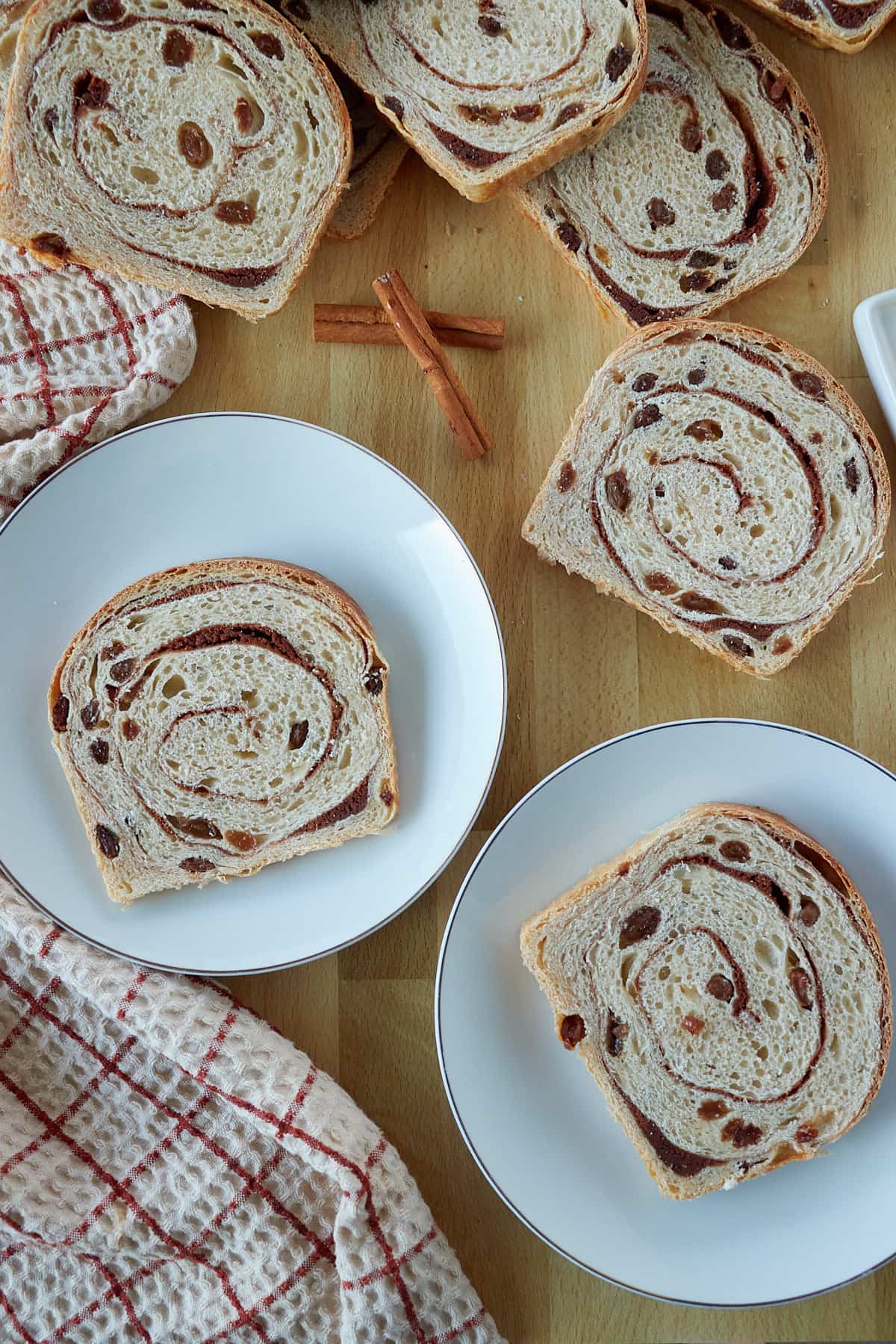
This soft Sourdough Cinnamon Raisin Bread is swirled with a sweet cinnamon sugar filling and raisins. Naturally leavened and ready in just one day, it’s an easy, flexible recipe that fits into any schedule.
Save & Summarize
Just like my Sourdough Sandwich Bread, this recipe has a soft crust and soft interior. This Sourdough Cinnamon Raisin Bread is just sweet enough, but not overly sweet. It is delicious on its own, with butter, or in sourdough french toast casserole.
Why you will love this recipe
- Flexible schedule – This Sourdough Cinnamon Raisin Bread can be made in just one day, just like my Same Day Sourdough Bread. Or, if you want a longer fermentation, there is an overnight rise option.
- Soft and fluffy texture – This loaf yields a soft and fluffy texture. If you love a crusty loaf, try my Cinnamon Honey Butter Sourdough Bread.
- No gapping – This recipe does not use a fat, like butter or milk, when adding the cinnamon sugar filling to make sure the swirl stays tight, no gapping here!
- Subtly sweet – This Sourdough Cinnamon Raisin Bread is perfectly balanced with the warm cinnamon, sweet raisins, and tangy sourdough starter.
Important Ingredients and Substitutions
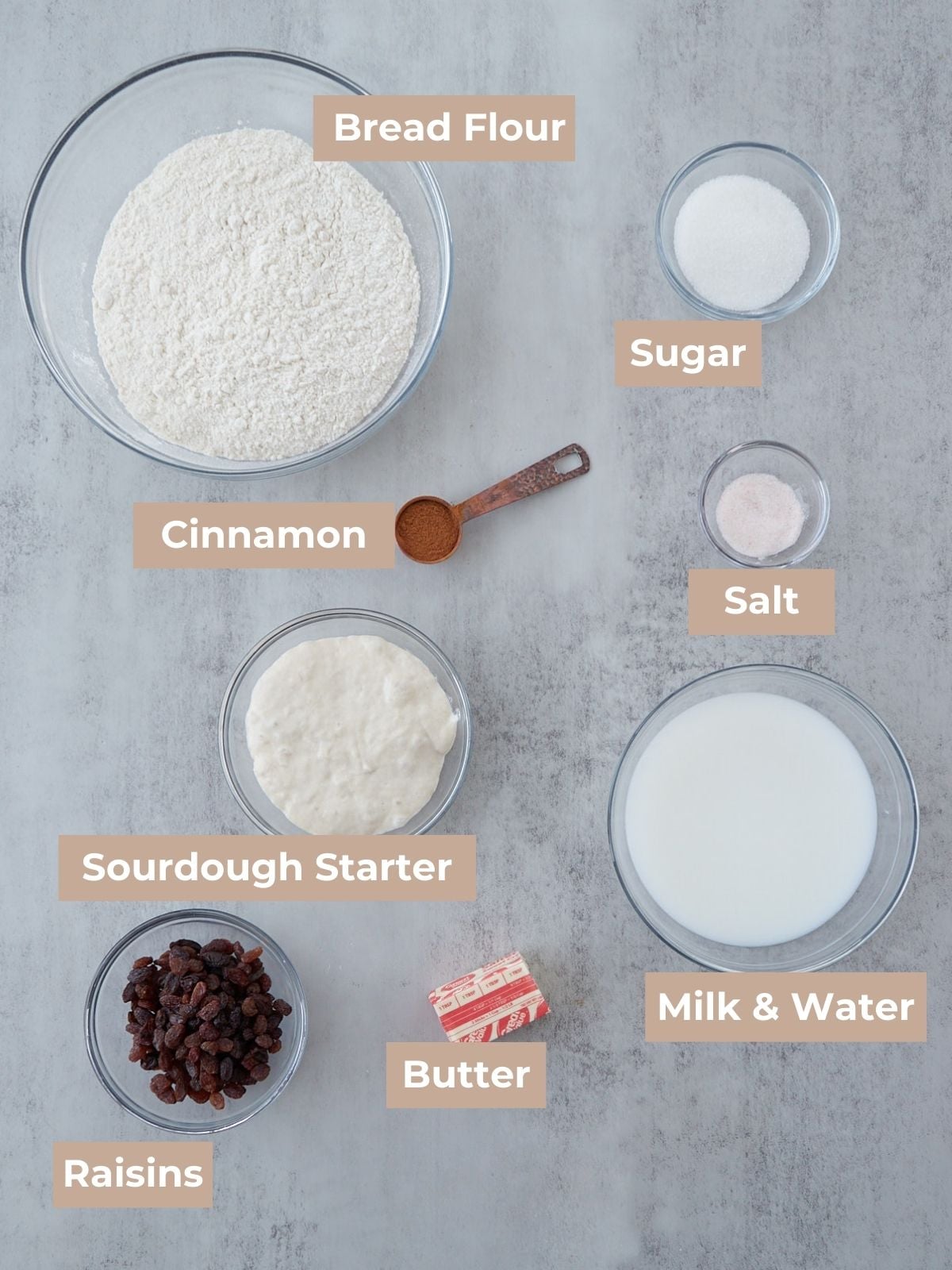
- Sourdough Starter – An active sourdough starter is one that has been recently fed, has doubled in size, and is bubbly. If you do not have a sourdough starter you can make one in an little as two weeks with my Easy Sourdough Starter Recipe.
- Bread Flour – I recommend using bread flour for the best result, but in a pinch, you can use all-purpose flour. However, you will need to reduce the water added by about 25 grams.
- Milk – Using milk in the dough helps create a soft, fluffy texture. I like to use whole milk but you can use what you have on hand. For a dairy-free option, you can use coconut milk.
- Raisins – For the classic cinnamon raisin bread flavor, they are added during the kneading process to be evenly distributed throughout the dough. If you do not like raisins, you can also leave them out. If you have more raisins, try my Carrot Cake Sourdough Scones.
- Cinnamon – Cinnamon is mixed with sugar and a little flour to create a beautiful swirl pattern in the loaf. If you love cinnamon, try my Sourdough Coffee Cake too.
See the full recipe in the recipe card.
Instructions to make Sourdough Cinnamon Raisin Bread
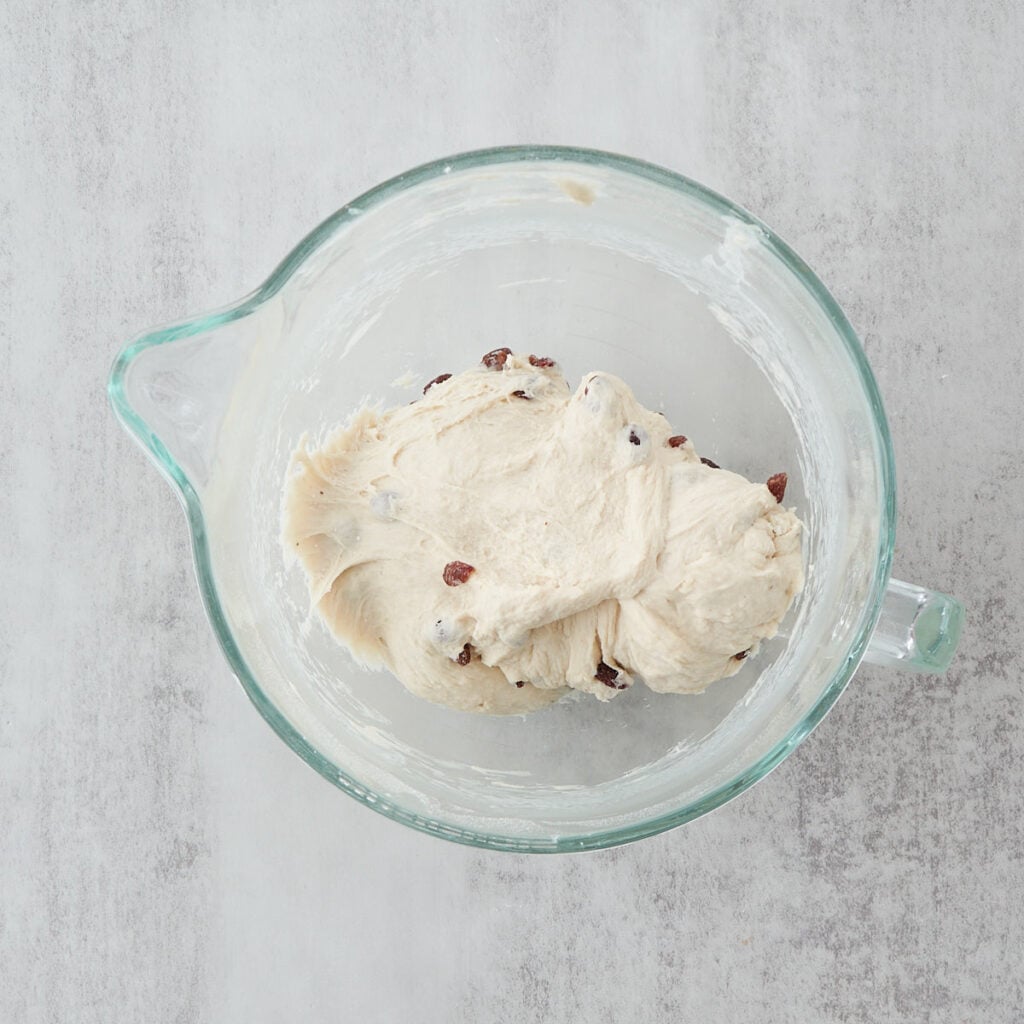
Step 1 – Knead dough
To a large bowl or stand mixer, add water, milk, sourdough starter, sugar, salt, butter, flour, and raisins. Mix together until all the ingredients are incorporated. After mixing, knead the dough for 10–15 minutes, either in a stand mixer with a dough hook on low speed or by hand on a lightly floured surface. It will feel sticky at first, but as the gluten develops, the dough will strengthen and become tacky and easier to handle. If after 3-4 minutes of kneading it is still extremely sticky slowly add up to another 50 grams of flour.

Step 2 – Windowpane test
To determine when the dough is done kneading, perform a windowpane test. This should be done on relaxed dough so let your dough rest for a minute or two before completing the test. Gently pull a section of the dough thin enough to see light through without tearing.
Step 3 – First rise
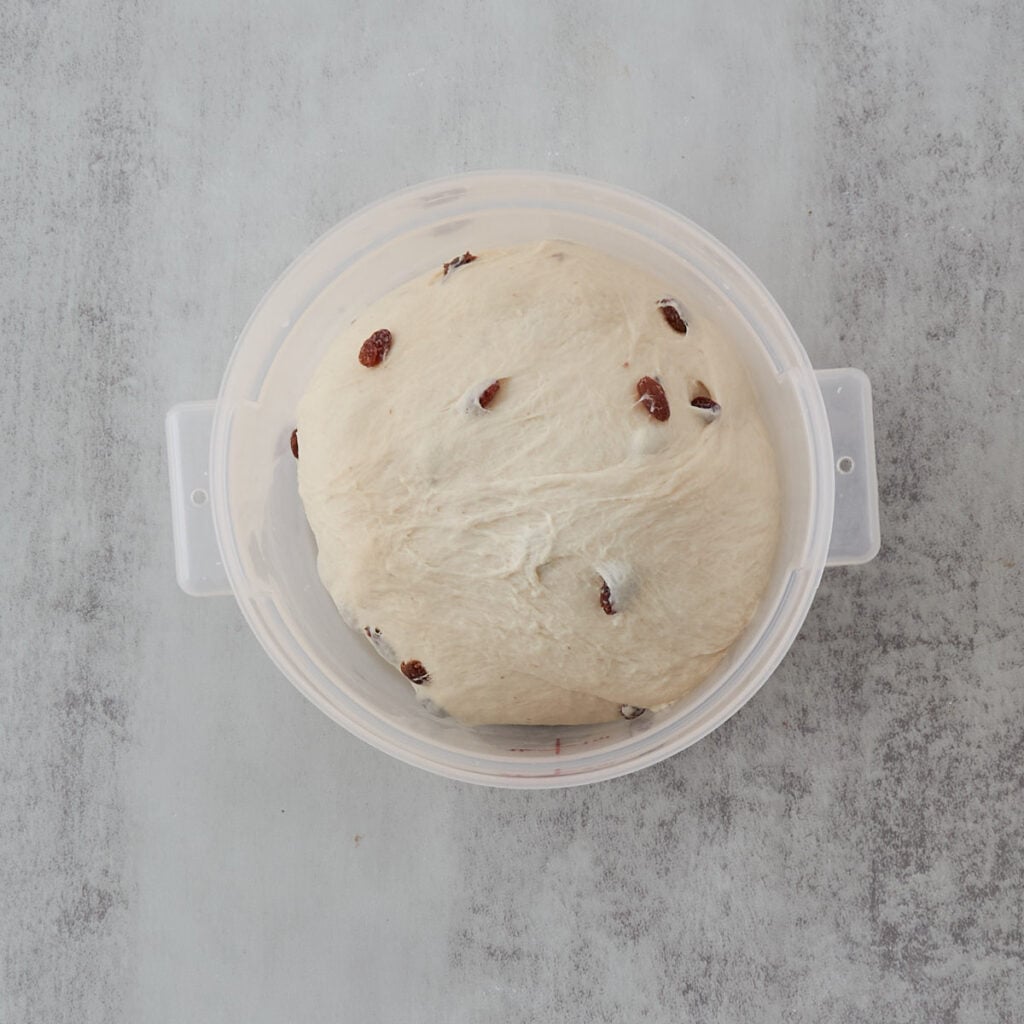
Shape the dough into a ball and place it into a 2-quart straight-edge container or bowl. Cover the bowl and let it rise.
Opt 1- Same Day Rise: Leave the dough at 80℉ to rise for 3-4 hours or until doubled in size.
Opt 2- Overnight Rise: Leave the dough at 68-70℉ to rise for 8-12 hours or until doubled in size.
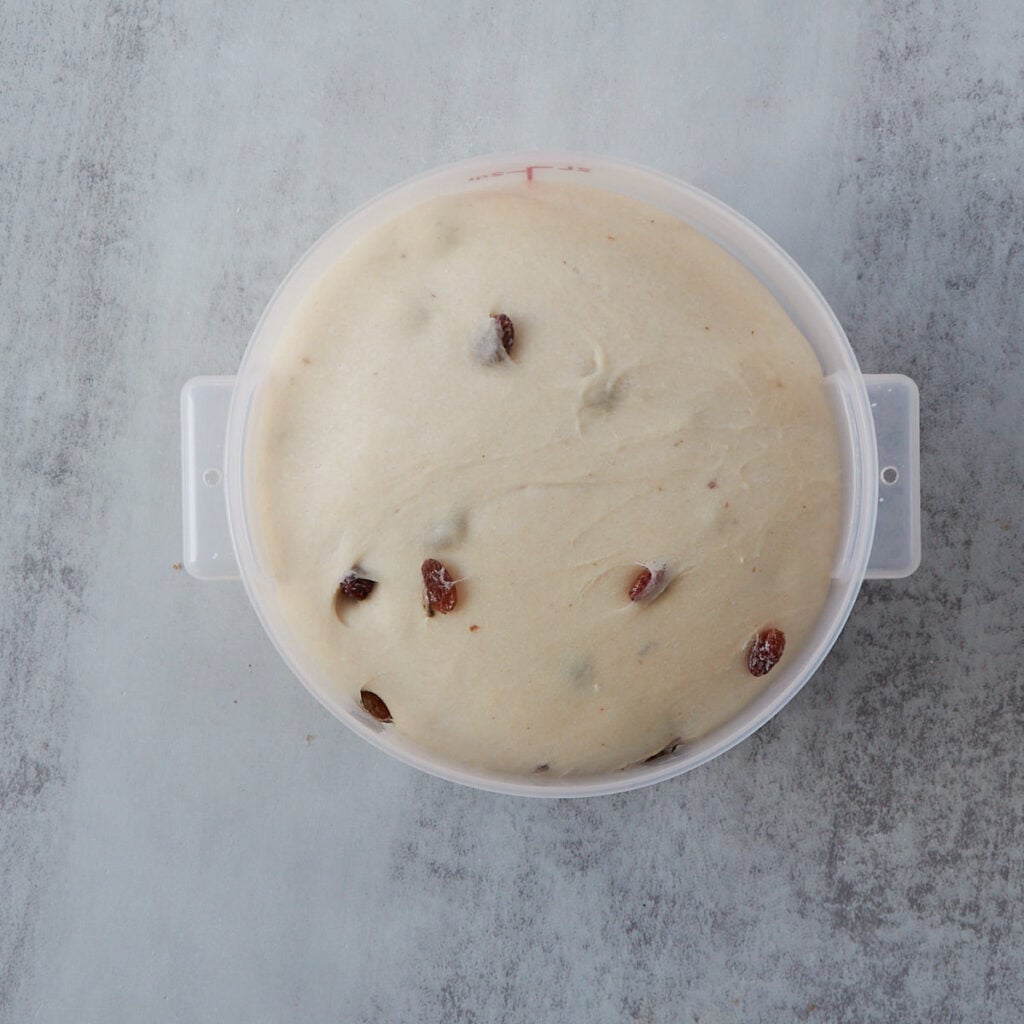
Step 4 – End of First Rise
Once the dough is doubled in size, punch it down and turn it out onto an unfloured surface.
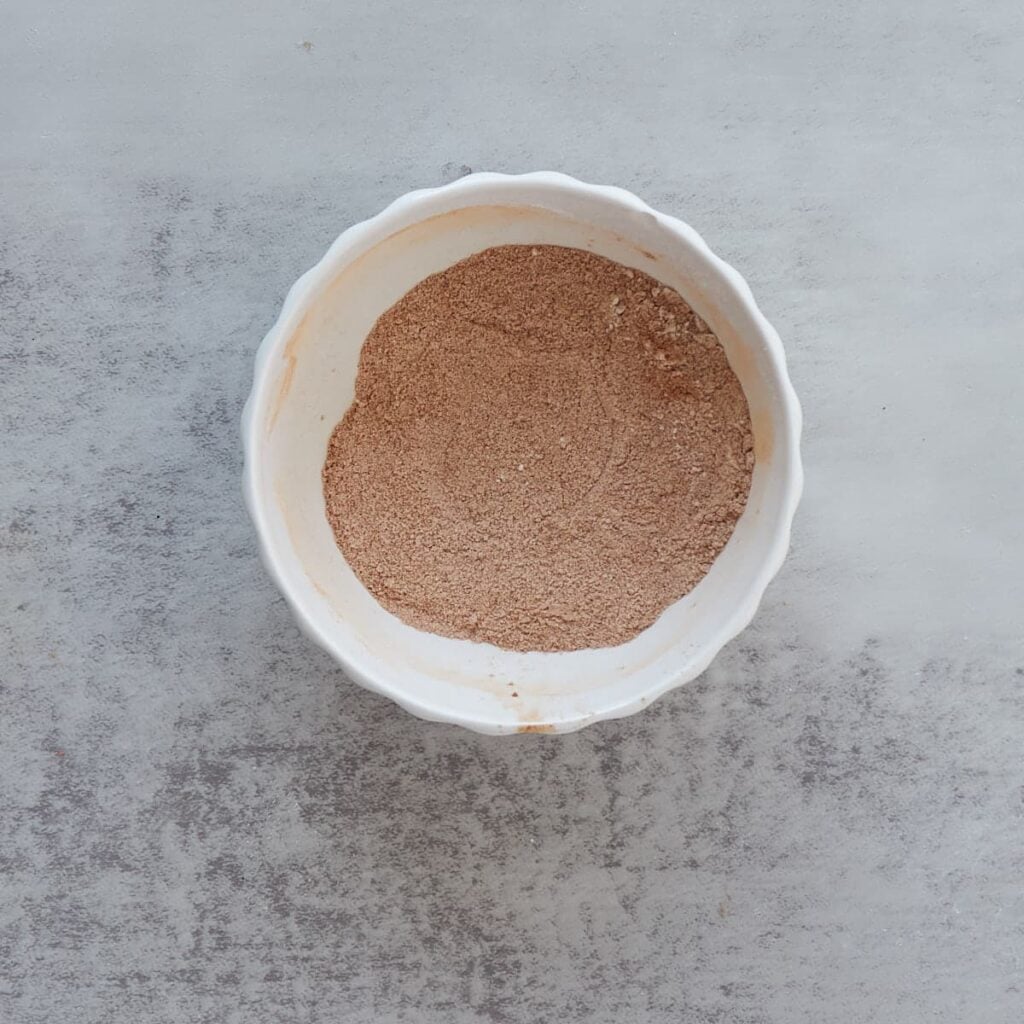
Step 5 – Mix filling
In a small bowl, combine the cinnamon and sugar.
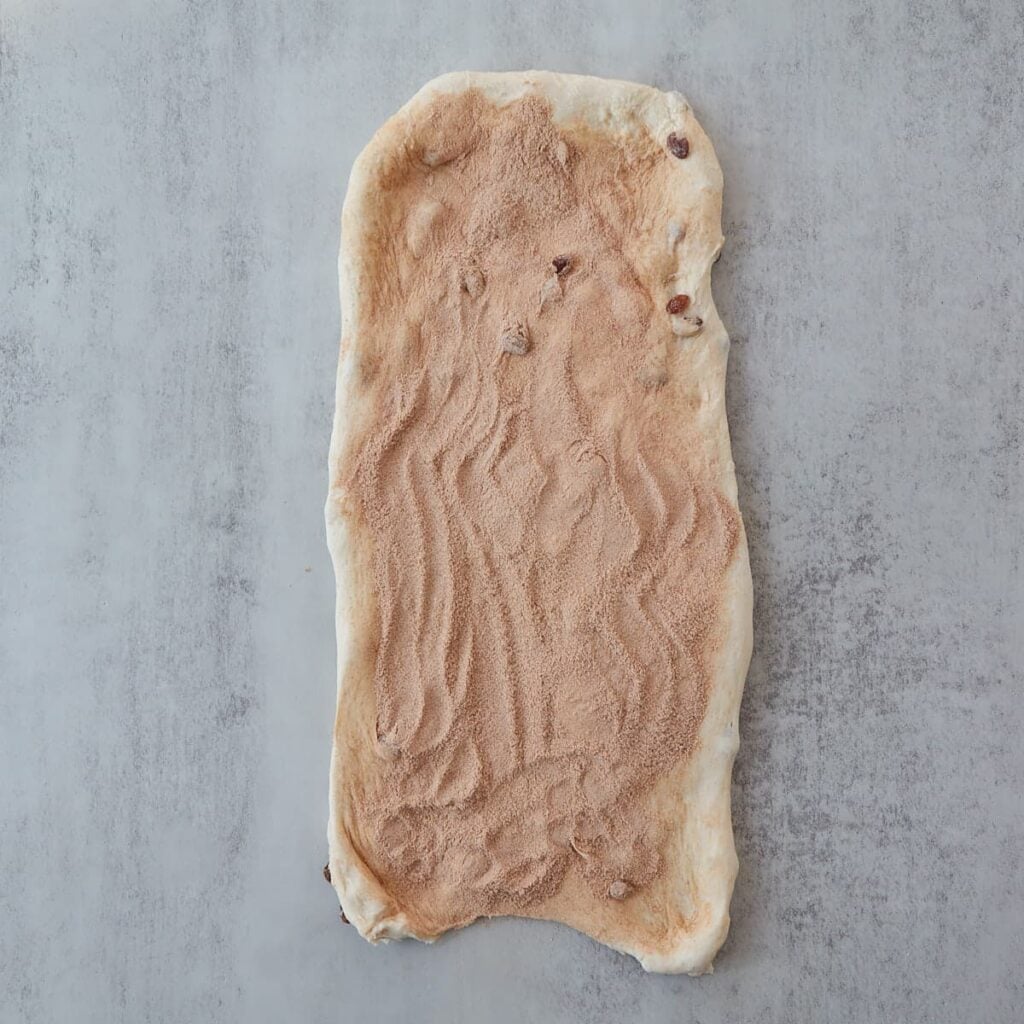
Step 6 – Shape
Roll the dough into a rectangle, making it about 18 inches long and the width about the same as the length of the pan. Pop any large bubbles. Sprinkle the filling over the dough.
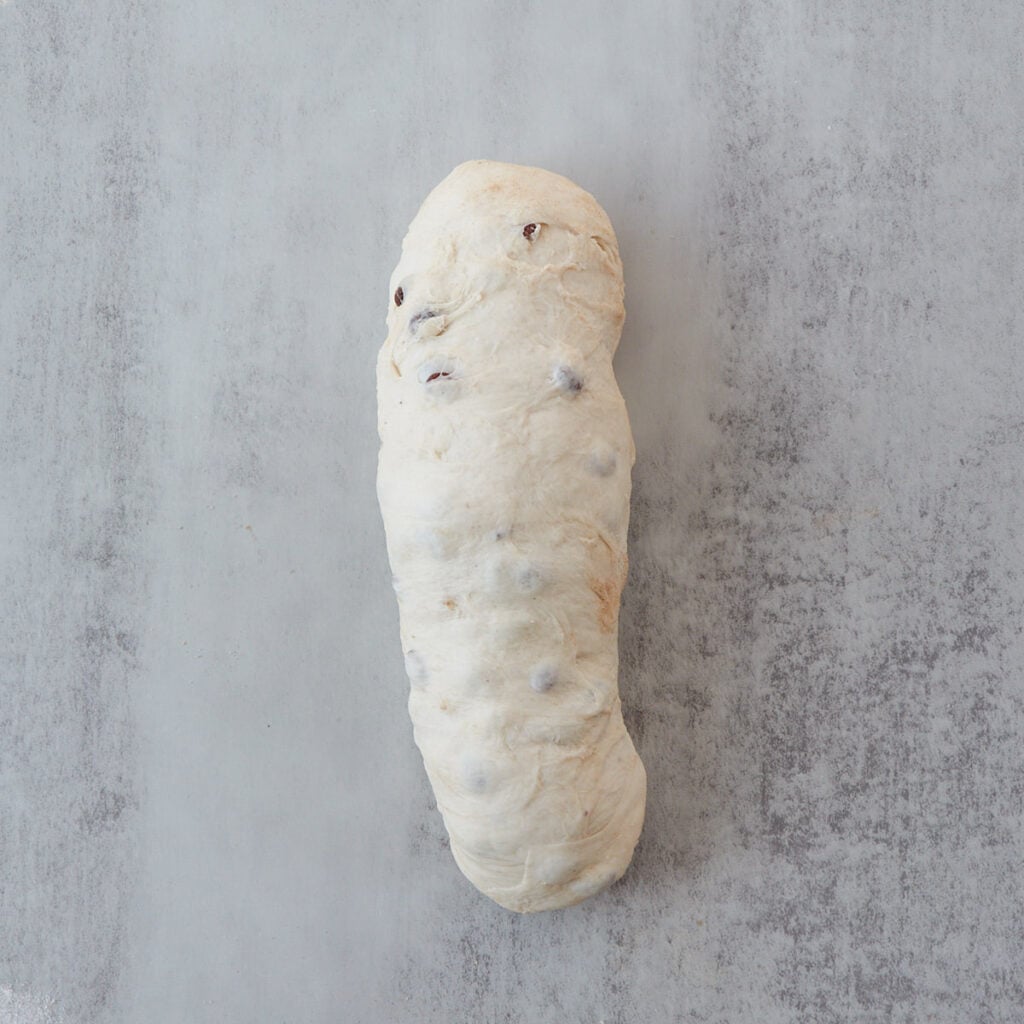
Step 7 – Shape
Starting on the shorter side, roll the dough up tightly into a log. As you roll, gently tuck the corners in to keep the filling from spilling out. Once fully rolled, pinch the ends together to seal the loaf.
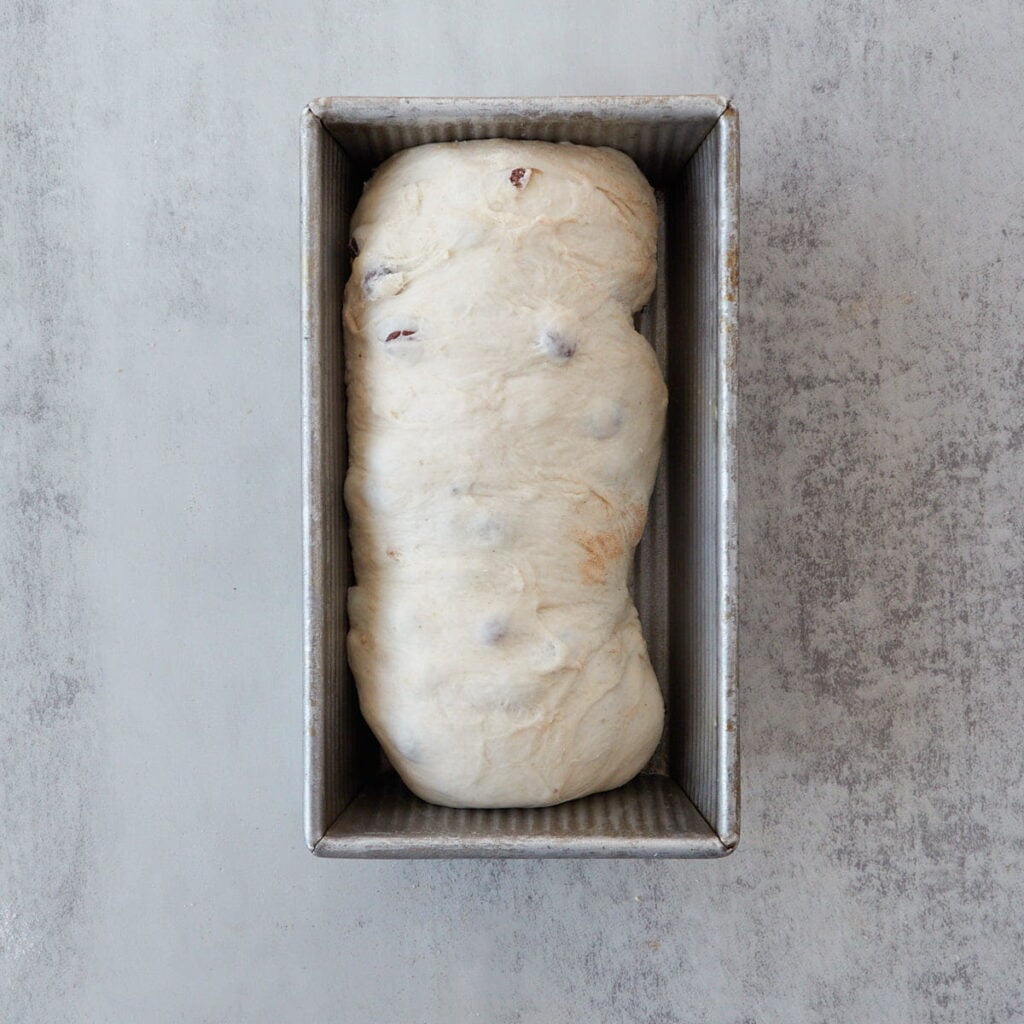
Step 8 – Second rise
Grease a 9″ x 5″ (1.25-pound) loaf pan. Place the log seam-side down into the greased pan.
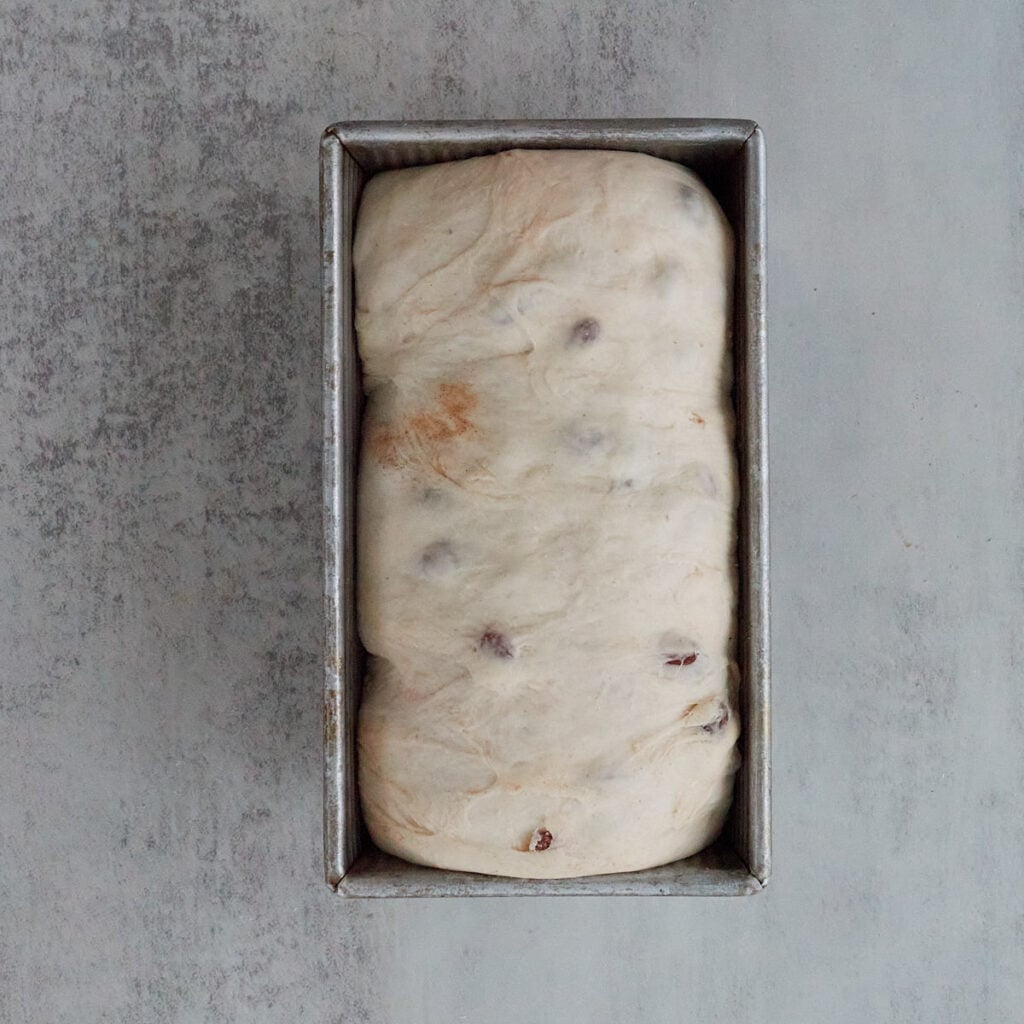
Step 9 – Second Rise
Cover the pan and let the dough rise at 80℉ for about 2 hours or until the center of the dough has risen about half an inch above the loaf pan. The dough should feel light, and if you poke the dough, the indent should stay.
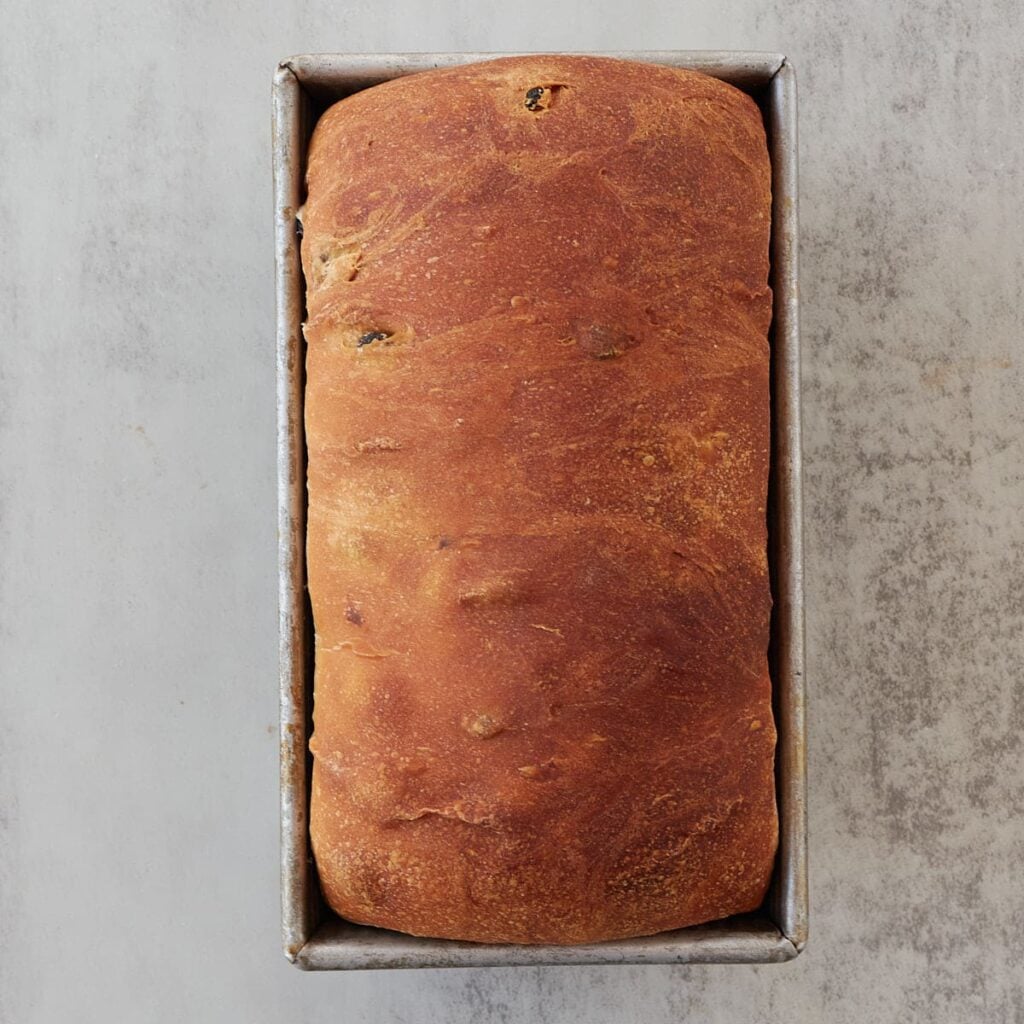
Step 10 – Bake
Bake at 350℉ for about 60 minutes or until the internal temperature reaches 190℉. If the top of your loaf is getting too dark, tent with foil for the last 15 minutes.
Recipe Tips
- If you notice or feel any large air bubbles on the surface of your loaf right before baking, gently pop them to prevent uneven baking or large hollow pockets. You can also lightly press a row of fork marks down the top of the loaf to release any trapped air.
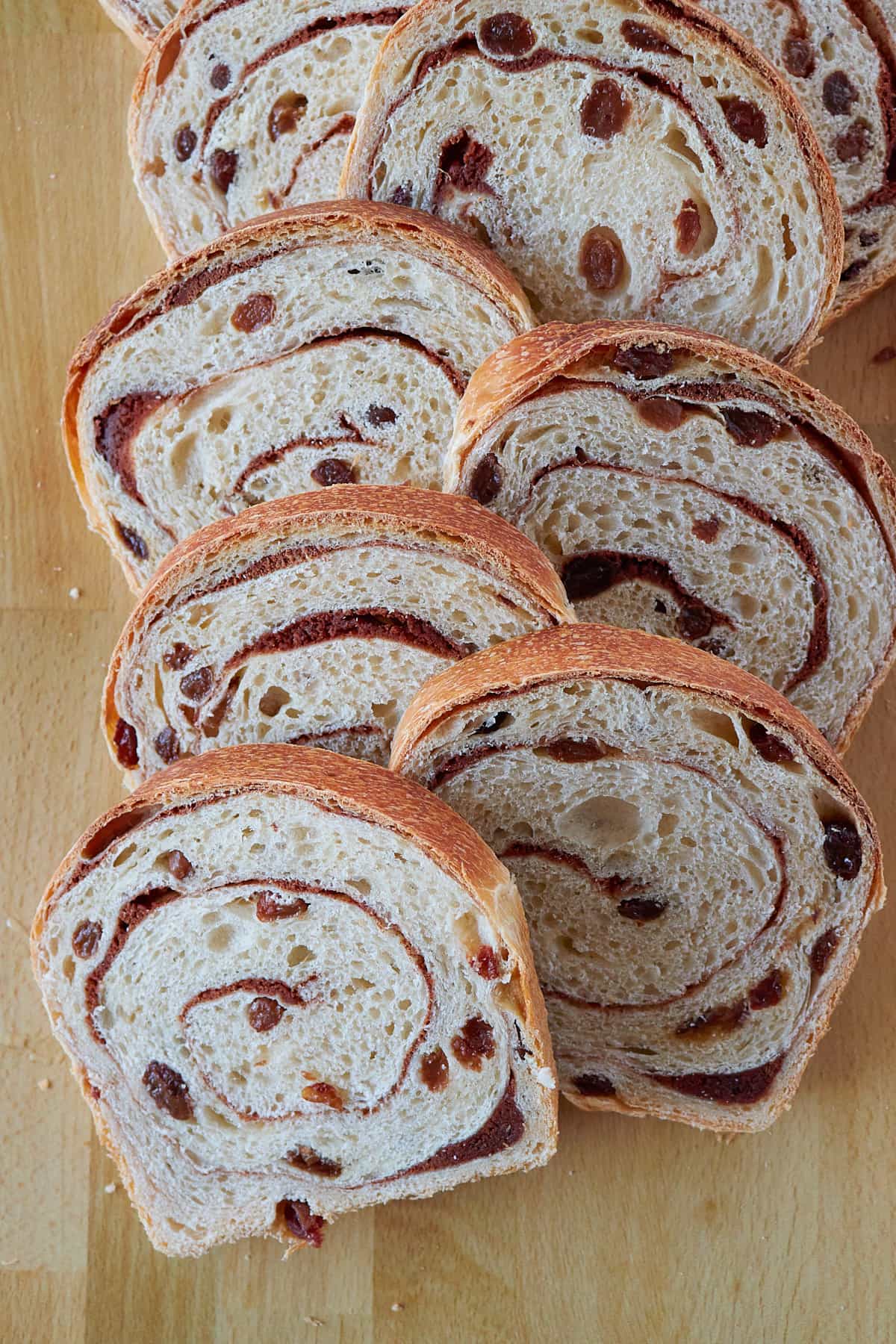
- To get a good swirl, roll the dough tightly up so that there are no gaps in the loaf.
- Make sure your dough is kept at the recommended temperature. Cooler conditions will slow down fermentation, and if the dough sits in an environment that’s too cold (typically the mid to low 60s°F), it may not rise at all. To keep your dough warm, use a bread mat (use code country10 for 10%) or proofing box.
- In summer months, if you are doing the overnight rise, use cooler liquids and reduce the sourdough starter amount to 125 grams. If the dough is still rising too quickly, you can reduce the starter amount to as low as 100 grams.
- Let the loaf cool before slicing. Cutting the bread warm can result in gapping between the swirl.
Sample baking schedule
This recipe can be made either the same day or you can let the dough rise overnight. Note the overnight rise will produce a tangier flavor.
Same Day Schedule- starter & dough temperature 80℉
| Step | Time |
| Feed sourdough starter a 1:1:1 ratio (60 grams starter: 60 grams flour: 60 grams water) | 8 am |
| Knead & First Rise | 12 pm |
| Shape & Second Rise | 4 pm |
| Bake | 6 pm |
Overnight Schedule- starter & dough temperature 70℉
| Step | Time |
| Feed sourdough starter a 1:5:5 ratio (20 grams starter: 100 grams flour: 100 grams water) | 10 am |
| Knead & First Rise | 10 pm |
| Shape & Second Rise | 8 am |
| Bake | 11 am |
Storage instructions
Once the loaf cools completely, you can store it in an airtight container or bag. It usually will last about 5 days unless humidity is high, which can cause it to mold quicker.
This bread also freezes well. You can either freeze the entire loaf uncut or sliced. To freeze an uncut loaf simply wrap in foil or place in a freezer safe ziplock. Once you are ready to eat the loaf place it on your counter covered overnight to thaw. To pull slices out individually, cut the loaf and place pieces of parchment paper in between each slice. Place in a freezer safe ziplock and pull slices out as needed.
Recipe FAQ
Yes, to make this recipe dairy-free, I recommend using full-fat coconut milk and plant-based butter.
I recommend using bread flour for the best result, but in a pinch, you can use all-purpose flour. I recommend reducing the amount of water added by 25 grams.
Yes, if you would like to bake the loaf later, shape it and add it to the loaf pan and let it rise for 30 minutes or so on the counter before placing it in the fridge for up to 12 hours.
The dough will feel sticky at first when you begin kneading. Allow time for the gluten to develop before deciding if it needs more flour, often times the dough will naturally become less sticky and easier to handle. If it still feels overly sticky after kneading, slowly add a small amount of flour (about 25-50 grams) until it comes together.
Keep in mind that extra stickiness can also be a sign of an acidic starter, so try to use your starter at its peak, before it begins to fall.
More sourdough Bread Recipes
Sourdough Bread Recipes
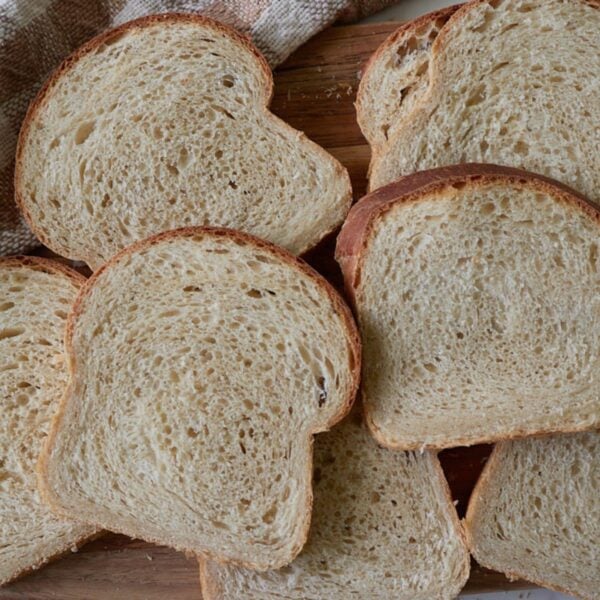
Same Day Sourdough Sandwich Bread

Sourdough Discard Recipes
The Easiest Sourdough Discard Sandwich Bread Recipe (Dairy-Free)

Soft Sourdough Bread Recipes
Same Day Sourdough Dinner Rolls
Sourdough Bread Recipes
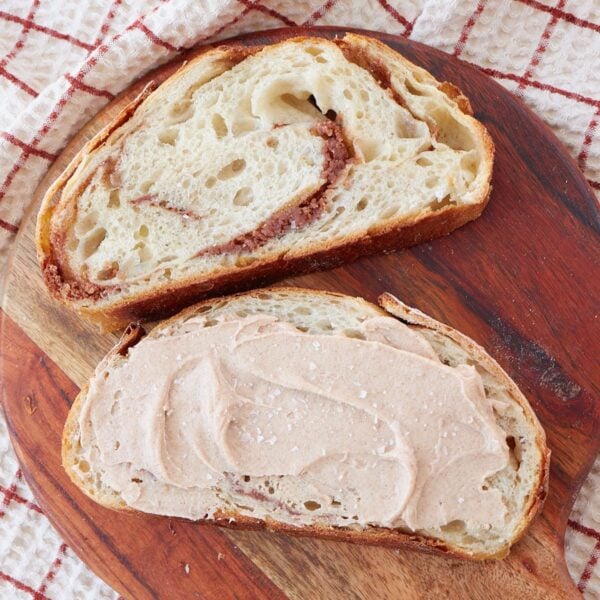
Cinnamon Honey Butter Sourdough Bread
Tried this Sourdough Cinnamon Raisin Bread or another recipe from the site? I’d love to hear about it! Drop a star rating and share your thoughts in the comments—can’t wait to see what you’re baking!
Sourdough Cinnamon Raisin Bread
Ingredients
Feed Sourdough Starter
- 60 grams sourdough starter, ¼ cup
- 60 grams all-purpose or bread flour, ½ cup
- 60 grams water, ¼ cup
Dough
- 190 grams water, warmed to 100℉, ¾ cup
- 120 grams milk, warmed to 100℉, ½ cup
- 180 grams active sourdough starter (levain), ¾ cup
- 50 grams sugar, ¼ cup
- 57 grams butter, melted, salted or unsalted will work, ¼ cup
- 10 grams salt, 2 teaspoons
- 550 grams bread flour, 4 cups
- 100 grams raisins, ⅔ cup
Filling
- 50 grams sugar, 3 Tablespoons
- 30 grams flour, 3 Tablespoons
- 12 grams cinnamon, 1 ½ Tablespoons
Instructions
- Feed your starter: About 4 hours before making the loaf, build a levain or feed your sourdough starter at a 1:1:1 ratio. Add an extra 5-10 grams of each ingredient if you don't have any extra starter to keep your starter going. Cover and let it rest at 80°F until bubbly and doubled in size. 60 grams sourdough starter, 60 grams all-purpose or bread flour, 60 grams waterSkip this step if your starter is already activated and ready to bake with. Note: If you want to start the loaf in the morning, you can feed your starter the night before (about 10 hours before) a 1:5:5 ratio or 20 grams starter: 100 grams flour: 100 grams water and leave at 70-72℉.
- Knead dough: Mix the water, milk, sourdough starter, sugar, salt, butter, flour, and raisins in a stand mixer or by hand. After mixing, knead the dough for 10–15 minutes either in a stand mixer with a dough hook on low speed or by hand on a lightly floured surface. It will feel sticky at first, but as the gluten develops, the dough will strengthen and become tacky and easier to handle. If after a couple of minutes of kneading, it is still extremely wet and sticky, add up to 50 more grams of flour until the dough comes together.Note: If you are doing the overnight rise, use room temperature water and milk. 190 grams water, warmed to 100℉, 120 grams milk, warmed to 100℉, 180 grams active sourdough starter (levain), 50 grams sugar, 57 grams butter, melted, 10 grams salt, 550 grams bread flour, 100 grams raisins
- Windowpane test: To determine when the dough is done kneading, perform a windowpane test. This should be done on relaxed dough so let your dough rest for a minute or two before completing the test. Gently pull a section of the dough thin enough to see light through. If it doesn’t tear, then it is ready. If it tears, continue kneading for a few more minutes.
- Bulk fermentation: Shape the dough into a ball and place it into a 2-quart straight-edge container or bowl. Cover the bowl and let it rise. Opt 1- Same Day Rise: Leave the dough at 80℉ to rise for 3-4 hours or until doubled in size. Opt 2- Overnight Rise: Leave the dough at 68-72℉ to rise for 8-12 hours or until doubled in size.
- Mix filling: In a small bowl, combine the filling ingredients.50 grams sugar, 30 grams flour, 12 grams cinnamon
- Prepare the pan: Grease an 9″ x 5″ (1.25-pound) loaf pan.
- Shape: Once the dough has doubled, punch it down and turn it out onto an unfloured surface. Roll the dough into a rectangle, making it about 18 inches long and the width about the same as the length of the pan. Sprinkle the filling over the dough. Roll up the dough tightly, starting on the shorter side. As you roll, gently tuck the corners in to keep the filling from spilling out.
- Second rise: Place the log seam-side down into the prepared pan. Cover the pan and let the dough rise at 80℉ for about 2 hours or until the center of the dough has risen about half an inch above the loaf pan. The dough should feel light, and if you poke the side of the dough, the indent should stay.
- Bake: Bake at 350℉ for about 60 minutes or until the internal temperature reaches 190℉. Tent with foil for the last 15 minutes to prevent the top of the loaf from turning too brown.
Notes
- If you notice or feel any large air bubbles on the surface of your loaf right before baking, gently pop them to prevent uneven baking or large hollow pockets. You can also lightly press a row of fork marks down the top of the loaf to release any trapped air.
- To get a good swirl, roll the dough tightly up so that there are no gaps in the loaf.
- .Let the loaf cool before slicing. Cutting the bread warm can result in gapping between the swirl.
- If you would like to bake the loaf later, shape it and add it to the loaf pan, then let it rise for 30 minutes or so on the counter before placing it in the fridge covered for up to 12 hours.
- See the post for sample baking schedules.
Nutrition
Nutrition information is automatically calculated, so should only be used as an approximation.


This bread turned perfect! Thank you for a great recipe!
Yay happy to hear that! Thanks for sharing.
Mine didn’t rise much, but I’m new to Sourdough. It was easy to make and tastes sooo Good still!!
My husband loves it!
Hi Desiree so glad you still liked it! It could be your starter isn’t as strong or your dough was cooler which can lead to longer rise times. If you find your dough is cooler you can opt for an overnight first rise instead to give the dough time to rise.
This turned out great. Instructions are great. Delicious. I’ve made it 3 times. Thank you.
I’m thrilled to hear you liked it! Thanks for leaving a review.
This cinnamon raison bread is so-o-o good! Just baked yesterday and going fast. It looks pretty with a lovely swirl, good moisture and crumb, and tastes yummy! Mild sourdough flavor and cinnamon sugar create a perfectly balanced flavor!! Will definitely be making this again…
So happy to hear you like it! Thanks for sharing.
Hi
Have you ever soaked the raisins in vanilla for a few hours prior to prep? They are yummy that way.
I haven’t but I’m going to have to try that thanks!
Can I add yeast to your soft sourdough cinnamon raisin bread? I’m not very patient.
I LOVE the format of your recipes, the explanations, the tips….. The best Ive seen yet 🙂
Thanks Judy! Yeah if you want to add yeast I would do a packet, so about 5-7 grams instant yeast and mix it in with the remainder of the ingredients. The 1st rise will likely take 1-2 hours to double depending how warm it is and then the second rise about 30mins to an hour.
Yeast breads typically rise more than full sourdough, so I actually would recommend splitting the dough in half and baking it into 2 8×4.5″ pans. I think it will be too much for a single 9×5. With that you may want to make 1.5x of the cinnamon sugar filling to make sure you have enough for 2. With 2 pans it will likely bake quicker as well so I would do about 25 mins at 350 and check if they are at temp. Please let me know how it goes!
This is one of my new favorite loaves! It’s soft and full of flavor and just lightly sweetened. We have been eating it as toast for breakfast every morning.