
This post may contain affiliate links . Read my full Disclosure Policy.


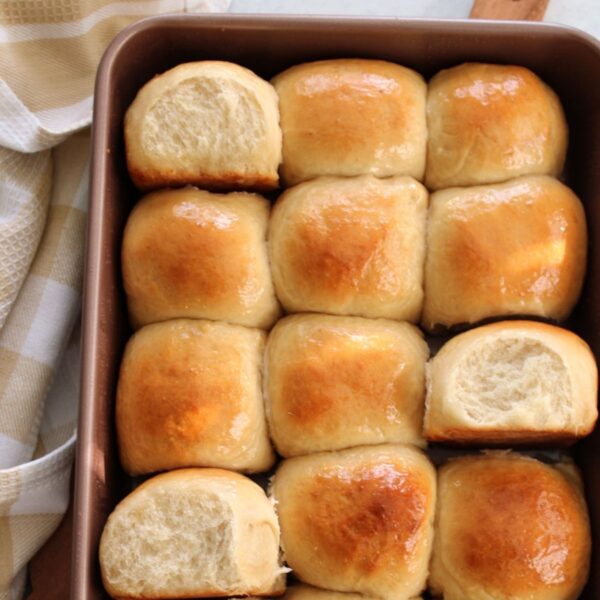
These Sourdough Dinner Rolls are super soft, fluffy, and full of buttery flavor. They can be made in one day, making them a quick and easy sourdough recipe. Made with just 7 simple ingredients, these rolls are sure to become your new go-to dinner roll.

Save & Summarize
“My family begs for these rolls!” -Brooke
Whether you are brand new to sourdough or have been making it for years, this recipe is perfect for all skill levels. It’s straightforward and requires minimal steps with a forgiving timeline. These soft, pillowy rolls covered with butter are the perfect combination, making it hard to have just one!
One of the many reasons to love the holiday season is all of the delicious holiday baking recipes! These Sourdough Dinner Rolls are the classic rolls that are always enjoyed during the holiday season, just like Sourdough Garlic Knots, Artisan Sourdough Bread, or Sourdough Focaccia. And don’t forget the classic dishes with a sourdough twist, like this Sourdough Corn Casserole or Veggie Sourdough Macaroni and Cheese made with sourdough discard.
Why You’ll Love This Sourdough Recipe
- Made in one day- This Sourdough Dinner Roll recipe can be made in one day, or you can refrigerate the dough to make them ahead of time. See notes in the sample schedule. If you want an even quicker option, check out my Sourdough Discard Dinner Rolls recipe.
- Incredible flavor and texture- These rolls are the soft, buttery dinner rolls you know and love, but with a slight sourdough tang and all the extra fermentation benefits.
- Naturally leavened- This recipe is made with an active sourdough starter, so there is no commercial yeast required!
- Great for the holidays- These soft Sourdough Dinner Rolls are the perfect addition to your Thanksgiving or Christmas dinner and go great with any meal you have, including turkey or ham.
- Perfect for sliders- These rolls are the perfect size for sliders, or use my Sourdough Hamburger Bun recipe for a full-sized burger. If you want a sweet roll, check out my Sourdough Hawaiian Roll recipe!
Sourdough Roll Recipe Ingredients
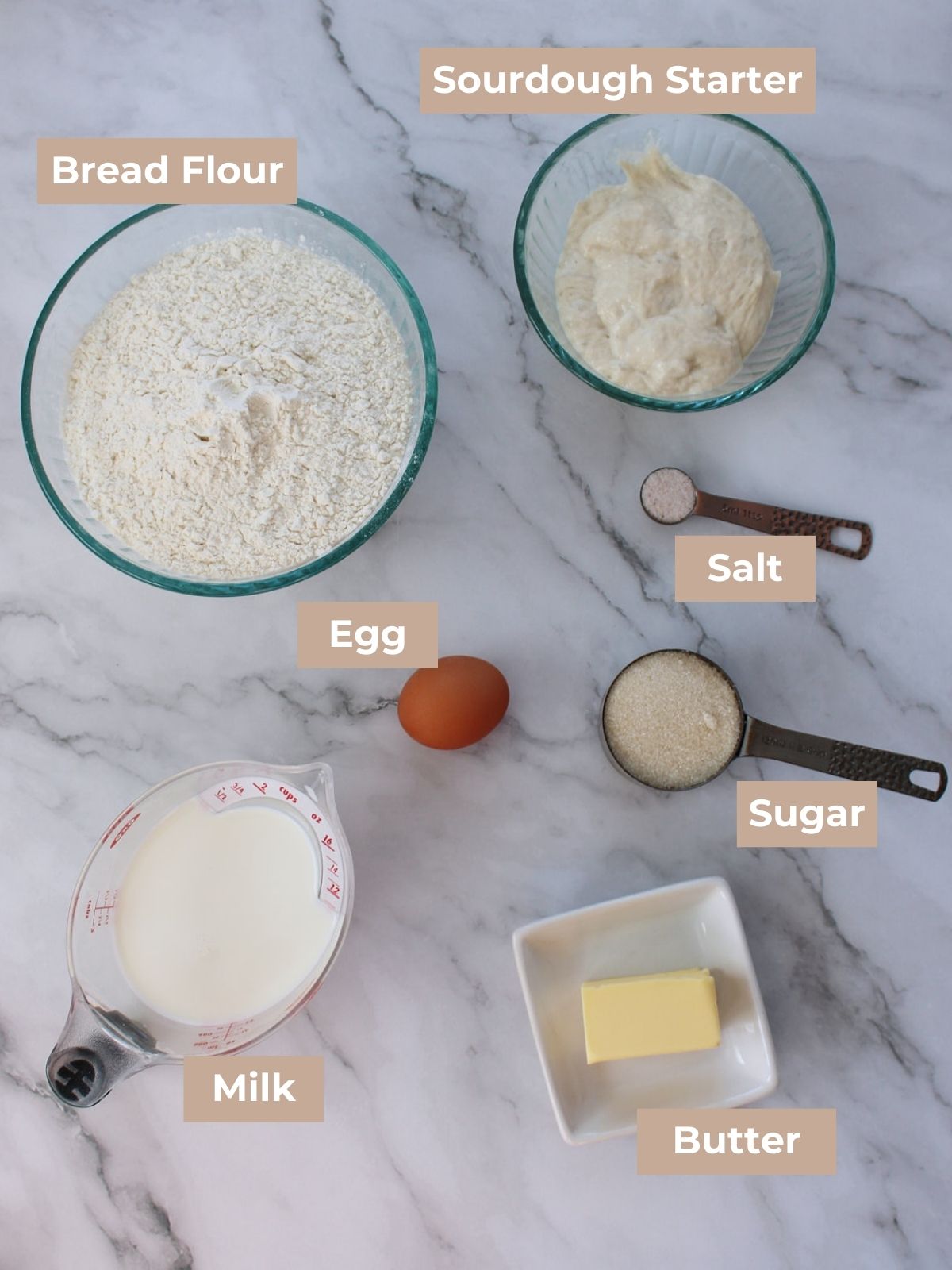
- Active sourdough starter – An active & bubbly sourdough starter is one that has been recently fed, has doubled in size, and is bubbly.
- Milk – I like to use whole milk for the extra fat content. This ensures a super soft roll. For a dairy-free option i recommend full-fat coconut milk.
- Butter- Use softened butter so it will mix into the dough easily. To control the amount of salt, use unsalted butter. If you use salted butter, reduce the amount of added salt.
- Bread flour – I recommend using bread flour over all-purpose flour because it has a higher protein content and is better at absorbing liquid in a higher hydration dough.
See all the ingredients and amounts in the recipe card below.
How to Make Soft Sourdough Rolls
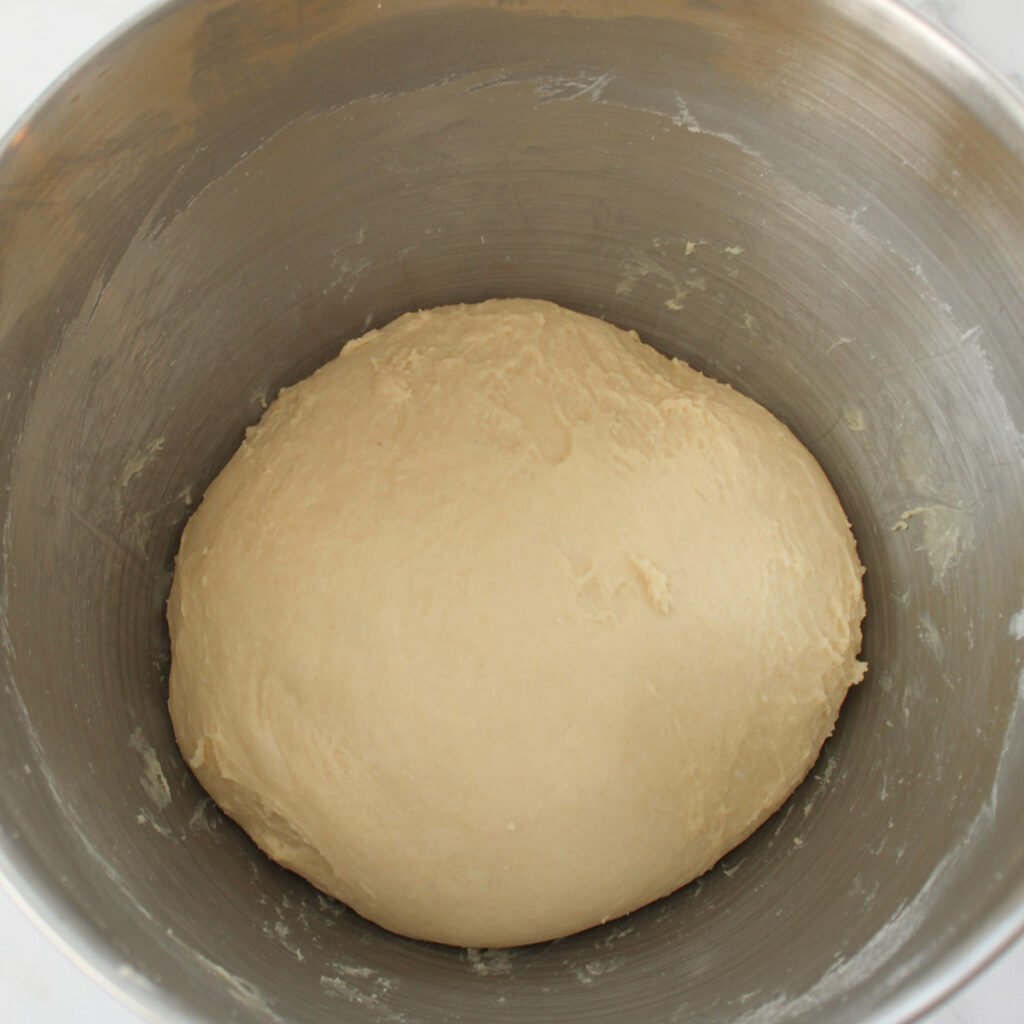
Step 1: Warm the milk and soften the butter. Add all the dinner roll ingredients to the bowl of a stand mixer and mix together with the dough hook attachment. I use my Bosch mixer to mix the dough on medium speed. You can use your hands if you do not have a mixer but you will need to knead for a longer period of time.
Knead the dough on medium speed for 15-20 minutes until the dough is pulling away from the sides of the bowl. The dough will seem sticky at first but as it kneads it will come together. You can add a little extra flour if it is too sticky.
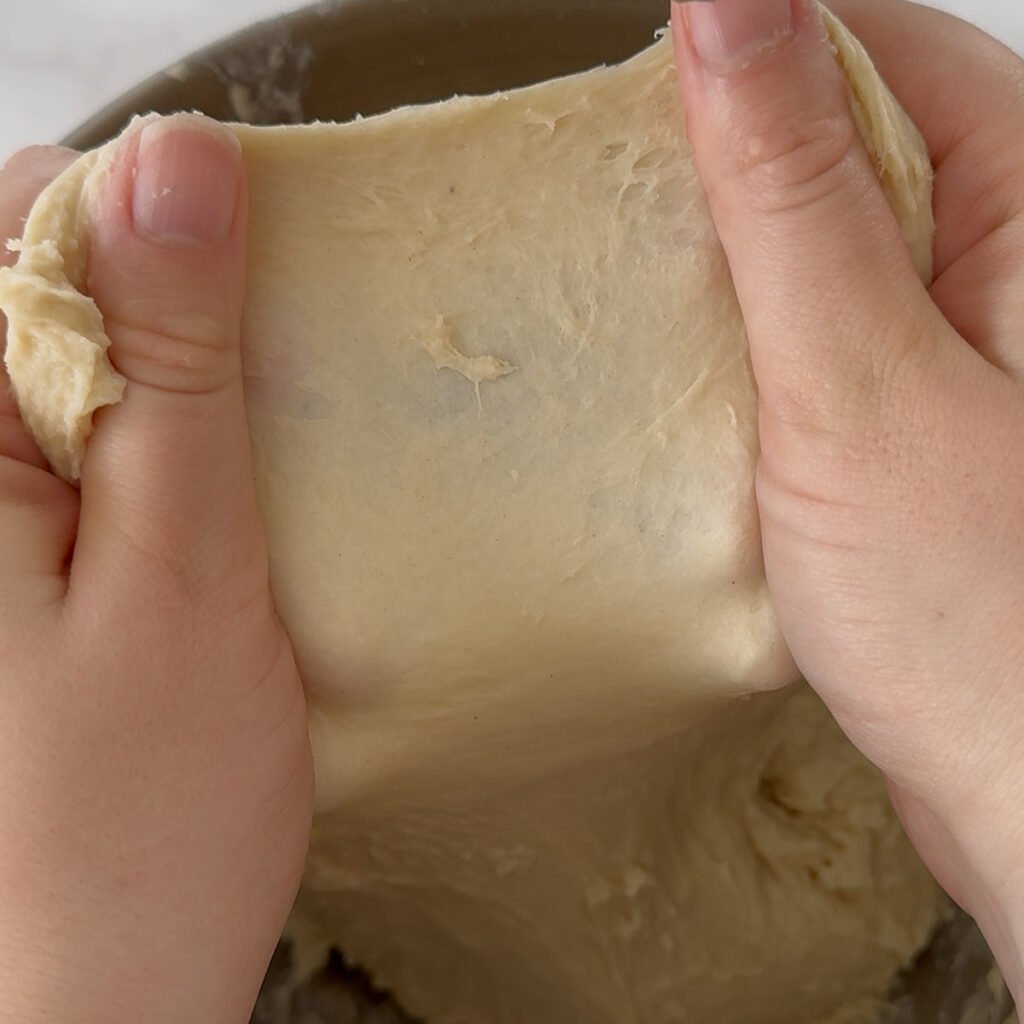
Step 2: Let the dough rest for 10 minutes. Perform the windowpane test by pulling a section of the dough thin enough to see light through without it tearing. If it doesn’t pass, continue to knead for another 5 minutes.
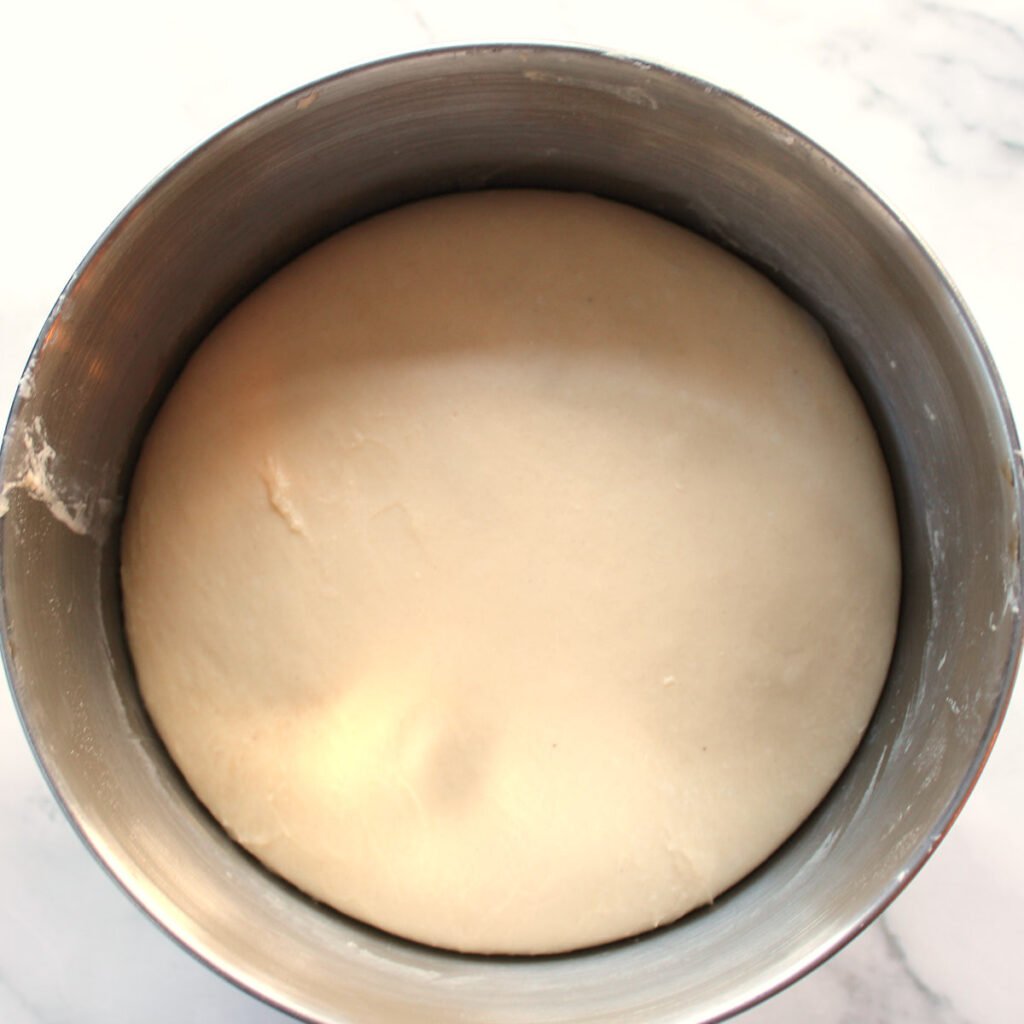
Step 3: Place the dough onto a lightly floured work surface and form the dough into a ball.
Place into a mixing bowl or 2 quart straight edge container and cover for bulk fermentation. I prefer to cover it with a lid or dinner plate rather than a tea towel to keep the dough from drying out. Keep the dough at 80°F for a shorter rise. At this temperature, the dough will take about 5-6 hours to double in size. Alternatively, if you would rather have the rolls rise overnight, leave them around 75-77°F for 8-12 hours to rise.
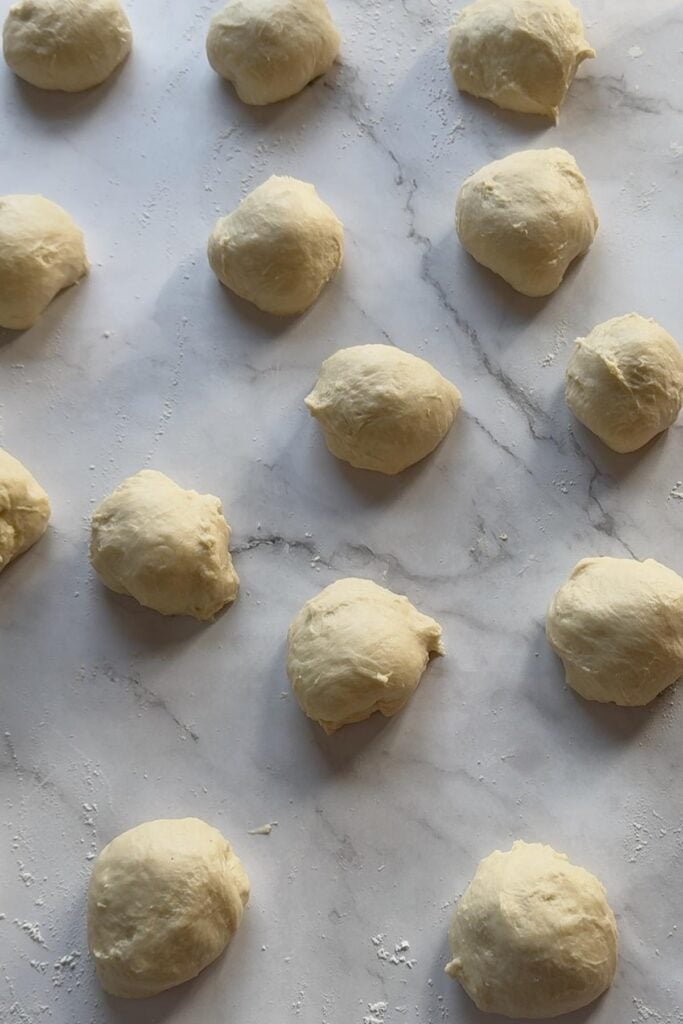
Step 4: Once doubled, punch down the dough and place it on a lightly floured surface. Divide the dough ball into 15 even balls (roughly 85 grams each).
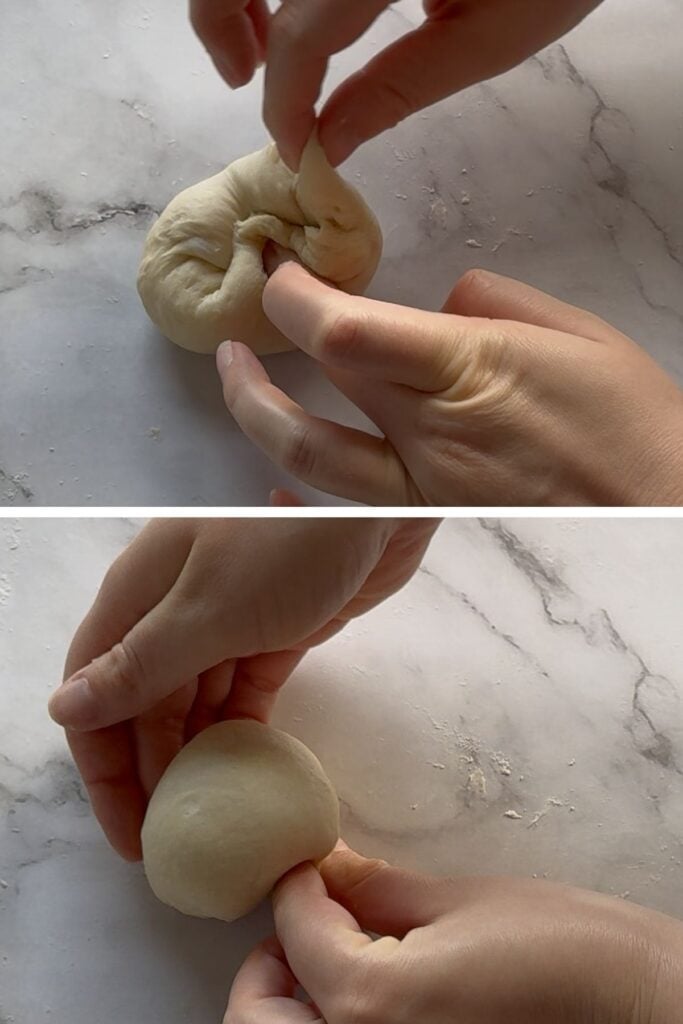
Step 5: To shape the dough balls, gather and pinch the edges together, then place the dough seam-side down. With your hand cupped, gently rotate the dough in a circular motion, pulling it toward you to create a smooth, taut surface.
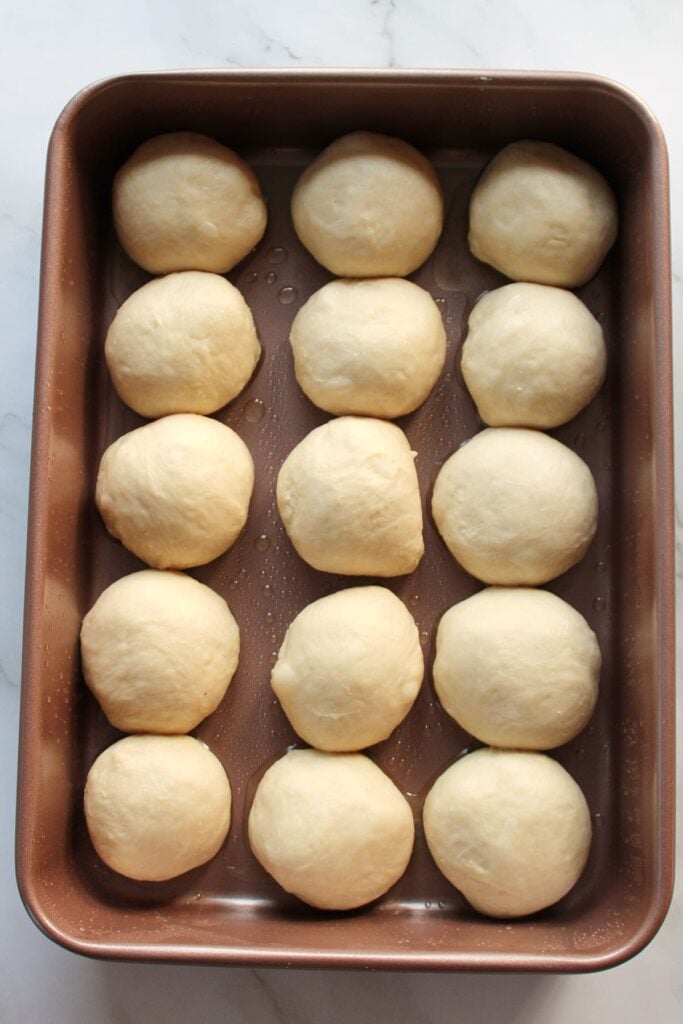
Step 6: Place the rolls in a greased 9×13 baking dish. Let the dough balls rise at 80°F for 2-3 hours for the second proof until puffy and risen.

Step 7: To determine if the rolls are ready, perform the poke test by lightly flouring a spot on one of the rolls and poking the dough with your finger. If the dough springs back immediately, it needs more time. If the dough doesn’t spring back at all, they are starting to go over and should be baked immediately. And, if they slowly spring back, they are just right.
Preheat the oven to 350°F. Brush the tops of the rolls with an egg wash to get golden brown rolls.
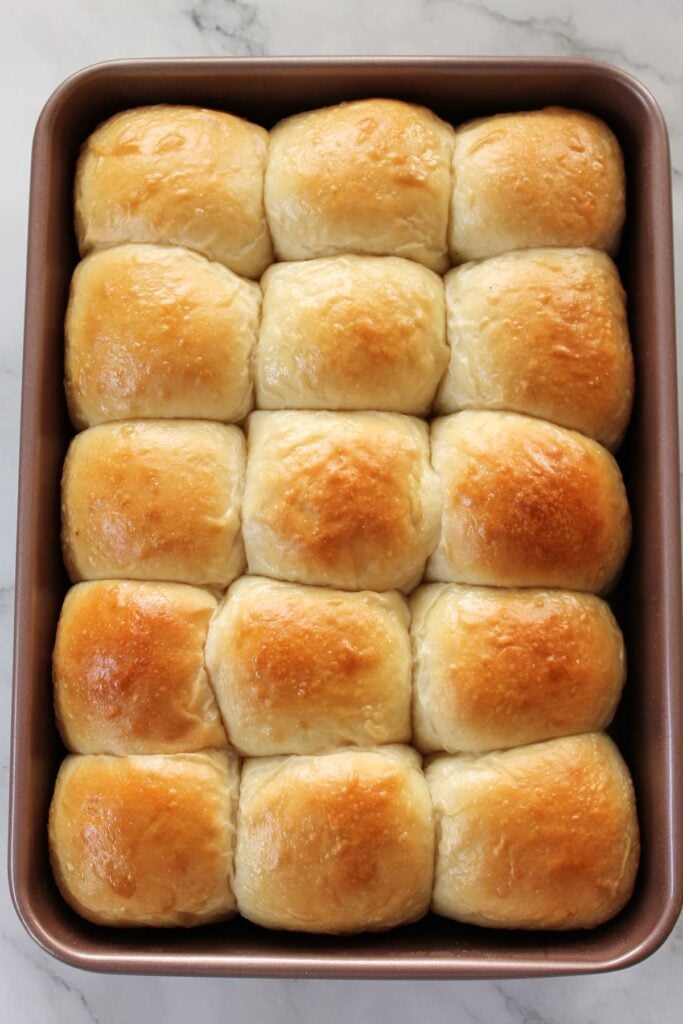
Step 8: Bake for 25-30 minutes until golden brown and rolls have an internal temperature of 190°F.
Remove from the oven and brush with 1 Tablespoon melted butter. Sprinkle the tops with flaky sea salt.
Quick Sourdough Rolls Recipe Tips
- Make sure to allow the dough to rise and become puffy. This is what helps create a soft and fluffy texture in the sourdough rolls.
- If the dough is rising too slowly at room temperature, use a bread mat (use code country10 for 10%) or proofing box to keep the dough warm to ensure it will rise properly. You can also try leaving the dough in a warm place such as the oven with the light on, above the refrigerator, or near a heating vent.
- Divide the dough into equal pieces so that the rolls will rise and bake evenly.
- Let the rolls rise until doubled (or a little more) in the pan before baking. If they don’t proof long enough, they’ll bake up dense and pale instead of light and golden. The egg wash will also help give the rolls perfectly golden brown tops.
- Use your sourdough starter at peak. Using a bubbly and active starter will set you up for success and help your dough rise properly.

Sample baking schedule
The total time that the rolls will take to rise and bake can vary depending on a few factors. The temperature of your dough, kitchen, humidity, and strength of your starter will all impact the times, so while this will give you an estimate, it is best to look at the signs the dough is ready to move on.
Same Day Schedule
This schedule assumes a dough temperature of 80°F.
| Step | Time |
| Feed sourdough starter 1:5:5 ratio at 72°F (20 g starter: 100 g flour: 100 g water) | 10 pm |
| Mix dough together | 8 am |
| First rise | 8:30 am |
| Shape rolls | 1:30 pm |
| Second rise | 1:45 pm |
| Bake | 4pm |
Overnight Schedule
If your kitchen is cooler (low 70s), an overnight rise will give the dough more time to rise.
| Step | Time |
| Feed sourdough starter 1:1:1 ratio (70g starter: 70g flour: 70g water) | 4 pm |
| Mix dough together | 9:30 pm |
| First rise | 10 pm |
| Shape rolls | 8 am |
| Second rise | 8:15 am |
| Bake or refrigerate roll until ready to bake (within 12 hours) | 11 am |
How to Store Soft Sourdough Rolls
To store the dinner rolls, let them cool completely and then store them in an airtight container or ziplock bag for up to 4 days. The dinner rolls will also freeze well. Let them cool completely, and then add them to a freezer bag and freeze for up to 3 months. To thaw, remove them from the freezer and let them defrost on the counter.
How to Freeze this Sourdough Dinner Rolls Recipe
If you would like to prep the sourdough dinner roll dough ahead of time and bake fresh later, it is really simple to do so! This can be especially great to get this recipe prepped ahead for the holidays or just to have fresh baked rolls whenever you’d like them. I recommend freezing the dough for up to a week for best results. Here is how to do so:
- After shaping, place the rolls on a sheet pan and freeze until solid. Transfer the frozen rolls to a freezer-safe ziploc bag for storage.
- When you’re ready to bake, arrange them on a greased pan and let them thaw and rise. At room temperature, this took about 9 hours, but you can speed it up by putting them in a warm spot.
- Once they’re puffy, brush with egg wash and bake as directed.
Sourdough Dinner Roll Recipe FAQs
Yes, if you prefer to use honey, reduce the milk to 270 grams and add 60 grams of honey.
I recommend using bread flour, but in a pinch, you could substitute all-purpose flour. Keep in mind that all-purpose flour does not absorb liquid as well, so you will need to reduce the milk by 25 grams.
To reheat the rolls, brush them with butter and then place them in the oven at 350°F for 7-10 minutes until warmed through.
Yes! The good bacteria in your sourdough starter will fight off any unwanted bacteria so it is perfectly safe to do so.
If your rolls came out pale after baking, they likely needed more time for the second rise. Allowing the rolls to fully double (or even a bit more) in the pan will help them bake up soft, fluffy, and golden brown.
More sourdough bread recipes
Soft Sourdough Bread Recipes
Sourdough Discard Hawaiian Rolls

Same Day Sourdough Recipes
Sourdough Hamburger Buns

Recipes with Sourdough Discard
Sourdough Discard French Bread

Sourdough Bread Recipes
Sourdough Garlic Knots
Tried this Sourdough Dinner Rolls or another recipe from the site? I’d love to hear about it! Drop a star rating and share your thoughts in the comments—can’t wait to see what you’re baking!

Quick Sourdough Rolls Recipe
Ingredients
- 310 grams milk, warm (100°F), 1 ¼ cup
- 57 grams butter, softened, ¼ cup
- 1 large egg, 50 grams
- 100 grams sugar, ½ cup
- 5 grams salt, 1 teaspoon
- 200 grams bubbly sourdough starter, scant 1 cup
- 575 grams bread flour, 4 cups
For topping
- Egg wash – 1 egg + 1 tablespoon water
- 14 grams melted butter, 1 tablespoon
- Flaky sea salt
Instructions
- Mix together all the ingredients in a stand mixer with a dough hook. I use my Bosch mixer.310 grams milk, warm (100°F), 57 grams butter, softened, 1 large egg, 100 grams sugar, 5 grams salt, 200 grams bubbly sourdough starter, 575 grams bread flour
- Knead the dough on medium speed for 15-20 minutes until the dough is pulling away from the sides of the bowl. The dough will seem sticky at first but as it kneads it will come together. If it is still sticky add a little extra flour.
- Let the dough rest for 10 minutes. Perform the windowpane test by pulling a section of the dough thin enough to see light through without it tearing. If it doesn’t pass, continue to knead for another 5 minutes.
- Place the dough onto a lightly floured counter and form the dough into a ball.
- Place into a bowl covered and keep the dough at 80F. At this temperature, the dough will take about 5-6 hours to double in size. Alternatively, if you would rather have the rolls rise overnight leave them at room temperature for 8-10 hours to rise.
- Punch down the dough and place it on the counter. Divide the dough ball into 15 even balls (roughly 85 grams each).
- To shape the dough balls, gather and pinch the edges together, then place the dough seam-side down. With your hand cupped, gently rotate the dough in a circular motion, pulling it toward you to create a smooth, taut surface.
- Place the rolls in a greased 9×13 pan. Let the dough balls rise at 80℉ for 2-3 hours until puffy and risen. To determine if they are ready perform the poke test by lightly flouring a spot on one of the rolls and poking the dough with your finger. If the dough springs back immediately it needs more time, if the dough doesn’t spring back at all they are starting to go over and needs to be baked immediately, and if they slowly spring back they are just right.
- Preheat the oven to 350℉. Brush the tops of the rolls with an egg wash to get golden brown rolls. Bake for 25-30 minutes until golden brown and rolls have an internal temperature of 190℉. Egg wash – 1 egg + 1 tablespoon water
- Remove from the oven and brush with 1 Tablespoon melted butter. Sprinkle the tops with flaky sea salt.14 grams melted butter, Flaky sea salt
Notes
- You can put the rolls in the fridge and bake them later by shaping them and letting them rise. Once they are puffy and about ready to bake cover and place in the fridge. I wouldn’t recommend going longer than 12 hours. You can bake them directly from the fridge.
- You can reduce the sugar in the recipe if you want a stronger tang from the sourdough. My kids prefer a more mild, sweeter flavor.
- If the rolls are not rising find a warmer spot for them to rise. Above the refrigerator, in the oven with the light on, or near a heating vent are all good options if you do not have a proofing mat or box.
Nutrition
Nutrition information is automatically calculated, so should only be used as an approximation.



They came out beautifully, although far too sweet for my taste
I have made a lot of sourdough dinner rolls & this recipe is the absolute best! Wonderful flavor & is a lot easier to make because there is less babying than other sourdough recipes. I was 30g short on my sourdough starter so I had to add 30-40 extra minutes on my rise.
Thanks Sarah! I’m so happy you like the recipe!
I made these dinner rolls twice and really loved them! Just wondering if I can use this recipe and roll out 8 buns for bugers and if so how long would I bake the larger buns please? Thank you.
Hi Isabel, I have a hamburger bun recipe if you want to use that: https://countryroadssourdough.com/sourdough-hamburger-buns/
If you are baking them as separate rolls, bake time will be similar, but if you are baking them in a pull-apart style, they may need a couple extra minutes.
would you have a suggestion of a ratio of all-purpose flour and whole wheat can use?
I would start by replacing 140 grams (1 cup) of the flour with whole wheat flour. Since whole wheat can make the texture a little denser, it’s best to start with a smaller amount and gradually increase it in future batches if you’d like.
You can also swap the bread flour for all-purpose flour. All-purpose flour absorbs slightly less moisture, so you may need to add a little extra flour if the dough feels too sticky. However, because whole wheat flour absorbs more moisture, using both substitutions may balance each other out and allow you to make a 1:1 swap.
I find the rolls a bit dry, anything I can adjust? or could it be the mix of whole wheat and all-purpose flour? don’t remember what ratio of flour I used.
Yes it would be because of the whole wheat (it’s a thirstier flour so it requires more water). I would add a little extra water to compensate.
what makes your rolls different from a pull art roll?
I’d classify these as pull-apart rolls since they are baked next to each other and therefore need pulled apart after baking.
oh k I left a space between them when putting on try after shaping.
what is the hydration of this recipe? not sure if i got an answer.