
This post may contain affiliate links . Read my full Disclosure Policy.



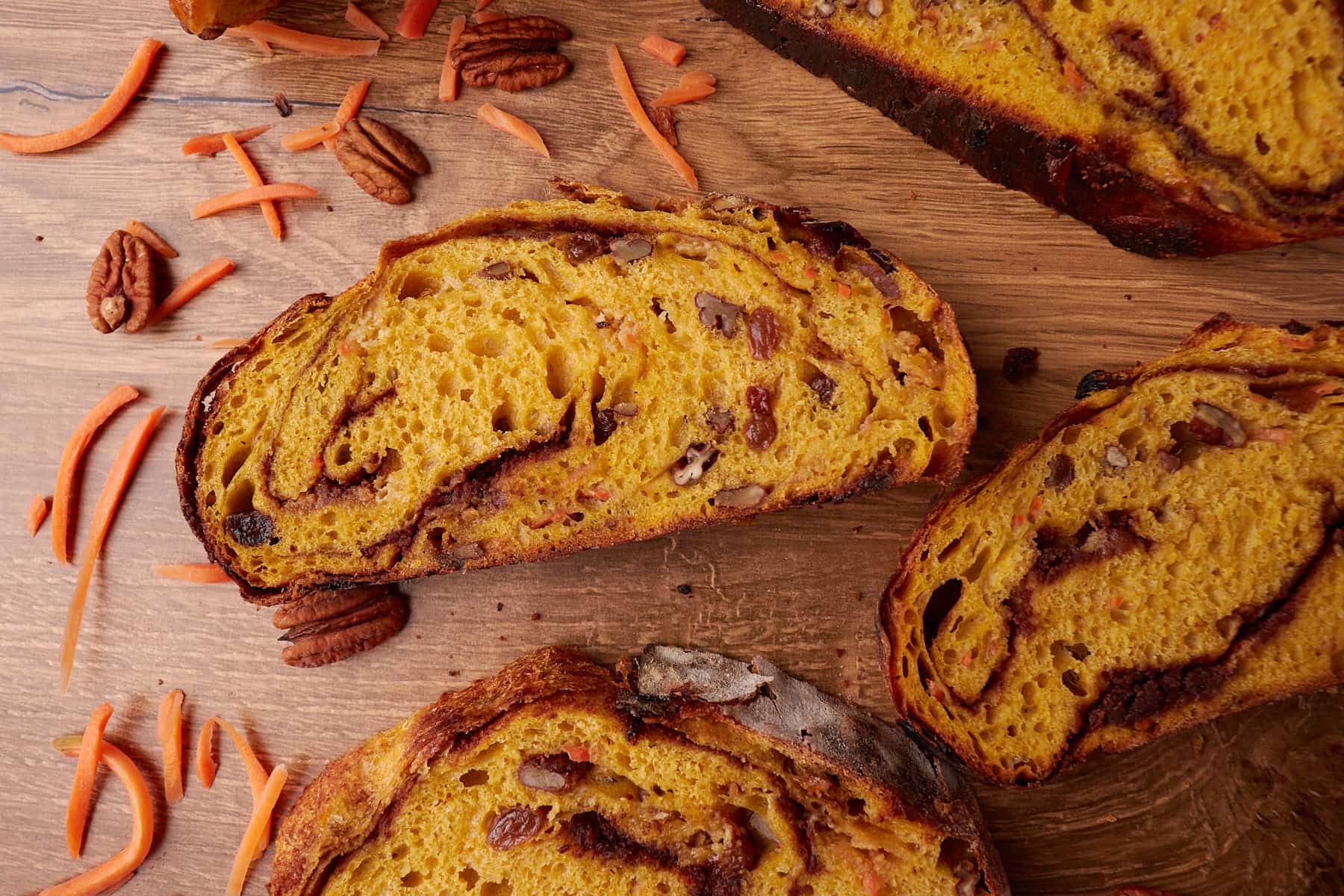
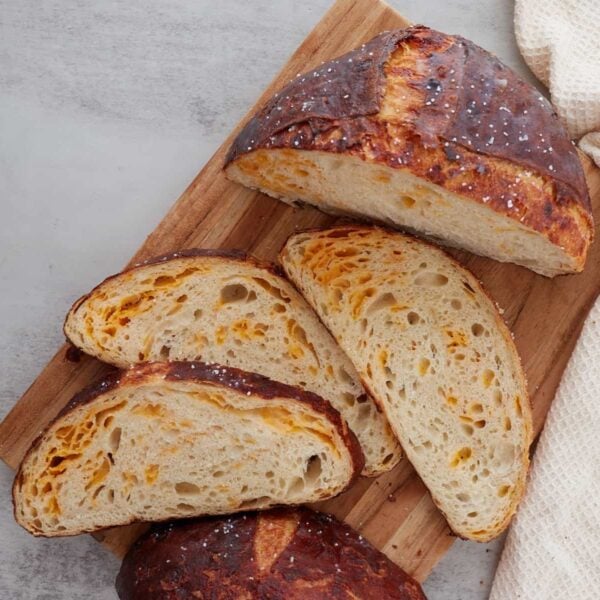
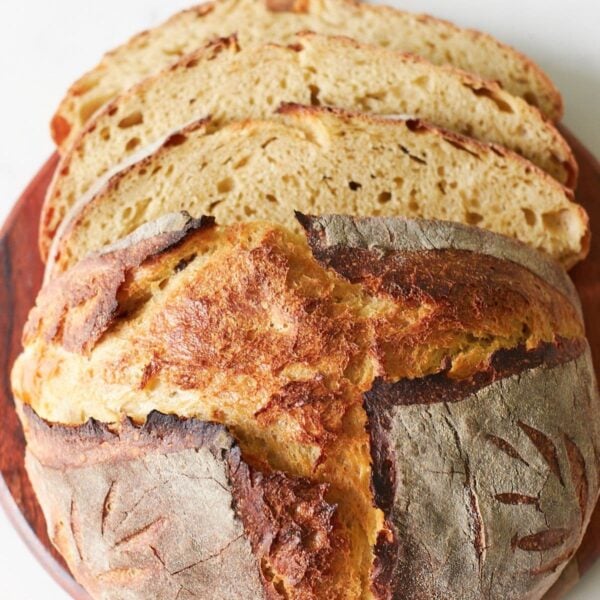
This sweet Carrot Cake Sourdough Bread is stuffed with carrots, raisins, nuts, and cream cheese chips. Swirled with a buttery spiced cinnamon filling, this recipe brings all the flavors of classic Sourdough Carrot Cake in an artisan loaf.
Save & Summarize
Made from the base of my Same Day Sourdough Bread, this loaf has a flexible timeline and can be made in just one day. It has a sweet spiced swirl, just like my Cinnamon Honey Butter Sourdough Bread, and uses carrot juice instead of water to really infuse the loaf with flavor. This Carrot Cake Sourdough Bread will quickly become a new spring and Easter favorite!
Table of Contents
Why you will love this recipe
- Classic carrot cake flavors – Just like my Carrot Cake Sourdough Scones, and Carrot Cake Sourdough Cinnamon Rolls, this sourdough loaf is filled with classic carrot cake flavors reimagined into something new.
- Flexible timeline – Bake this Carrot Cake Sourdough Bread in just one day, or add it to the fridge for the second rise and bake when you are ready.
- Easy to customize- You can keep or remove the raisins and nuts based on your preference. The cream cheese chips can also be swapped for white chocolate chips, or omitted entirely.
- No leaking- This loaf has a cinnamon swirl throughout, similar to my Cinnamon Raisin Sourdough Bread, that stays sealed while baking so all the flavor remains inside.
Important Ingredients and Substitutions
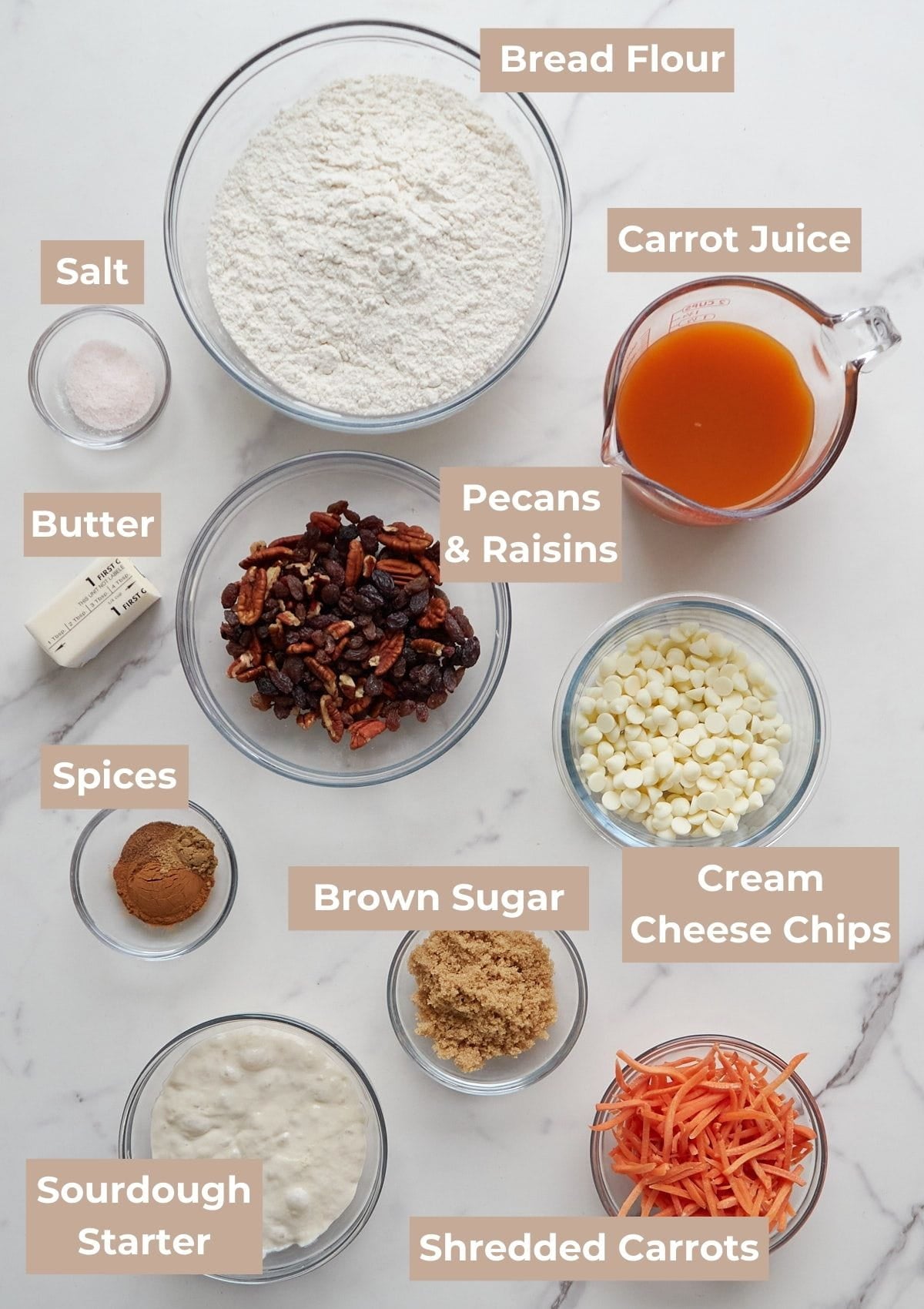
- Sourdough starter – An active sourdough starter is one that has been recently fed, has doubled in size, and is bubbly. If you do not have a sourdough starter, you can make one in as little as two weeks with my Easy Sourdough Starter Recipe.
- Bread flour – Flour with a higher protein content, like bread flour, is ideal for sourdough bread. Sourdough bread is a higher hydration dough so it needs a flour that is efficient at absorbing water, like bread flour is. You can use all-purpose flour, although it’s not ideal. If you substitute with all-purpose flour, reduce the liquid by 25 grams.
- Carrot juice – Instead of water, this loaf uses carrot juice to infuse the carrot flavor in every bite. You can juice your own carrots or buy no-sugar-added carrot juice from the store. Or if you don’t want to use carrot juice, you can replace it with water.
- Shredded carrots – In addition to the carrot juice, shredded carrots are also used as a mix-in. You can shred your own or use pre-shredded.
- Cream cheese chips – You can find cream cheese chips in the baking aisle at the store. They add a sweet, creamy taste, just like the cream cheese frosting on carrot cake. You can leave out the cream cheese chips if you prefer, or swap them with white chocolate chips.
- Spices – A mixture of cinnamon, nutmeg, and ginger is swirled in the loaf for a beautiful, warm flavor.
See the full recipe in the recipe card below.
Instructions to make Carrot Cake Sourdough Bread
1. Feed sourdough starter
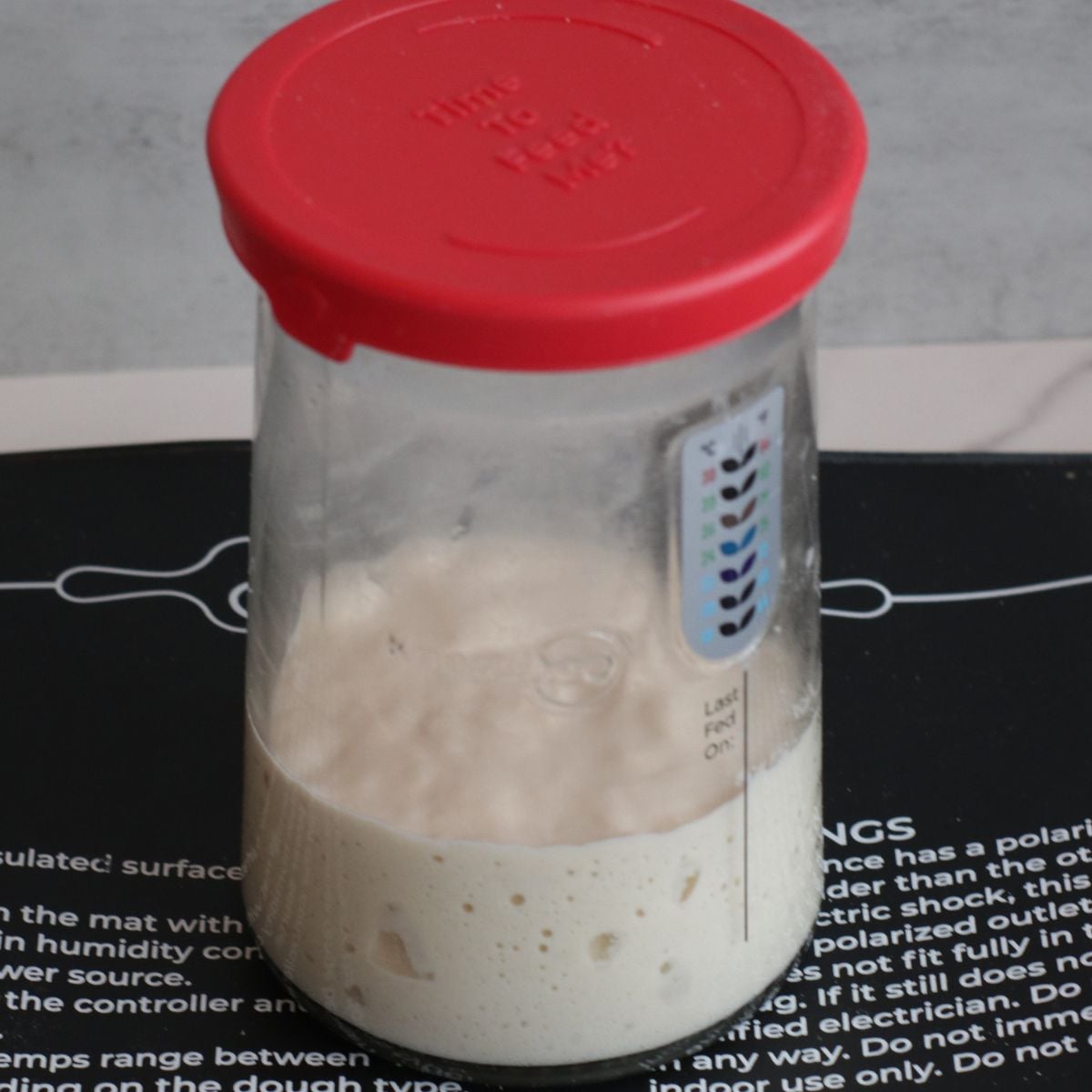
About 4 hours before making the loaf, build a levain or feed your sourdough starter at a 1:1:1 ratio (50 grams sourdough starter: 50 grams flour: 50 grams water). Cover and let it rest at 77–80°F until bubbly and doubled in size.
If you don’t have extra starter, add an extra 5–10 grams to each portion (starter, flour, and water) so you have enough to bake with and still keep your starter going.
Skip this step if your starter is already activated and ready to bake with.
Note: If you want to start the loaf in the morning, you can feed your starter a 1:5:5 ratio (15 grams active sourdough starter, 75 grams flour, 75 grams water) the night before and leave for about 10 hours at 72℉.
2. Mix dough
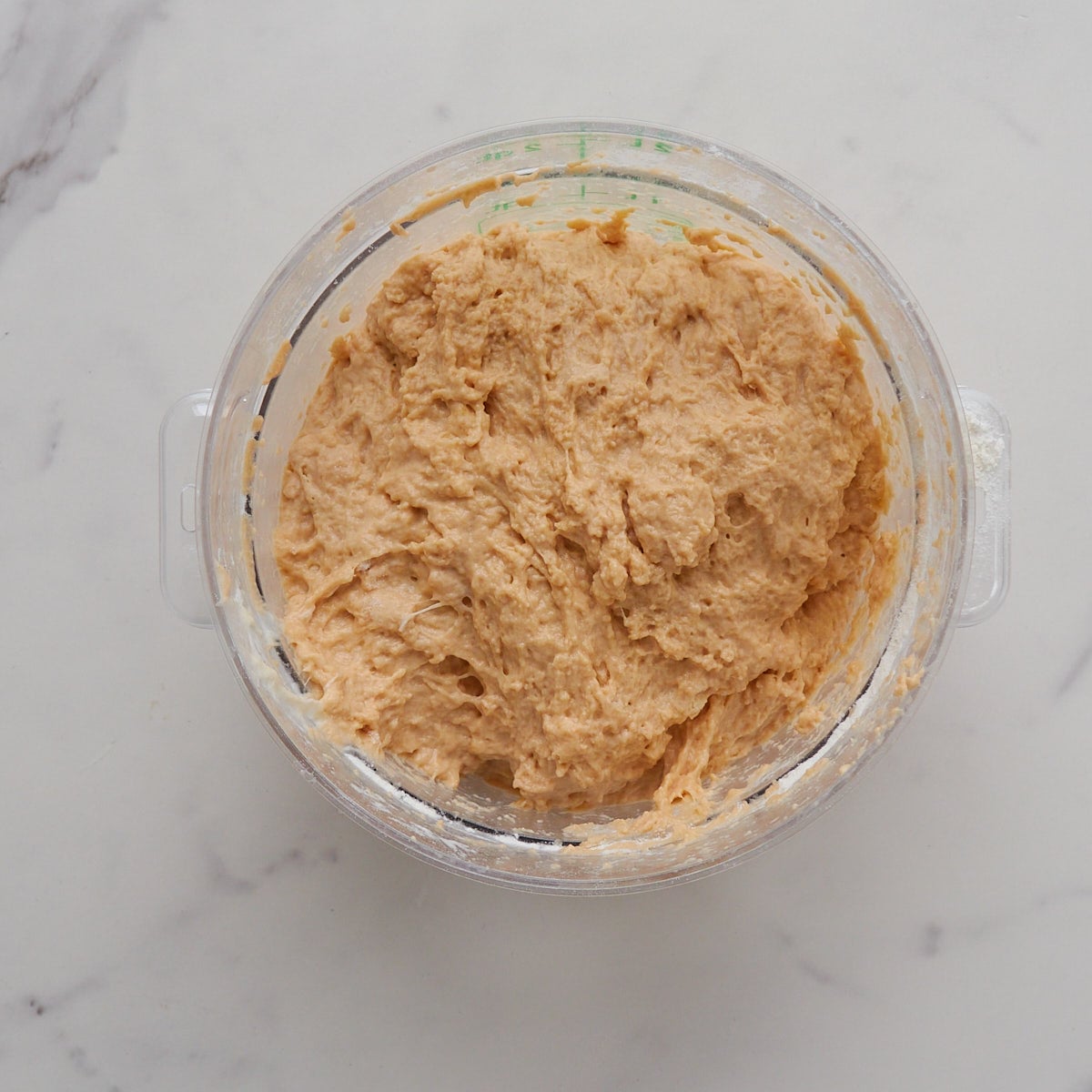
With a danish dough whisk (10% off with link) hands, or large spoon mix together active starter, carrot juice, and salt in a container with straight sides or a medium clear bowl. Add the flour and mix well for about 2 minutes. Cover with a lid or dinner plate so the dough doesn’t dry out and let sit for 30 minutes in a a warm spot.
For a similar timeline as listed below keep the dough temperature at 75°F.
3-4. Stretch and folds

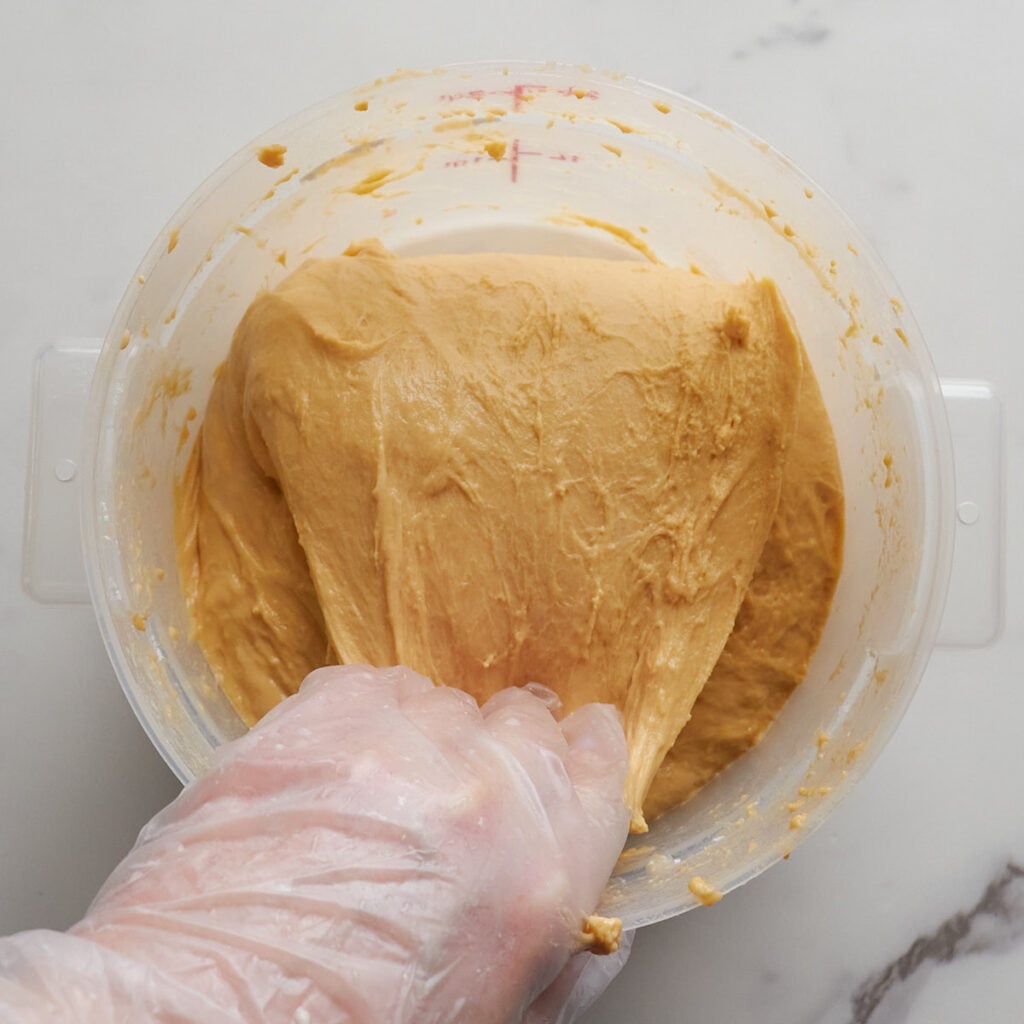
Perform 2 sets of stretch and folds with a 30-minute rest in between each set.
To stretch and fold the dough, grab one side with a damp hand and gently shimmy the dough up, and then fold it on top of itself. Repeat this 3 more times, rotating the bowl 90 degrees each time.
Cover and keep the dough warm between each set.
5-10. Laminating mix-ins
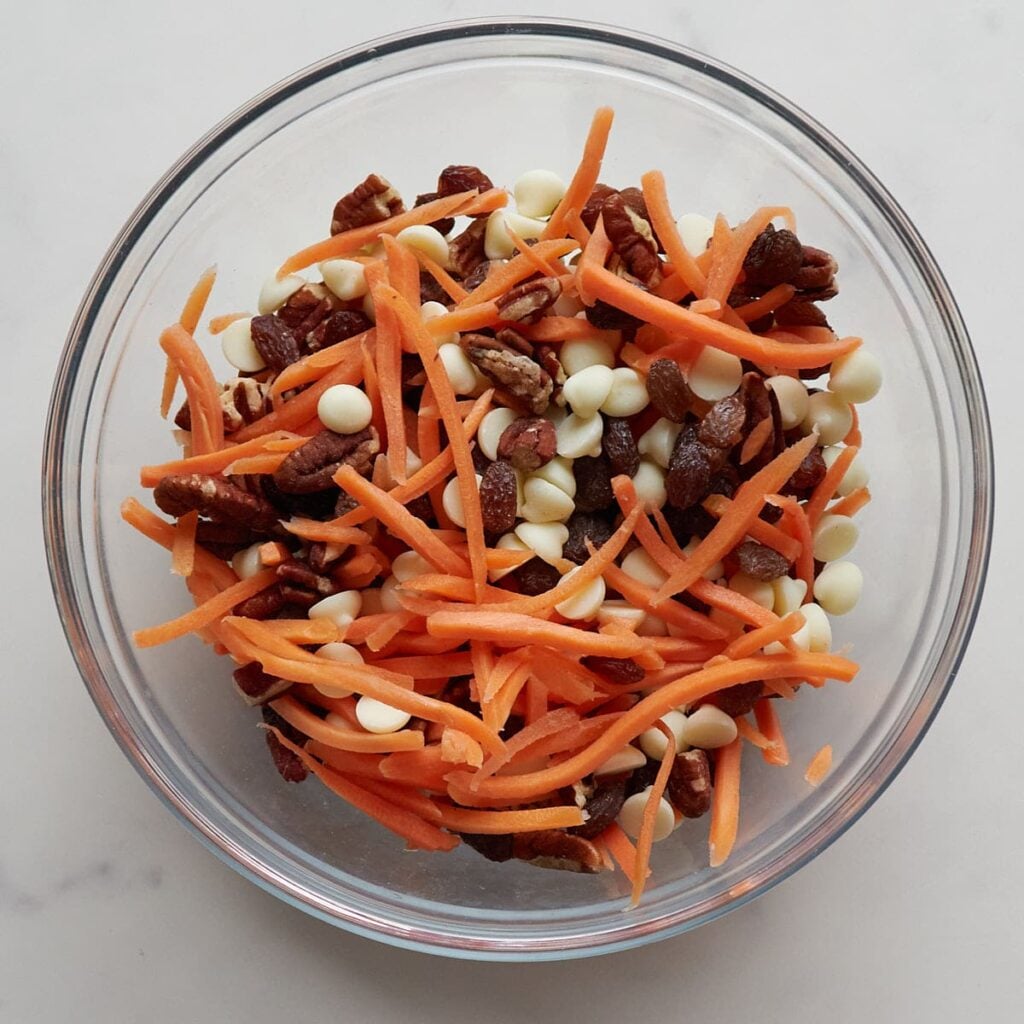
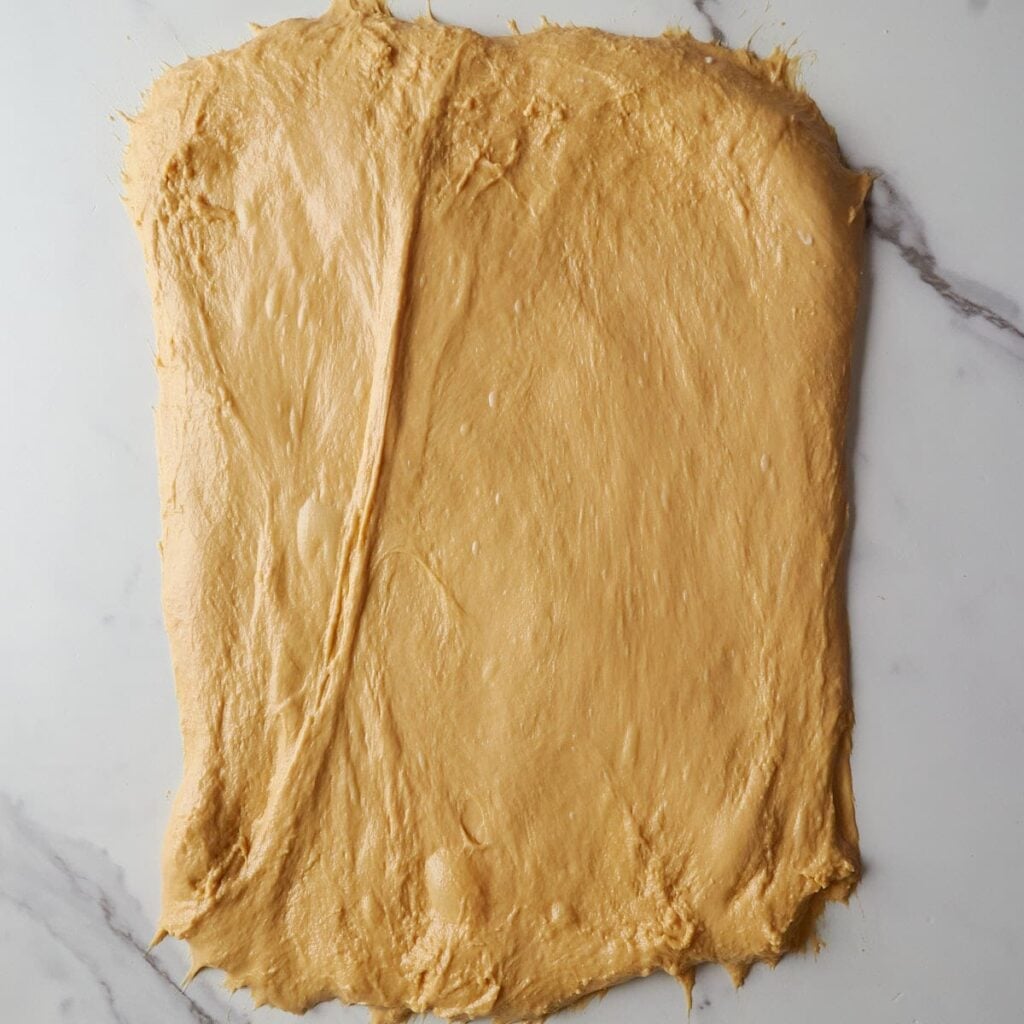

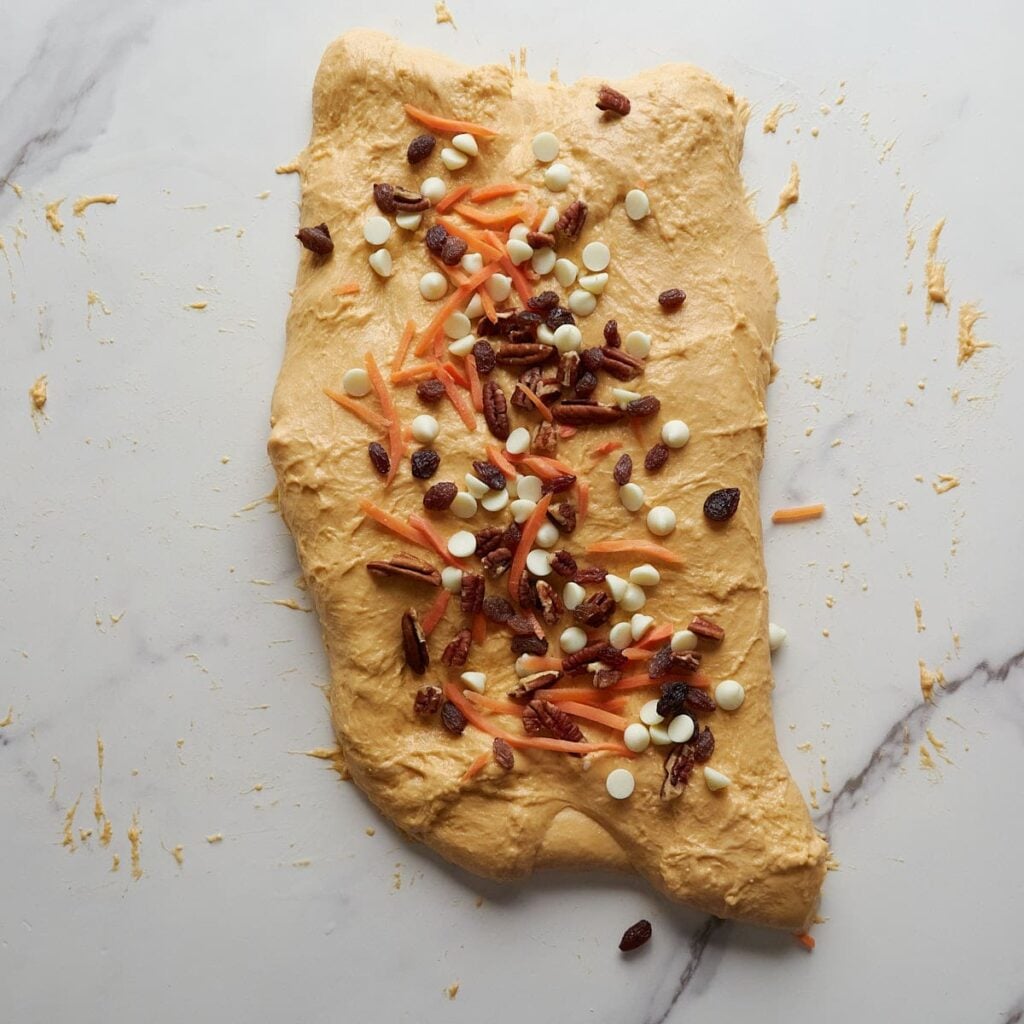
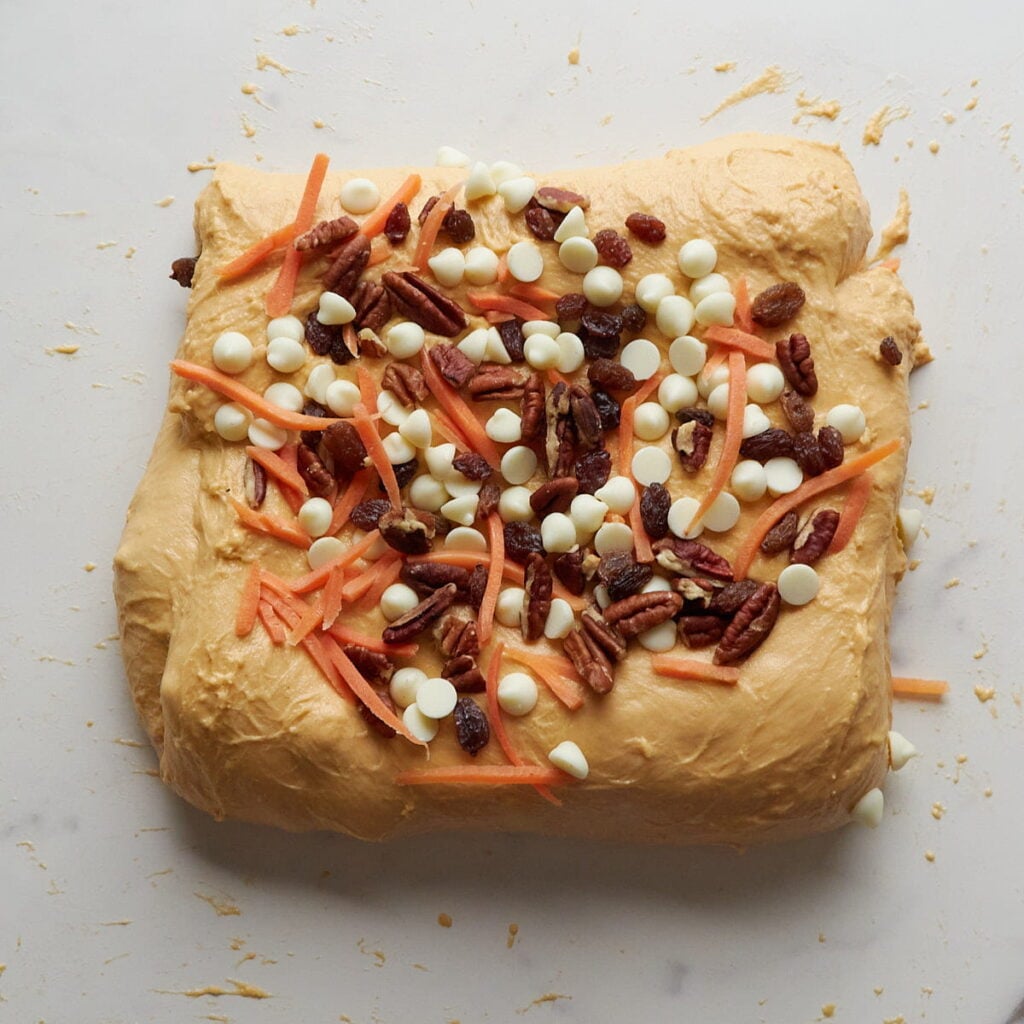
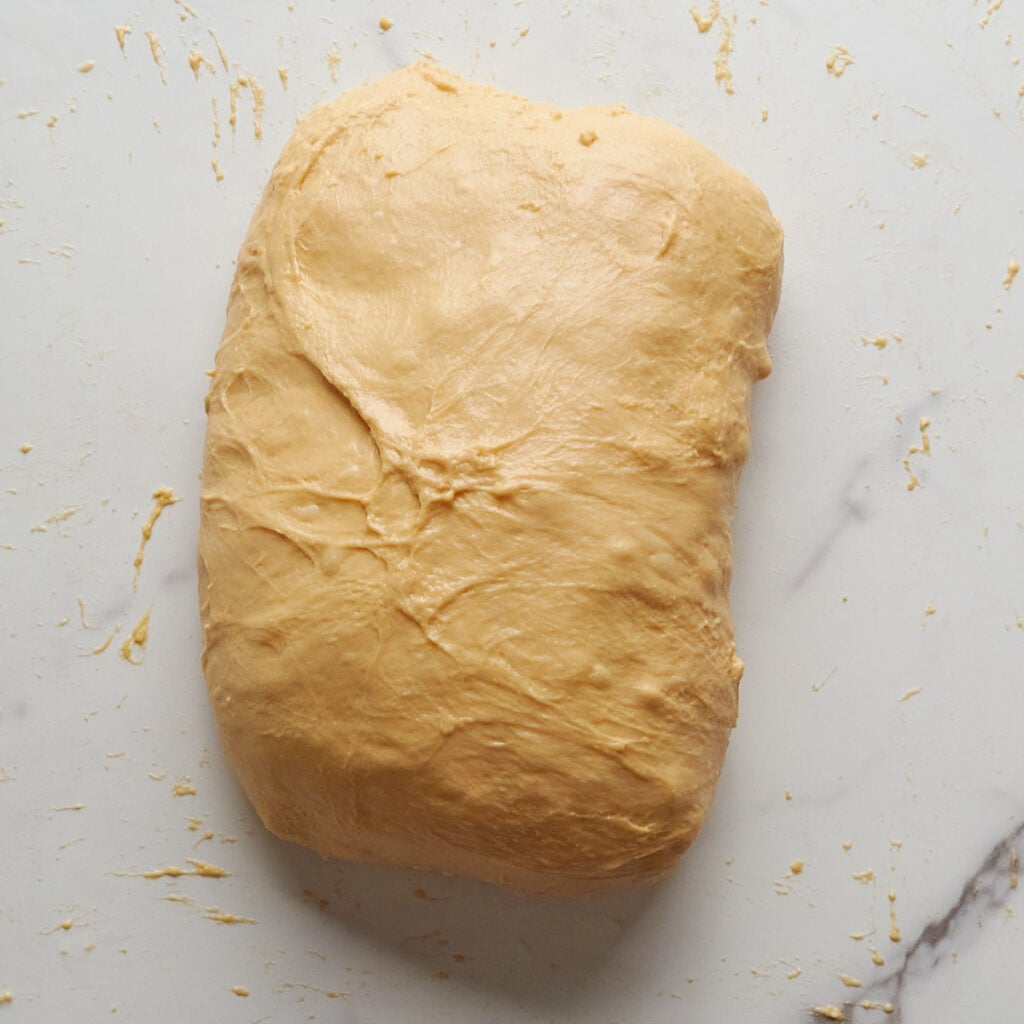
After the second set of stretch and folds, let the dough rest for 30 minutes. Then add the mix-ins using the lamination method.
In a small bowl, combine the shredded carrots, pecans, raisins, and cream cheese chips. If you are shredding your own carrots, pat them dry with a paper towel before adding them to the dough.
Turn the dough out onto the counter and gently stretch it into a large rectangle, being careful not to tear it. Sprinkle one-third of the mix-ins over the dough. Fold the ends of the dough toward the middle to enclose the mix-ins.
Add another one-third of the mix-ins, fold the dough toward the center again, then add the remaining mix-ins. Roll the dough up like a log, then use cupped hands to gently shape it into a rough round. Place the dough back into the bowl to continue the first rise.
11. First rise
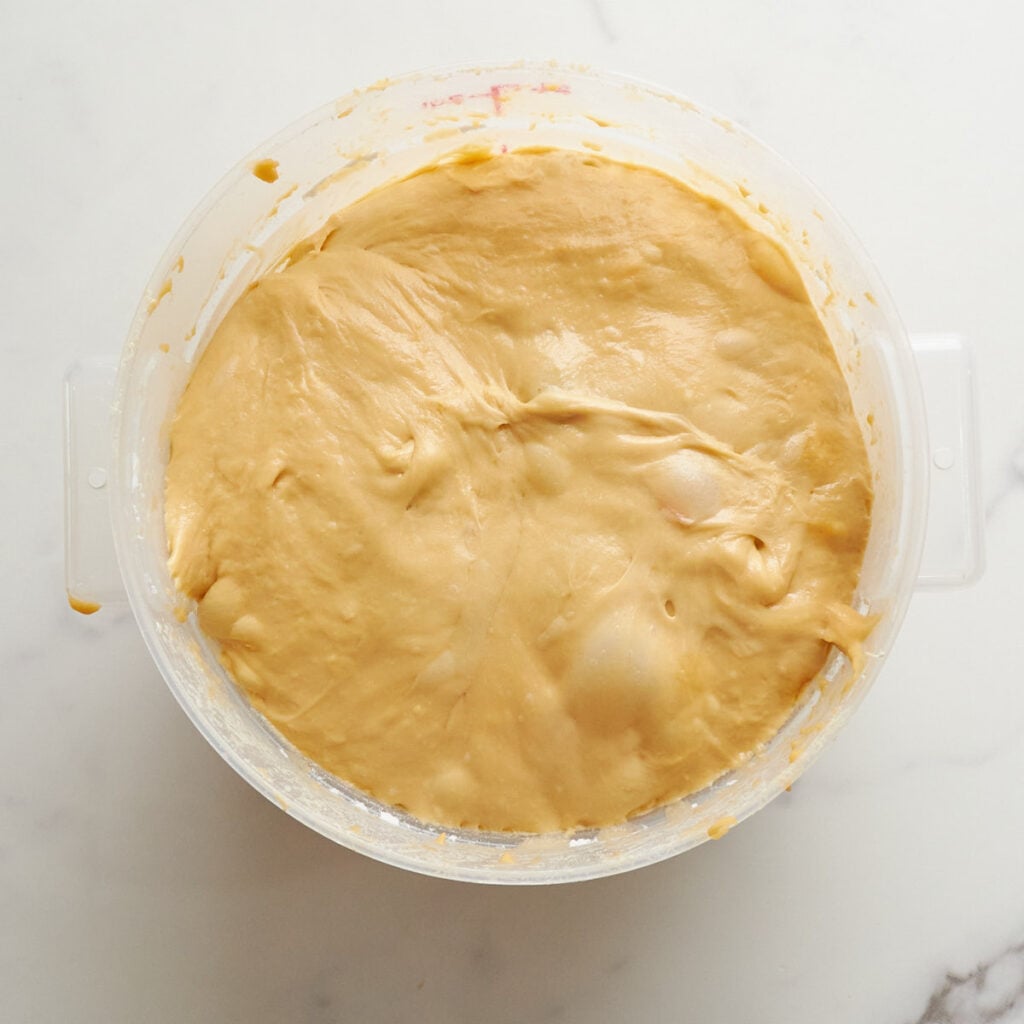
Let the dough rest on the counter in a warm spot to finish bulk fermentation. Bulk fermentation is done when the dough is jiggly, domed on top, bubbly on the sides, and risen 50%. If it does not show these signs, continue to let the dough rise.
At a dough temperature of 75°F, my dough is ready in about 4.5 hours from the time it is mixed.
12. Make filling
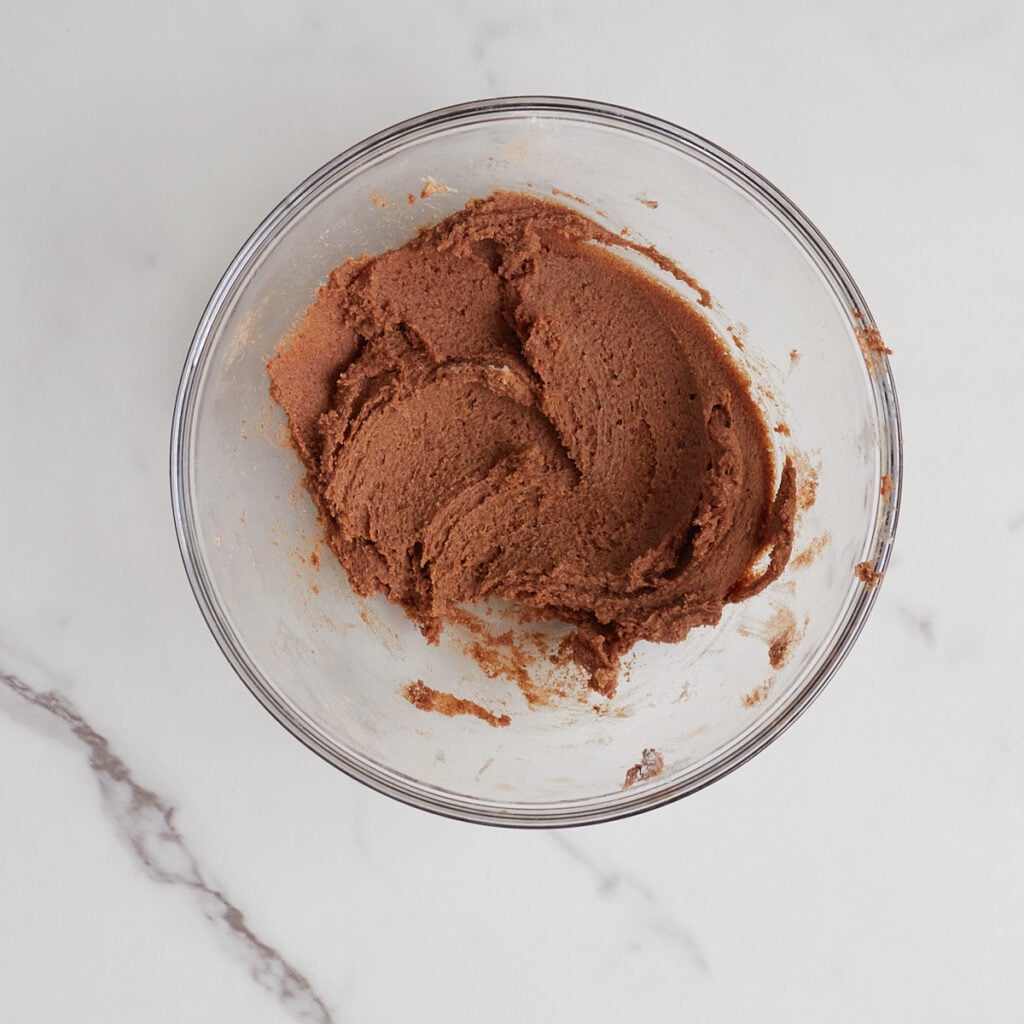
In a bowl, mix the room temperature butter, brown sugar, cinnamon, nutmeg, ginger and flour until smooth and fully combined. If the butter isn’t incorporating easily, microwave the mixture for about 5 seconds to soften it slightly. It should be soft, not melted.
13-16. Shaping
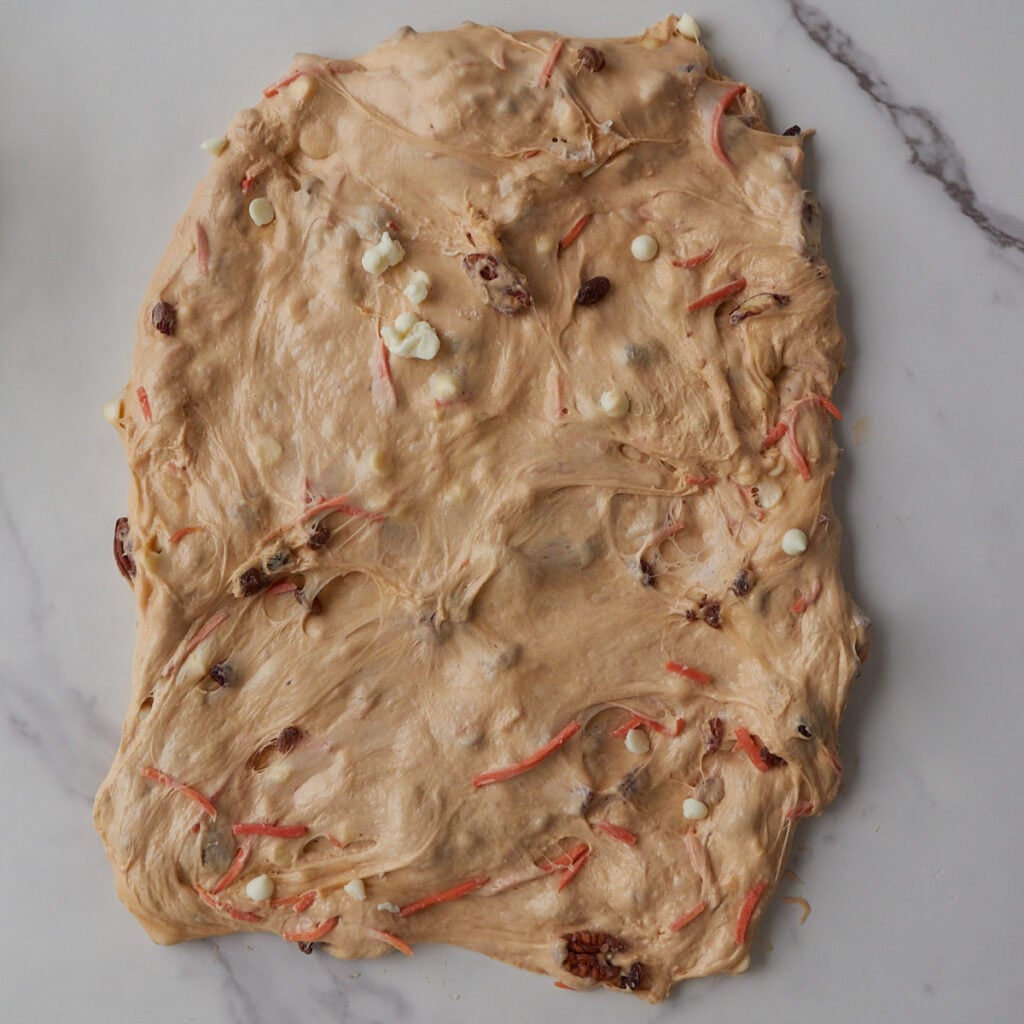


Prep basket: Lightly flour an 8–10-inch oval proofing basket with all-purpose flour or rice flour. If you don’t have an oval proofing basket, line a loaf pan with a lightly floured tea towel.
Shape dough: Turn the dough out onto an unfloured surface and gently stretch it into a 12 x 9-inch rectangle. Spread half of the filling evenly over the dough. Fold the bottom third of the dough up toward the center. Then fold the top third down so the edges meet in the middle, like folding a letter. Spread the remaining filling over the folded dough. Starting from one short end, roll the dough up somewhat tightly into a log.
Add to basket: Pinch the sides closed to seal, then place the dough seam side up into a proofing basket. Cover.
17. Final rise

Final rise same-day (option 1): Let the dough rest on the counter for 1–2 hours at 75°F.
To check for readiness, perform the poke test: gently press the dough with a lightly floured finger. If the indentation slowly springs back, it’s properly proofed and ready to bake. If it bounces back right away, it needs more time. If the indentation doesn’t spring back at all, the dough is overproofed and should be baked right away.
Tip: Poke the dough in several spots since this loaf has a lot of mix-ins. Avoid poking areas with a heavy concentration of mix-ins so you can get a more accurate read on the dough.
Once the dough is ready, place it in the freezer for 20-30 minutes while the oven preheats with the dutch oven.
Final rise overnight (option 2): Place the dough in the fridge overnight for 8-12 hours until ready to bake. No need to test if the dough is ready, just bake it straight from the fridge.
18. Bake
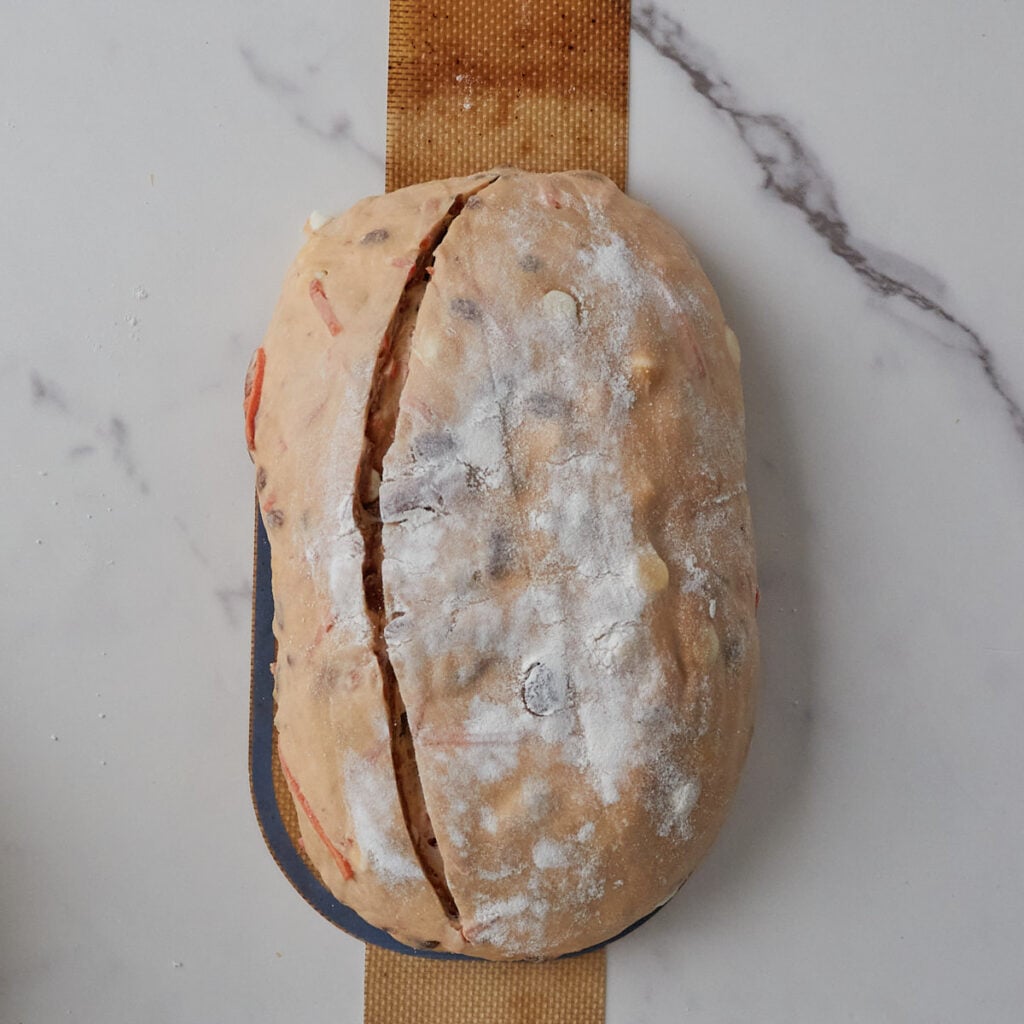
Place a piece of parchment paper or a silicone bread sling over the top of the basket. Flip the dough out onto your surface and remove the basket.
Using a bread lame or a sharp knife held at about a 45-degree angle, quickly score one long slash along the length of the loaf.
18. Bake
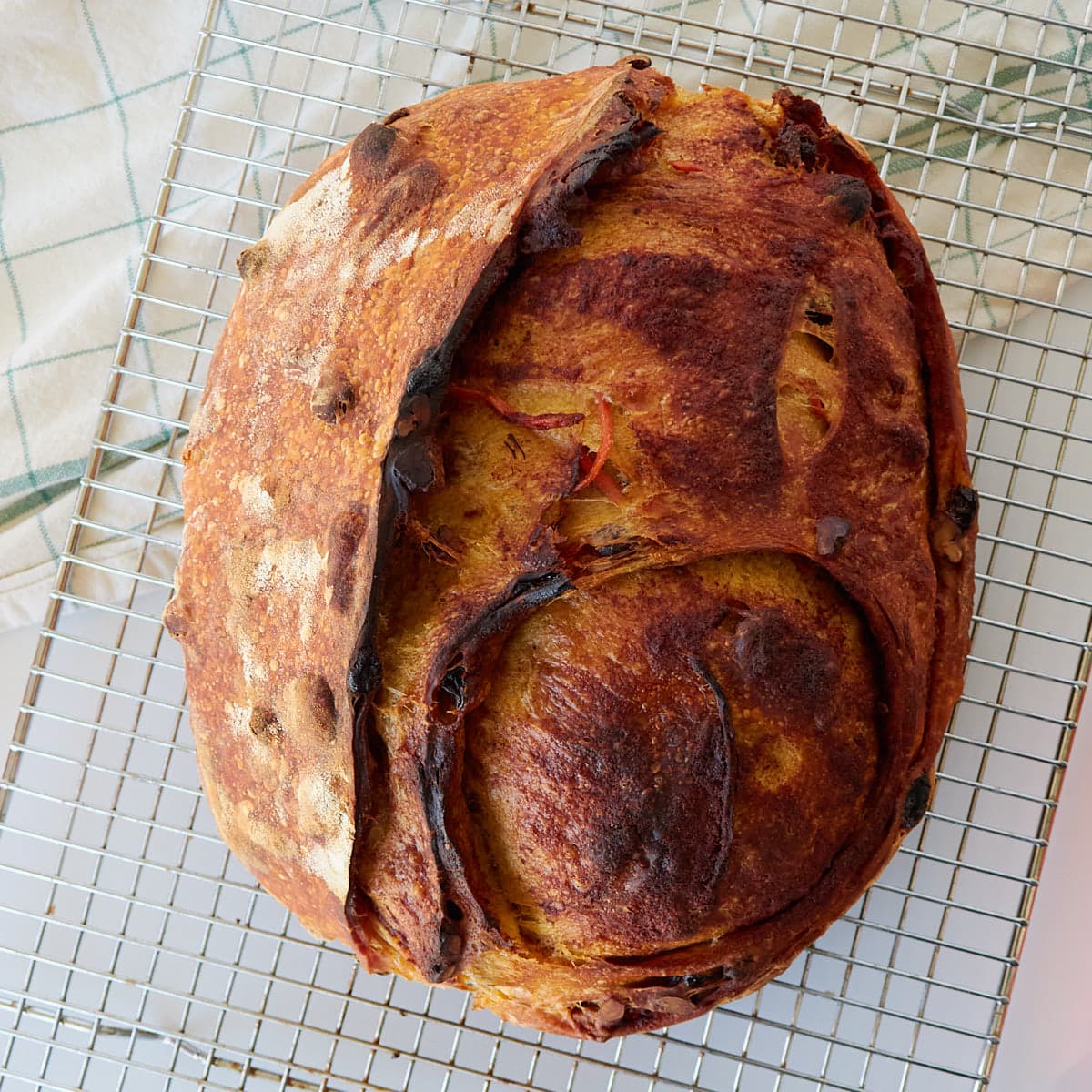
Bake: Transfer the dough to the 425℉ preheated Dutch oven and cover with the lid. Bake for 40 minutes. Remove the lid and continue baking for an additional 10 minutes. If the loaf is burning, you can bake the entire time with the lid on.
Cool: Place the loaf on a cooling rack and let cool for at least 30 minutes before cutting but ideally 2 hours.
Recipe Tips
- Chill before scoring. If baking the same day, place the shaped loaf in the freezer for 20–30 minutes right before baking. It makes scoring easier and helps the loaf hold its shape.
- Seal the seams well. After rolling the dough into a log, pinch the seams and ends closed tightly. This helps keep the filling tucked inside the loaf.
- Don’t overshape the dough. Once the loaf is rolled up, resist the urge to keep tightening or reshaping it. Overhandling can cause the dough to tear, which may lead to the filling leaking out. If you notice a small hole, gently pinch the dough back together and place it seam side up in the basket right away.
- Let it cool before slicing. It’s tempting to cut into the loaf right away, but let it cool for at least 30 minutes (but ideally 2 hours) before slicing. This helps the crumb set properly, prevents gaps from forming around the layers, and keeps each slice structured and clean.
Sample Baking Schedule
This is based on the dough temperature being at 75°F when on the counter, although timing can vary so make sure to watch the dough, not the clock.
Same day method
Note: If you want to start the loaf in the morning, you can feed your starter a 1:5:5 ratio (15 grams active sourdough starter, 75 grams flour, 75 grams water) the night before and leave it covered for about 10 hours at 70-72℉.
| Steps | Time |
| Feed starter a 1:1:1 ratio and leave at 77-80°F (50 grams sourdough starter: 50 grams flour: 50 grams water) *If you do not have extra starter be sure to feed your starter a little more so you have leftover | 8 am |
| Mix dough | 12 pm |
| Stretch & folds | 12:30 – 1:30 pm |
| First rise | 1:30pm – 4:30 pm |
| Shape | 4:30 pm |
| Final rise | 4:45 – 5:45 pm |
| Freeze dough | 5:45 pm |
| Bake | 6 pm |
Overnight method
| Steps | Time |
| Feed starter a 1:1:1 ratio and leave at 77°F (50 grams sourdough starter: 50 grams flour: 50 grams water) *If you do not have extra starter be sure to feed your starter a little more so you have leftover | Day One: 1:00 pm |
| Mix dough | 5:00 pm |
| Stretch & folds | 5:30 pm – 6:30 pm |
| First rise | 6:30 – 9:30 pm |
| Shape and into the fridge | 9:30 pm |
| Bake | Day two: 8 am |
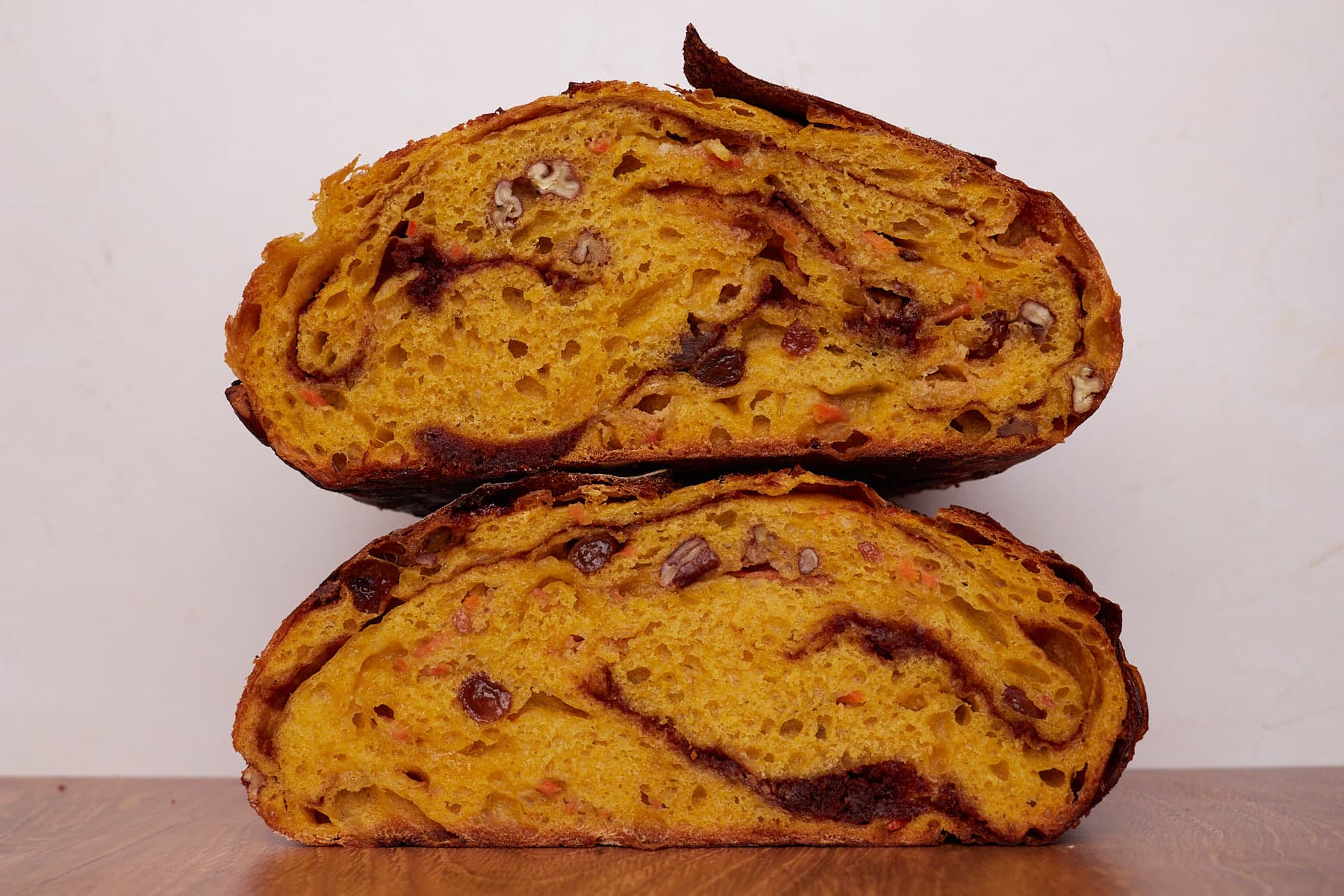
Storage instructions
Store a whole loaf, or a side that can be placed cut side down with only the crust exposed, on the counter up to 2 days with just a tea towel over it. If the inside of the loaf is exposed I store it in a bread box, bread bag or brown paper bag.
Sourdough will not hold its crunch for extended periods of time but can be revived in the oven or toaster. To refresh a loaf preheat the oven to 400°F. Run the loaf quickly under water and then place in the oven for 5-10 minutes until the crust is crispy again.
Sourdough bread also freezes really well. To freeze a loaf, either place the whole or half a loaf into a freezer safe bag. Alternatively, preslice the loaf and place parchment paper in between each slice before placing in a freezer bag.
To thaw, place the loaf on the counter for several hours in the ziplock bag. If you are in a time crunch I’ve used the defrost feature in the microwave to thaw my loaf. Once thawed, use the same refresh instructions as listed above. For individual slices, pulled from the freezer, pop it in the toaster.
How to serve Carrot Cake Sourdough Bread
If you need some ideas on what to eat the carrot cake sourdough bread I have some! This would make incredible french toast or sourdough french toast casserole for Easter morning. You could also use it to make bread pudding. Or serve it by itself with cream cheese.
Recipe FAQ
Yes, if you do not have carrot juice or do not want to use it you can just swap it for water.
Yes, you can bake this in a 9×5″ loaf pan. However, you will need to cover the loaf with another loaf pan or cover it with foil to prevent the top from burning with the added sugar.
You can find instructions on baking sourdough bread in a loaf pan.
To help prevent the bottom of the loaf from burning, place a heavy-duty baking stone on the rack directly below your Dutch oven.
If the top of your loaf is browning too quickly, make sure your oven rack is positioned in the center, not too high. You can also leave the lid on for the full baking time, or remove it for just the last 5 minutes.
Your starter may not be active enough, or your dough temperature may be too cool. For best results, keep the dough around 75°F during bulk fermentation.
Excess stickiness can sometimes be caused by an overly acidic starter. When a starter becomes too acidic, it can weaken the gluten structure and cause the dough to overproof prematurely, making it harder to handle.
Use damp hands when performing stretch and folds to prevent sticking. If the dough is especially difficult to shape, lightly dust your work surface with a small amount of flour, just enough to make it manageable without incorporating too much into the dough.
Because this dough contains a large amount of mix-ins, adding them during lamination instead of during the stretch and folds helps distribute them more evenly throughout the dough. The carrot juice can also make the dough slightly weaker, so laminating the dough helps strengthen it.
This loaf contains a large amount of mix-ins along with a cinnamon sugar swirl, which can disrupt the gluten network and weigh the dough down. Even though the loaf may bake up a little flatter with a more closed crumb, the flavor from all the mix-ins makes it well worth it.
Yes, the carrots soften in the loaf, no crunchy bits!
More Easter sourdough Recipes

Spring Sourdough Recipes
Carrot Cake Sourdough Cinnamon Rolls

Easter Sourdough Recipes
Sourdough Carrot Cake Scones
Easter Sourdough Recipes
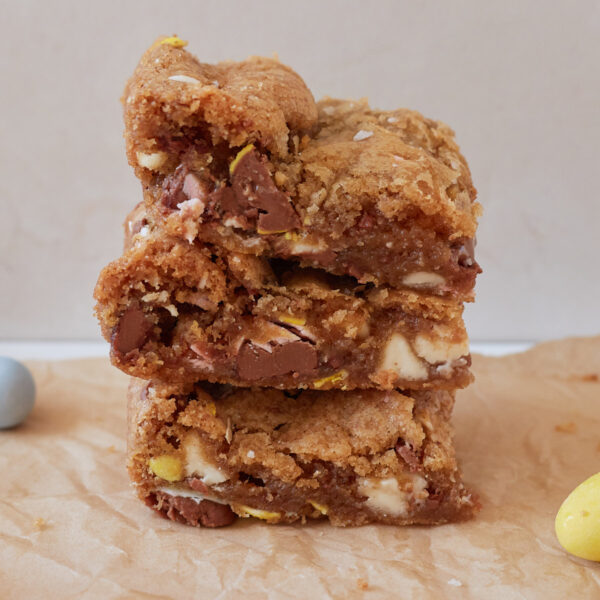
Cadbury Egg Sourdough Cookie Bars
Sourdough Discard Recipes
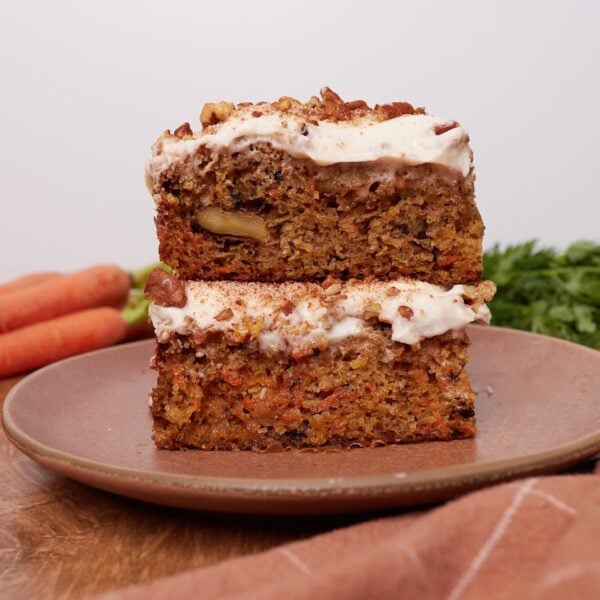
Sourdough Carrot Cake (9×13 or Bundt pan)
Tried this Carrot Cake Sourdough Bread or another recipe from the site? I’d love to hear about it! Drop a star rating and share your thoughts in the comments—can’t wait to see what you’re baking!

Carrot Cake Sourdough Bread
Ingredients
Sourdough Starter (Levain)
- 50 grams active sourdough starter, ¼ cup
- 50 grams all-purpose or bread flour, ⅓ cup
- 50 grams warm water, ¼ cup
Sourdough Bread
- 350 grams carrot juice, warmed, 1 ½ cups
- 150 grams active and bubbly sourdough starter, ⅔ cup
- 10 grams salt, 1 ½ teaspoon
- 500 grams bread flour, 3 ½ cups
Mix ins
- 55 grams raisins, ⅓ cup
- 55 grams chopped pecans, ½ cup
- 55 grams shredded carrots, ⅔ cup
- 100 grams cream cheese chips or white chocolate chips , ⅔ cup
Swirl
- 57 grams butter room temperature, ¼ cup
- 50 grams brown sugar, ¼ cup
- 8 grams cinnamon, 1 Tablespoon
- ½ teaspoon ginger
- ½ teaspoon nutmeg
- 16 grams flour, 2 Tablespoons
Instructions
- Feed sourdough starter: About 4 hours before making the loaf, build a levain or feed your sourdough starter at a 1:1:1 ratio (50 grams sourdough starter: 50 grams flour: 50 grams water). Cover and let it rest at 77–80°F until bubbly and doubled in size. 50 grams active sourdough starter. 50 grams all-purpose or bread flour, 50 grams warm waterIf you don’t have extra starter, add an extra 5–10 grams to each portion (starter, flour, and water) so you have enough to bake with and still keep your starter going. Skip this step if your starter is already activated and ready to bake with. Note: If you want to start the loaf in the morning, you can feed your starter a 1:5:5 ratio (15 grams active sourdough starter, 75 grams flour, 75 grams water) the night before and leave for about 10 hours at 72℉.
- Mix dough: With a danish dough whisk (10% off with link) hands, or large spoon mix together active starter, carrot juice and salt in a container with straight sides or a medium clear bowl. Add the flour and mix well for about 2 minutes ensuring all the flour is fully incorporated. 350 grams carrot juice, warmed, 150 grams active and bubbly sourdough starter, 10 grams salt, 500 grams bread flourCover with a lid or dinner plate so the dough doesn’t dry out and let sit for 30 minutes in a warm spot. To follow the suggested timing, keep the dough temperature at 75°F.
- Stretch and folds: Perform 2 sets of stretch and folds with a 30-minute rest in between each set. To stretch and fold the dough, grab one side with a damp hand and gently shimmy the dough up, and then fold it on top of itself. Repeat this 3 more times, rotating the bowl 90 degrees each time.Cover and keep the dough warm between each set.
- Prepare mix-ins: In a bowl, combine the shredded carrots, pecans, raisins, and cream cheese chips. If you are shredding your own carrots, pat them dry with a paper towel before adding them to the dough.55 grams shredded carrots, 55 grams chopped pecans, 55 grams raisins, 100 grams cream cheese chips or white chocolate chips
- Lamination: After the second set of stretch and folds, let the dough rest for 30 minutes and then add the mix-ins with lamination. Turn the dough out onto the counter and gently stretch it into a large rectangle, being careful not to tear it. Sprinkle one-third of the mix-ins over the dough. Fold the ends of the dough toward the middle to enclose the mix-ins.Add another one-third of the mix-ins, fold the dough toward the center again, then add the remaining mix-ins. Roll the dough up like a log, then use cupped hands to gently shape it into a rough round. Place the dough back into the bowl to continue the first rise.
- First rise: Let the dough rest on the counter in a warm spot to finish bulk fermentation. Bulk fermentation is done when the dough is jiggly, domed on top, bubbly on the sides, and risen 50%. If it does not show these signs, continue to let the dough rise.At a dough temperature of 75°F my dough is ready in about 4.5 hours from the time it is mixed.
- Make filling: In a bowl, mix the filling ingredients together until smooth. If the butter isn’t incorporating easily, microwave the mixture for about 5 seconds to soften it slightly. It should be soft, not melted.57 grams butter room temperature, 50 grams brown sugar, 8 grams cinnamon, ½ teaspoon ginger, ½ teaspoon nutmeg, 16 grams flour
- Prep basket: Lightly flour an 8–10-inch oval proofing basket with all-purpose flour or rice flour. If you don’t have an oval proofing basket, line a loaf pan with a lightly floured tea towel.
- Shape dough: Turn the dough out onto an unfloured surface and gently stretch it into a 12 x 9-inch rectangle. Spread half of the filling evenly over the dough. Fold the bottom third of the dough up toward the center. Then fold the top third down so the edges meet in the middle, like folding a letter. Spread the remaining filling over the folded dough. Starting from one short end, roll the dough up somewhat tightly into a log.
- Add to basket: Pinch the sides closed to seal, then place the dough seam side up into a proofing basket. Cover.
- Final rise – same-day (option 1): Let the dough rest on the counter for 1–2 hours at 75°F. To check for readiness, perform the poke test: gently press the dough with a lightly floured finger. If the indentation slowly springs back, it’s properly proofed and ready to bake. If it bounces back right away, it needs more time. If the indentation doesn’t spring back at all, the dough is overproofed and should be baked right away. Once the dough is ready, place it in the freezer for 20-30 minutes. Tip: Poke the dough in several spots since this loaf has a lot of mix-ins. Avoid poking areas with a heavy concentration of mix-ins so you can get a more accurate read on the dough.Final rise – overnight (option 2): Place the dough in the fridge overnight for 8-12 hours until ready to bake. No need to test if the dough is ready, just bake it straight from the fridge.
- Preheat: Preheat dutch oven in the oven at 425℉. To prevent the bottom of the loaf from burning, place a heavy-duty baking sheet on the rack below.
- Score: Place a piece of parchment paper or a silicone bread sling over the top of the basket. Flip the dough out onto your surface and remove the basket. Using a bread lame or a sharp knife held at about a 45-degree angle, quickly score one long slash along the length of the loaf.
- Bake: Transfer the dough to the preheated Dutch oven and cover with the lid. Bake for 40 minutes. Remove the lid and continue baking for an additional 10 minutes, or until the crust is golden brown. If the loaf is getting dark, you can bake the entire time with the lid on or just remove the lid for the last 5 minutes.
- Cool: Place the loaf on a cooling rack and let cool for at least 30 minutes before cutting, but ideally about 2 hours.
Notes
- This loaf contains a large amount of mix-ins along with a cinnamon sugar swirl, which can slightly disrupt the gluten network. Even though the loaf may bake up a little flatter with a more closed crumb than a traditional loaf, the flavor from all the mix-ins makes it well worth it.
- All of the mix-ins can be swapped out or removed based on your preference. If you can’t find cream cheese chips, you can substitute white chocolate chips or leave them out altogether. Pecans can also be replaced with your favorite nuts.
- See sample baking schedules in the blog post.
- Chill before scoring. If baking the same day, place the shaped loaf in the freezer for 20–30 minutes right before baking. It makes scoring easier and helps the loaf hold its shape.
- Seal the seams well. After rolling the dough into a log, pinch the seams and ends closed tightly. This helps keep the filling tucked inside the loaf.
- Don’t overshape the dough. Once the loaf is rolled up, resist the urge to keep tightening or reshaping it. Overhandling can cause the dough to tear, which may lead to the filling leaking out. If you notice a small hole, gently pinch the dough back together and place it seam side up in the basket right away.
- Let it cool before slicing. It’s tempting to cut into the loaf right away, but let it cool for at least 30 minutes (but ideally 2 hours) before slicing. This helps the crumb set properly, prevents gaps from forming around the layers, and keeps each slice structured and clean.
Nutrition
Nutrition information is automatically calculated, so should only be used as an approximation.


can it bulk ferment longer or only 4.5 hours from the start of making the dough?!
i’m wanting to make more than one loaf, but this recipe has different bulking times. My other one bulks about five hours after the stretch and folds so about seven hours total.
Hi Annie! You could always reduce the amount of starter to the same amount as your other loaves for a similar timing.
Could you substitute organic pineapple juice for carrot juice or will the natural sugar affect the dough
You will need to use canned pineapple juice to make it work. Fresh pineapple contains an enzyme called bromelain that breaks down gluten, which prevents the dough from coming together properly and stops it from rising.
I baked this bread, and I was first hesitant because of the many inclusions; I would have a leaky loaf. Well, it turned out amazing. The flavor is exquisite, and one has to wonder if it is a bread or a perfectly balanced carrot cake.
The crumb was as it should be. Love this recipe.
I’m so glad you liked it!! Thanks for sharing.
Hi, I’m truing this recipe. What is the difference between levain and active starter?
A levain is an off shoot of your starter that is fed the amount you need for your loaf. You can either create an off shoot with the measurements or just feed your main sourdough starter.
This is my new favorite loaf! It’s so flavorful and delicious. We can’t get enough!!