
This post may contain affiliate links . Read my full Disclosure Policy.



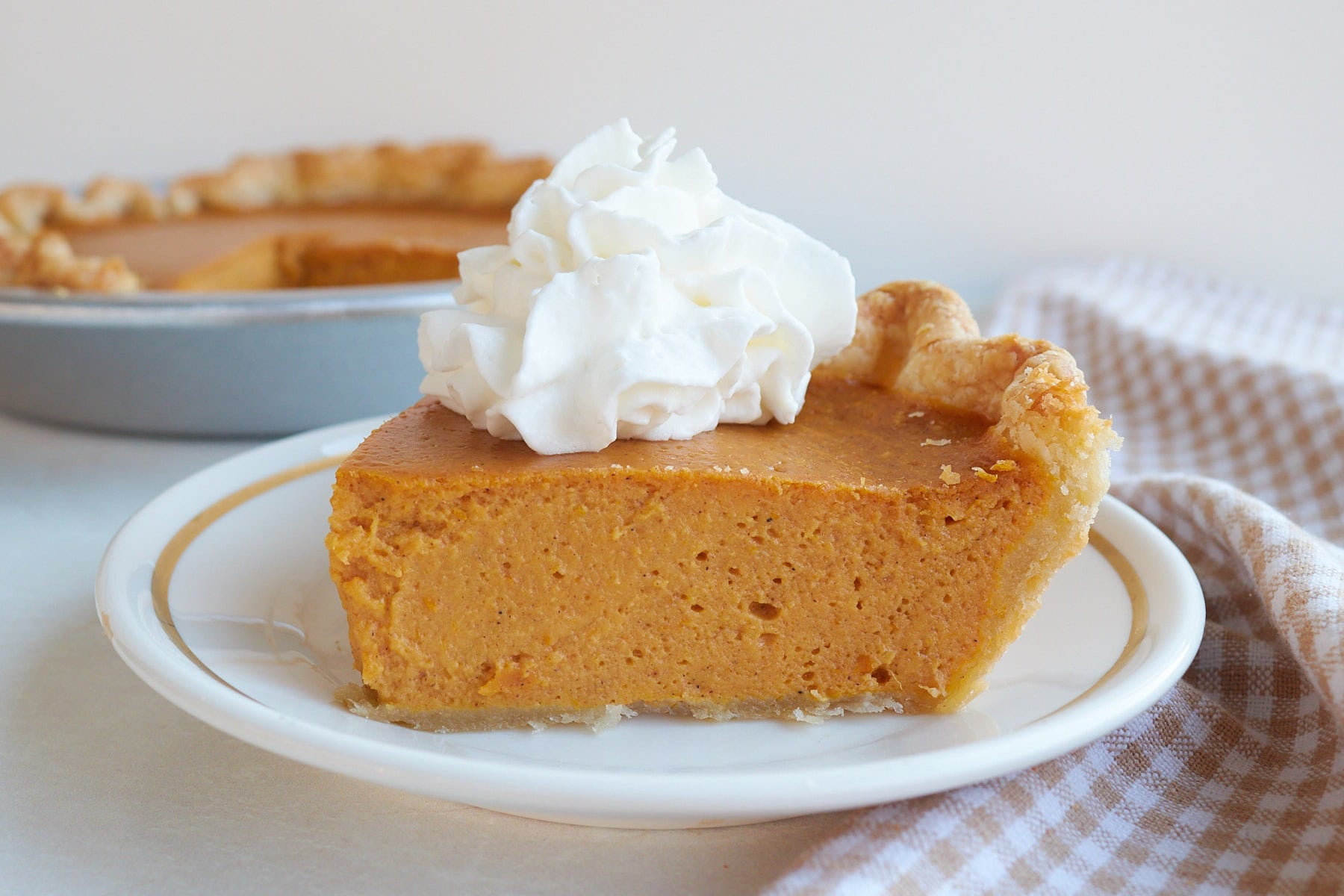
I’ve never really liked pumpkin pie, but after a few rounds of testing and plenty of taste testers, I finally found one I love! Turns out, I just needed to make my own. It has a creamy, spiced pumpkin filling with sourdough discard mixed right in and a flaky sourdough pie crust that bakes beautifully without blind baking.
Save & Summarize
I started with a classic, trusted pumpkin pie recipe and adapted it with my sourdough pie crust and sourdough discard in the filling. The discard adds a little extra depth without making the pie taste sour or taking away from that classic pumpkin pie flavor.
I also tested whether the crust needed to be blind baked first, and we all agreed it didn’t. Starting the pie at a higher temperature helped the crust bake through beautifully, which means one less step when making Thanksgiving dessert. If you love pie on Thanksgiving, don’t miss my Sourdough Pecan Pie made without corn syrup!
Why You’ll Love This Sourdough Pumpkin Pie
- Great use of sourdough discard. This recipe uses sourdough discard in both the filling and the crust!
- No blind baking required. We found the crust baked beautifully without needing the extra step.
- Easy and delicious filling. This recipe uses a whole can of pumpkin puree and sweetened condensed milk, making the filling incredibly easy and creamy.
- Great for making ahead. Bake the pie ahead of Thanksgiving and refrigerate until you’re ready to serve!
Sourdough Pumpkin Pie Ingredients and Substitutions
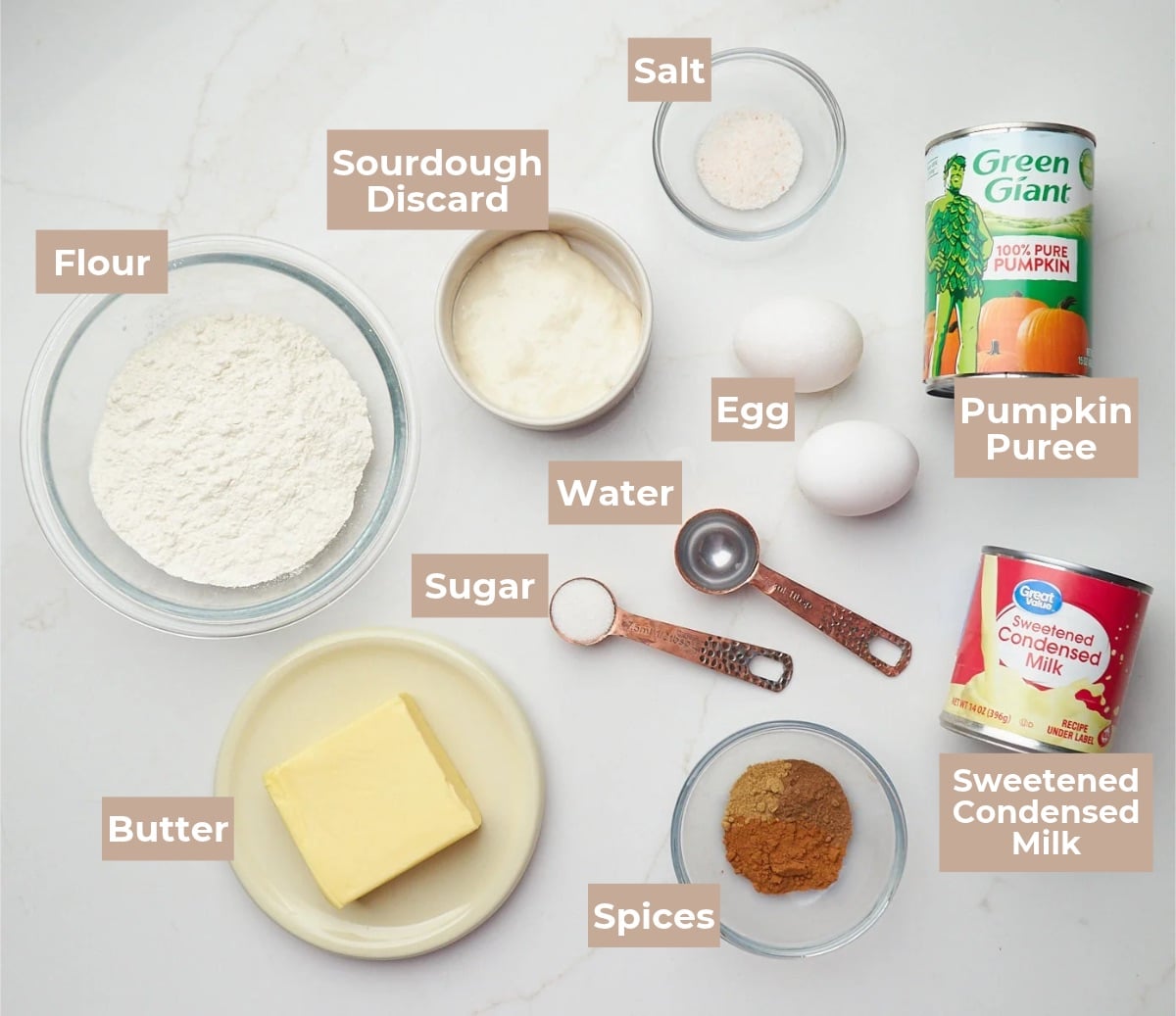
- Sourdough discard – You can use sourdough discard or active sourdough starter in this recipe. For the crust you’ll want to use cold starter to ensure a flaky crust but in the filling I recommend using it at room temperature for easy mixing. For the filling, use discard ideally from the last week or so to avoid the filling becoming too tangy.
- Butter – Using very cold butter straight from the fridge is what creates flaky layers, just like it does in sourdough chocolate chip scones and sourdough biscuits. Either salted or unsalted will work for this recipe.
- Pumpkin Puree – This recipe uses a full can of pumpkin puree. Be sure to use plain canned pumpkin and not canned pumpkin pie filling. If you are using homemade pumpkin puree, you will want to make sure it is not too watery, draining it well, so it doesn’t add a lot of extra moisture.
- Sweetened condensed milk – A full can of sweetened condensed milk is used to sweeten the filling, so no need to add sugar.
- Spices – A combination of ginger, nutmeg, and cinnamon is used for a classic pumpkin pie flavor. If you’d prefer, you can also substitute with 2 teaspoons of pumpkin pie spice.
Find the full recipe with measurements in the recipe card.
Instructions to make Sourdough Pumpkin Pie
Step 1 – Prepare the pie crust
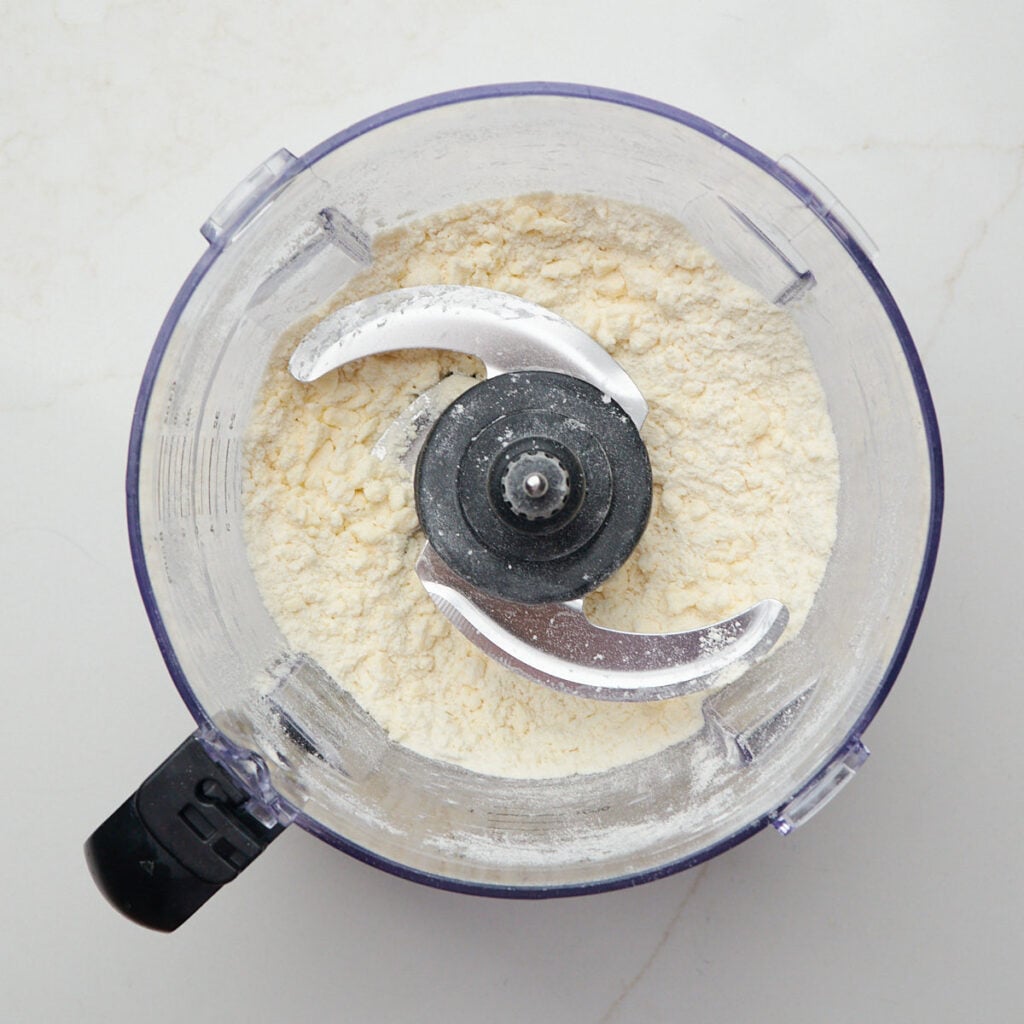
Add flour, salt, and sugar to a food processor or mixing bowl.
Dice up the cold butter and scatter it on top. Pulse for about 10-15 seconds or until the butter is in pea-size pieces.
If you are mixing the dough by hand, you can either use a cheese grater to grate frozen butter into the dry mixture, or you can dice the cold butter into the mix and use a pastry cutter to incorporate the butter.
Step 2 – Add sourdough discard
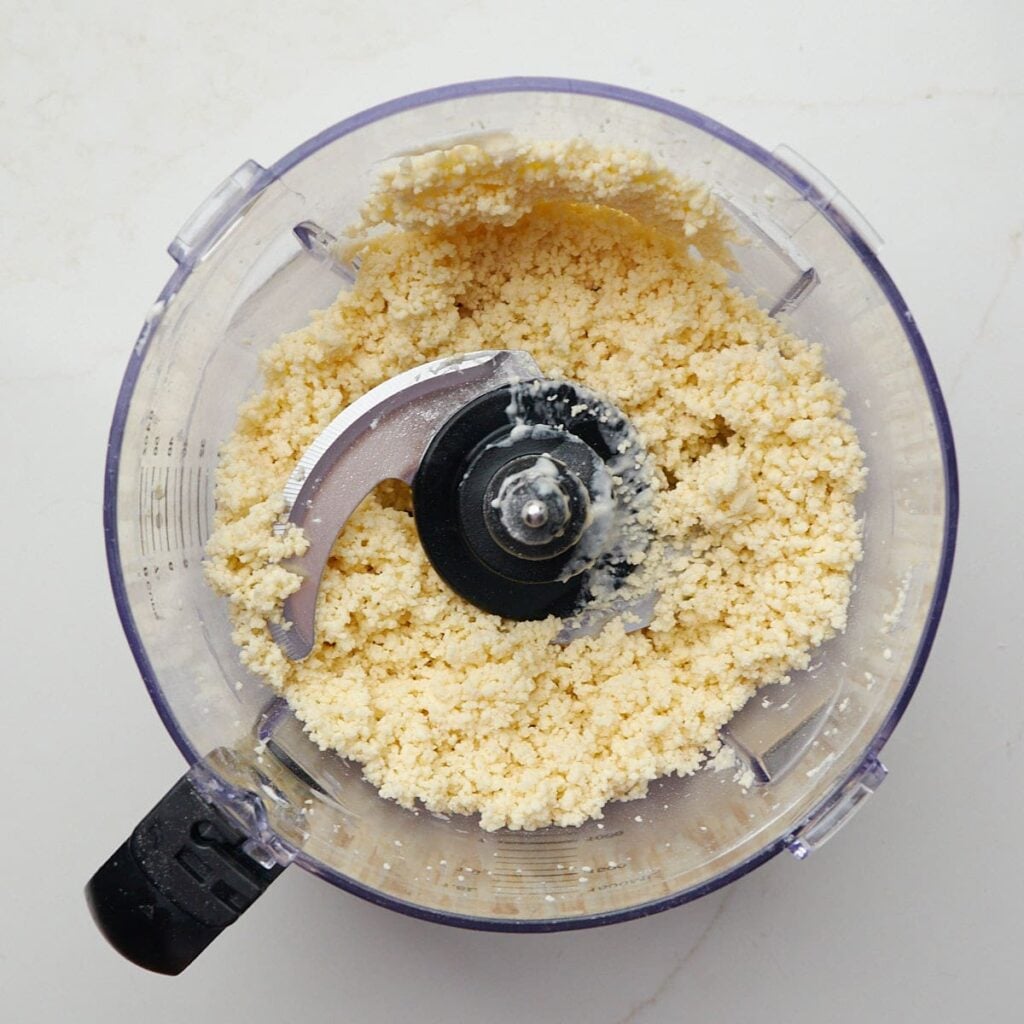
Add the sourdough discard and cold water and pulse until it begins to cling to itself, about 20 seconds. It will still be a little dry, but if you press it together, it should hold together. If not, add one tablespoon of ice-cold water at a time until it does.
If you are mixing by hand, add the discard and cold water and mix with a fork or Danish dough whisk until the dough begins to come together. It should hold together when pressed between your hands. If not, add one tablespoon of ice-cold water at a time until it does.
Step 3 – Chill dough
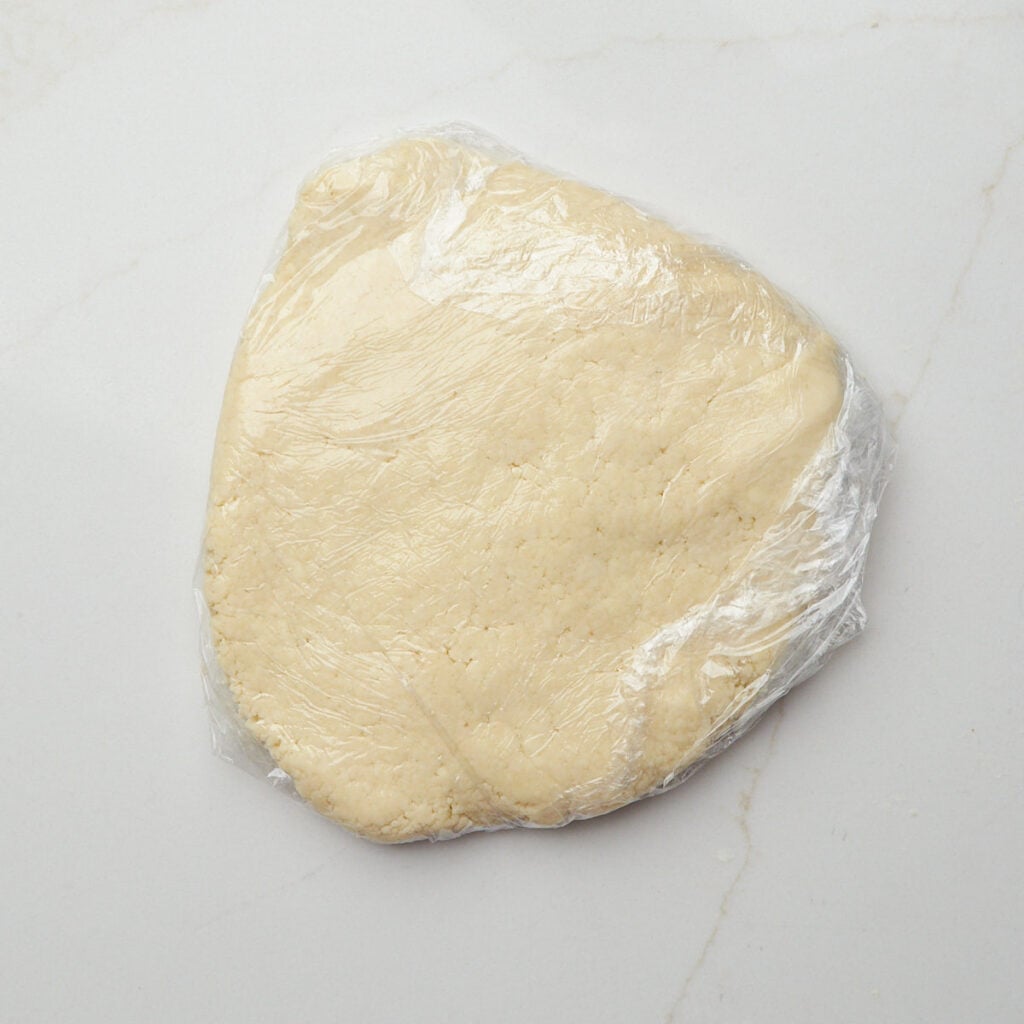
Turn the dough onto a lightly floured surface and gently press it into a disk. Wrap and refrigerate for 30 minutes.
The dough can be left in the fridge for up to 4 days at this point or placed in the freezer for up to 3 months.
Step 4 – Roll out the dough
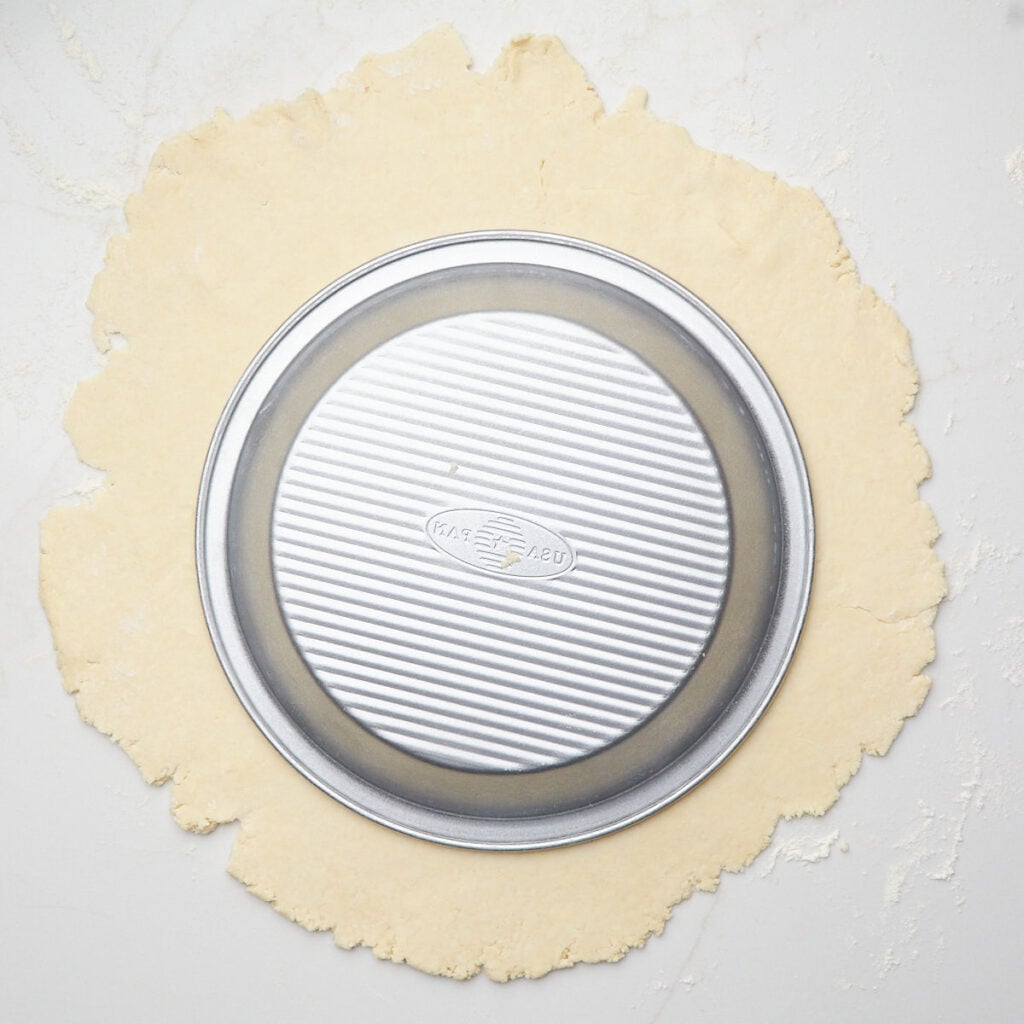
On a lightly floured surface, roll out the dough with a rolling pin until it is 2 inches larger than your pie pan.
Tip: If your pie dough has been in the fridge for a long period of time, you will likely need to let it sit out for 5-10 minutes to make it easier to roll.
Step 5 – Transfer to pie pan
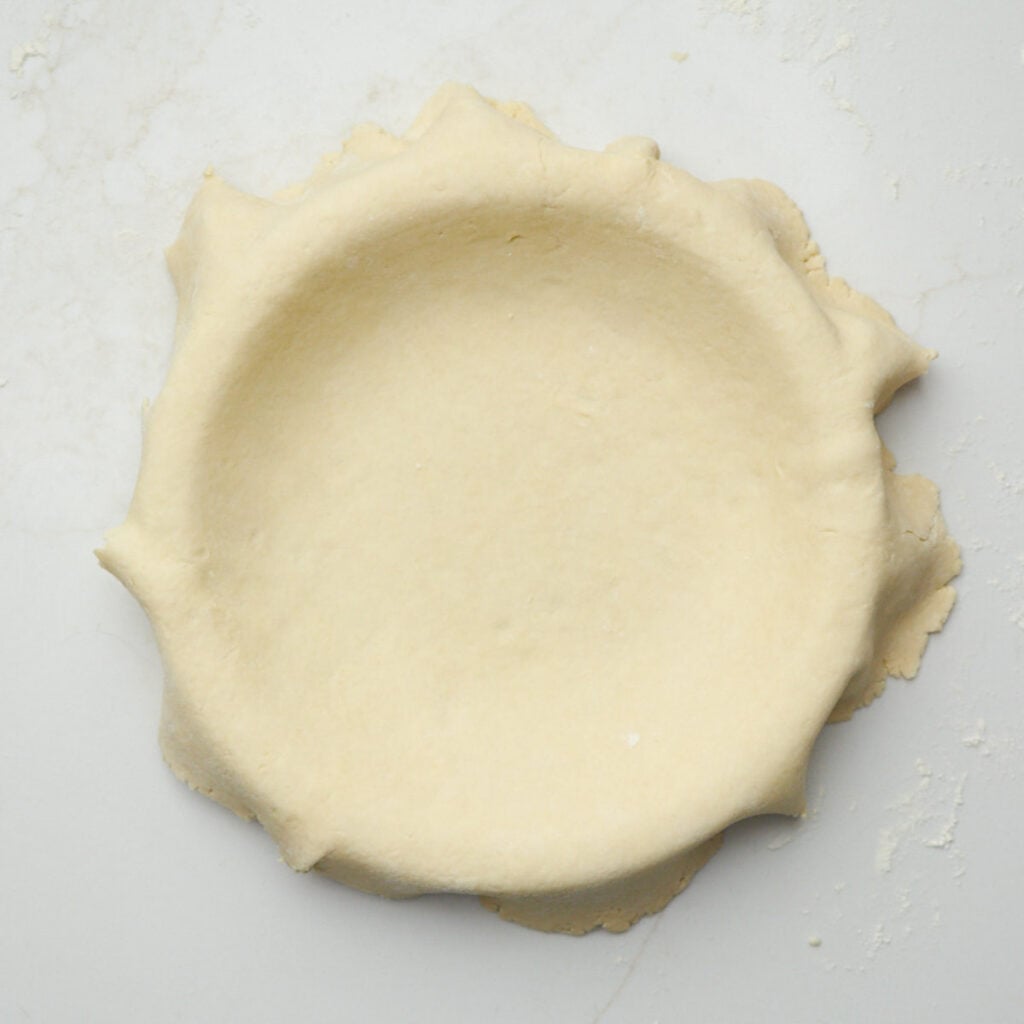
Gently roll the dough around your rolling pin, then unroll it over a 9-inch pie pan. You do not need to grease the pan. You can also fold the dough in half, then in half again, place it in the pie pan, and carefully unfold it. Gently press the dough into the bottom and sides of the pan, taking care not to stretch the dough.
Step 6 – Flute and chill
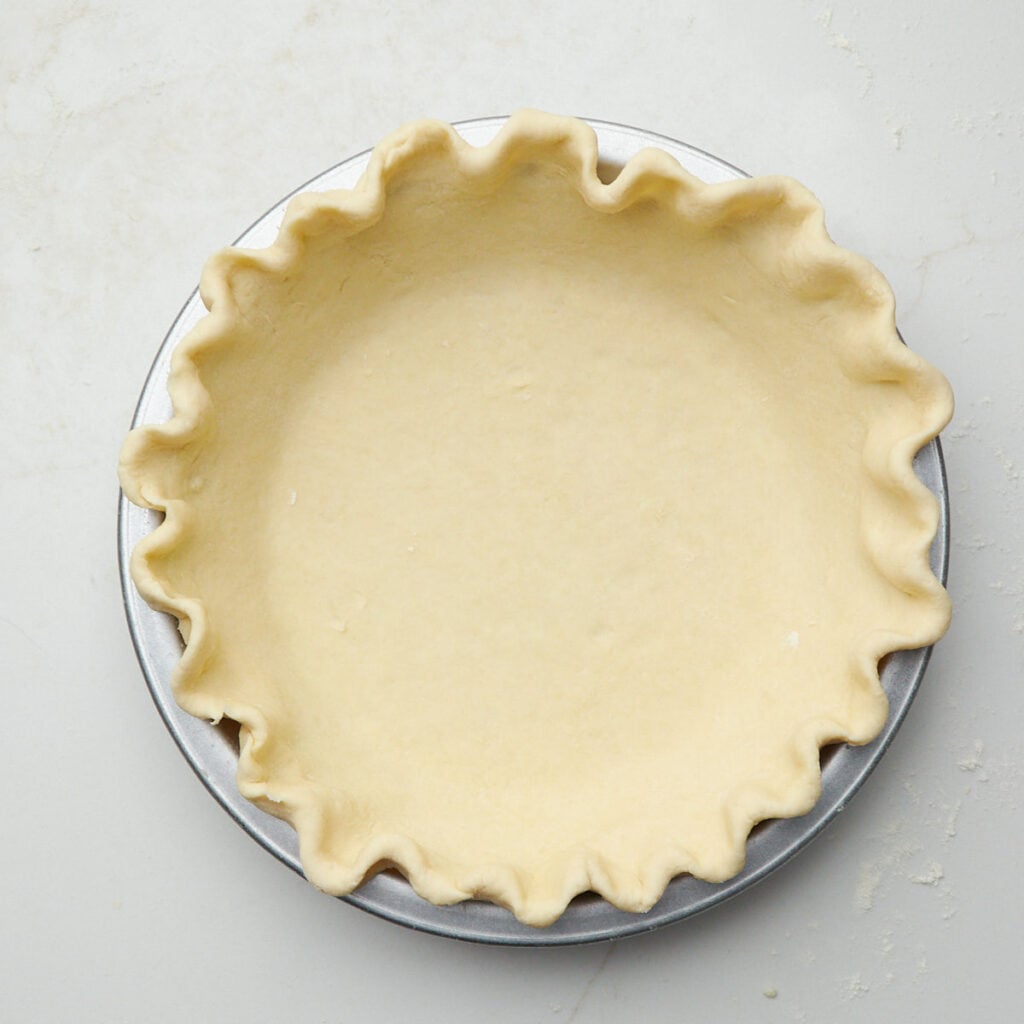
Trim off any excess dough, then gently roll the edges under to create a smooth, even rim. To flute the crust, use the thumb and index finger knuckles of one hand to gently press the dough around the knuckle of your opposite hand, creating a scalloped edge. Repeat all the way around the pie.
Let the crust chill in the fridge for 1-2 hours before baking to help prevent shrinkage. If you are short on time, you could put it in the freezer for about 30 mins or until firm. You do not need to cover it.
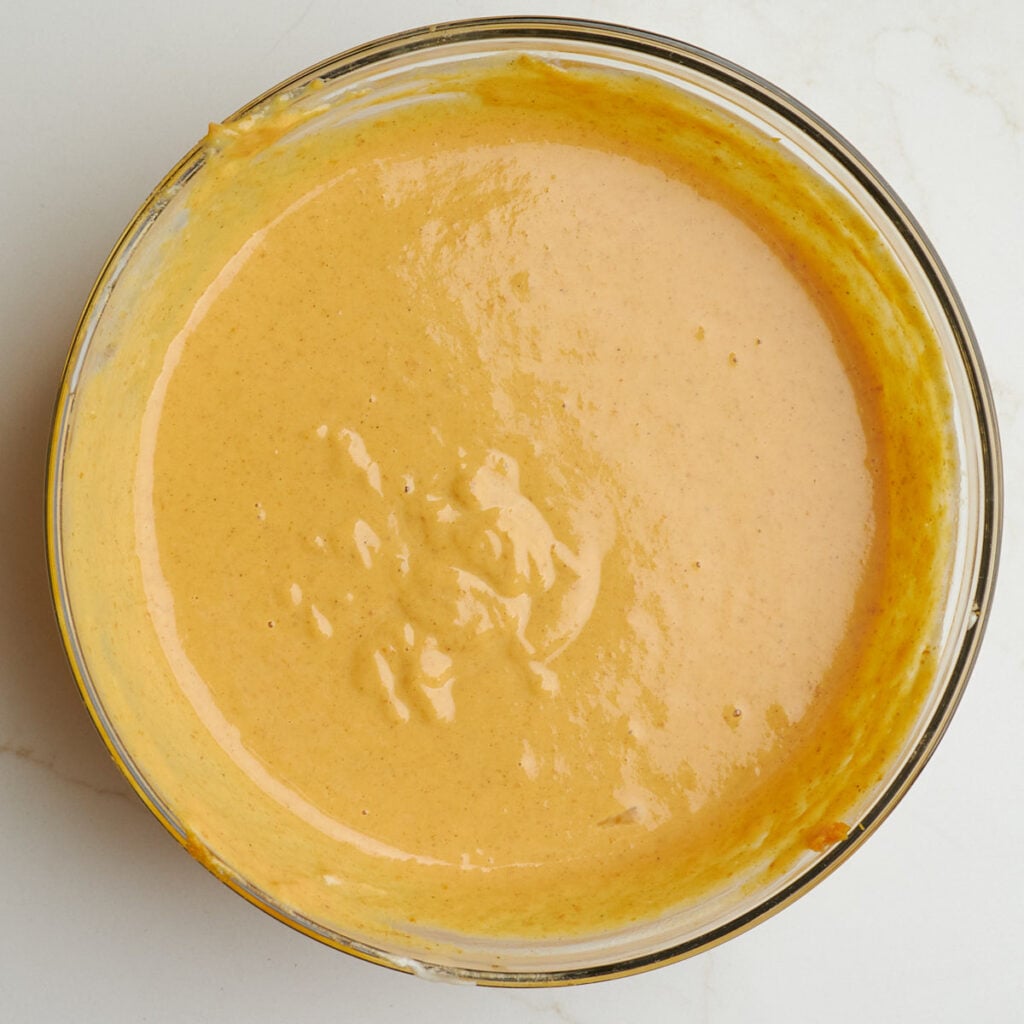
Step 7 – Make the filling
In a large bowl, whisk together the pumpkin puree, sweetened condensed milk, sourdough discard, eggs, cinnamon, ginger, nutmeg, and salt until smooth.
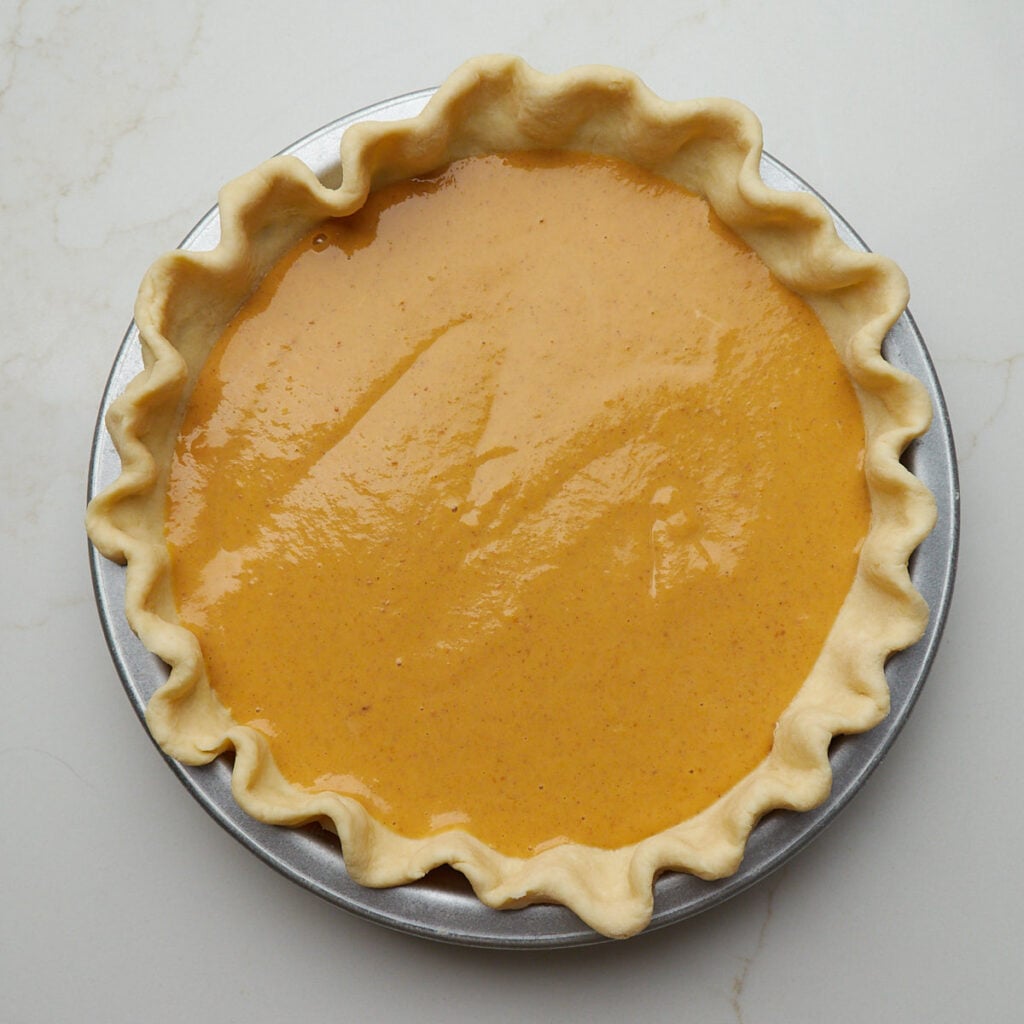
Step 8 – Add filling
Pour the filling into the unbaked pie crust.
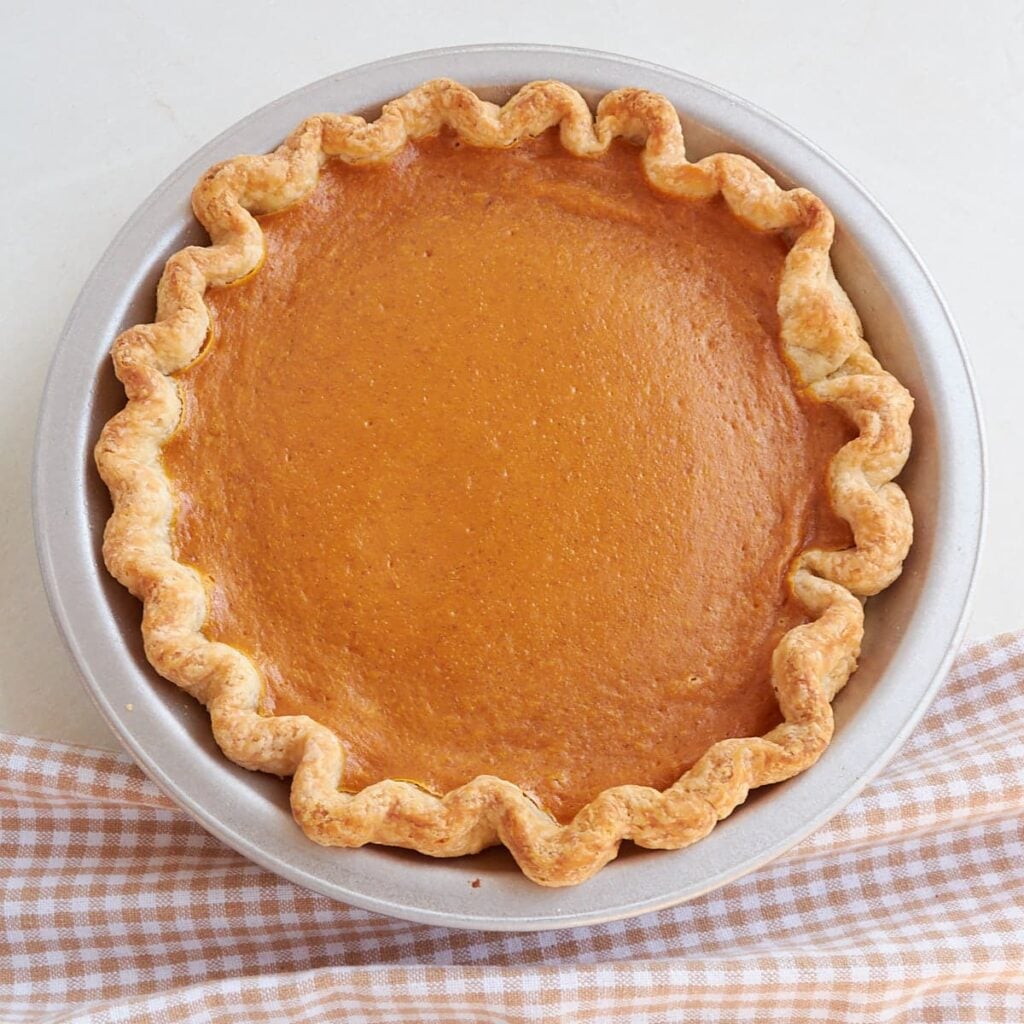
Step 9 – Bake
Bake at 425°F (220°C) for 15 minutes, then reduce to 350°F (175°C) and bake for another 33–35 minutes. If the crust browns too quickly, cover the edges with foil or a pie shield. I covered mine the last 15 minutes.
The pie is done when the center is mostly set with just a slight jiggle (175°F (79°C) internally). Cool on a wire rack for 2 hours before cutting. Cover and refrigerate.
Recipe Tip
- Don’t overwork the dough. It will still be crumbly after mixing, but when you press it together, it should easily clump together.
- Use really cold butter and discard to make the pie crust to ensure that the butter doesn’t melt, ensuring a flaky crust everytime.
- Don’t Overbake the Pie. Overbaking the pie can lead to cracking. When you remove it from the oven, the outside of the filling should look set while the center still has a light jiggle. The internal temperature should be about 175°F (79°C).
- If the edges of your pie crust are browning faster than the filling is baking, loosely cover them with foil or add a pie crust shield.
- Let It Cool Completely so the pumpkin custard has plenty of time to finish setting before slicing.
- I recently switched to metal pie pans from ceramic and really like how the crust bakes up. Plus, you don’t have to worry about putting a cold pan directly into the oven.
How to Store Sourdough Pumpkin Pie
Once the pie has cooled completely, cover it and store it in the refrigerator for 3 to 4 days. Because the filling contains eggs, pumpkin pie should be refrigerated rather than left at room temperature for long periods.
Recipe FAQ
The center of my tested pie reached 175°F when I removed it from the oven. At that point, it was mostly set, with a slight jiggle in the middle
No. I tested this recipe without blind baking and found that the crust baked through well, so I don’t think the extra step is necessary.
The pie starts at 425°F for 15 minutes before the oven is reduced to 350°F. That initial high heat helps give the crust a head start while the filling begins to set.
Yes! Pumpkin pie is a great make-ahead Thanksgiving dessert. Bake the pie, let it cool completely, then cover and refrigerate it until you’re ready to serve. I especially like making pies ahead of time because it frees up oven space on Thanksgiving Day.
Yes. An active starter or discard will work as long as your starter is 100% hydration, meaning it’s fed equal weights of flour and water. Since the recipe doesn’t rely on the starter for fermentation, there’s no need to feed it first.
Yes, but canned pumpkin puree tends to have a very consistent moisture level. If using homemade pumpkin puree, make sure it is thick rather than watery. You may need to drain excess moisture and pat it dry before using it.
Yes. You can replace the cinnamon, ginger, and nutmeg with 2 teaspoons of pumpkin pie spice.
Cracks are most commonly a sign that the custard was baked a little too long. Remove the pie while the center still has a slight jiggle rather than waiting until it looks completely firm.
The crust will usually brown before the pumpkin custard finishes baking. If it reaches the color you want before the filling is done, cover the edges with a pie crust shield or strips of aluminum foil.
Yes. Let the pie cool completely before wrapping it well and freezing. Thaw it overnight in the refrigerator before serving.
More Pumpkin Desserts

Recipes with Sourdough Discard
Sourdough Pumpkin Cobbler

Recipes with Sourdough Discard
Sourdough Pumpkin Cake with Cream Cheese Frosting
Fall Sourdough Recipes
Sourdough Pumpkin Chocolate Chip Cookies

Fall Sourdough Recipes
Sourdough Pumpkin Cinnamon Rolls with Vanilla Cream Cheese Icing
Tried this Sourdough Pumpkin Pie or another recipe from the site? I’d love to hear about it! Drop a star rating and share your thoughts in the comments—can’t wait to see what you’re baking!
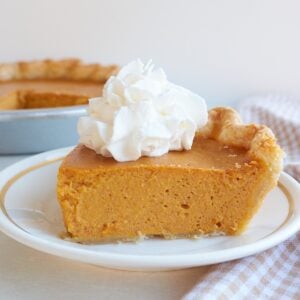
Sourdough Pumpkin Pie
Ingredients
Sourdough Pie Crust
- 140 grams all-purpose flour, 1 cup
- 3 grams salt, ½ teaspoon
- 8 grams sugar, ½ Tablespoon
- 75 grams butter, cold, ⅓ cup
- 120 grams sourdough discard, cold, ½ cup
- 45 grams water, ice cold, 3 Tablespoons
Pumpkin Pie Filling
- 1 15-ounce can pumpkin puree, about 1¾ cups
- 1 14-ounce can sweetened condensed milk, about 1⅓ cups
- 75 grams sourdough discard, about ⅓ cup
- 2 large eggs
- 1 teaspoon cinnamon
- ½ teaspoon ground ginger
- ½ teaspoon ground nutmeg
- ½ teaspoon salt
Instructions
- Prepare the pie crust: Add flour, salt, and sugar to a food processor or mixing bowl. Dice up the cold butter and scatter it on top. Pulse for about 10-15 seconds or until the butter is in pea-size pieces. 140 grams all-purpose flour, 3 grams salt, 8 grams sugar, 75 grams butterIf you are mixing the dough by hand, you can either use a cheese grater to grate frozen butter into the dry mixture, or you can dice the cold butter into the mix and use a pastry cutter to incorporate the butter.
- Add sourdough discard: Add the discard and cold water and pulse until it begins to cling to itself, about 20 seconds. It will still be crumbly, but if you press it together, it should hold together. If not, add one tablespoon of ice-cold water at a time until it does. 120 grams sourdough discard, 45 grams waterIf you are mixing by hand, add the discard and cold water and mix with a fork or Danish dough whisk until the dough begins to come together. It should hold together when pressed between your hands. If not, add one tablespoon of ice-cold water at a time until it does.
- Chill dough: Turn the dough onto a lightly floured surface and gently press it into a disk. Wrap and refrigerate for 30 minutes.
- Roll out the dough: On a lightly floured surface, roll out the dough with a rolling pin until it is 2 inches larger than your pie pan.
- Transfer to pie pan: Gently roll the dough around your rolling pin, then unroll it over a pie pan. You do not need to grease the pan. You can also fold the dough in half, then in half again, place it in the pie pan, and carefully unfold it. Gently press the dough into the bottom and sides of the pan, taking care not to stretch the dough.
- Flute and chill dough: Trim off any excess dough, then gently roll the edges under to create a smooth, even rim. To flute the crust, use the thumb and index finger knuckles of one hand to gently press the dough around the knuckle of your opposite hand, creating a scalloped edge. Repeat all the way around the pie.Let the crust chill in the fridge for 1-2 hours before baking to help prevent shrinkage. If you are short on time, you could put it in the freezer for about 30 mins or until firm. You do not need to cover it.
- Preheat the oven: Preheat the oven to 425°F (220°C).
- Make the filling: In a large bowl, whisk together the pumpkin puree, sweetened condensed milk, sourdough discard, eggs, cinnamon, ginger, nutmeg, and salt until smooth. Pour the filling into the unbaked pie crust.1 15-ounce can pumpkin puree, 1 14-ounce can sweetened condensed milk, 75 grams sourdough discard, 2 large eggs, 1 teaspoon cinnamon, ½ teaspoon ground ginger, ½ teaspoon ground nutmeg, ½ teaspoon salt
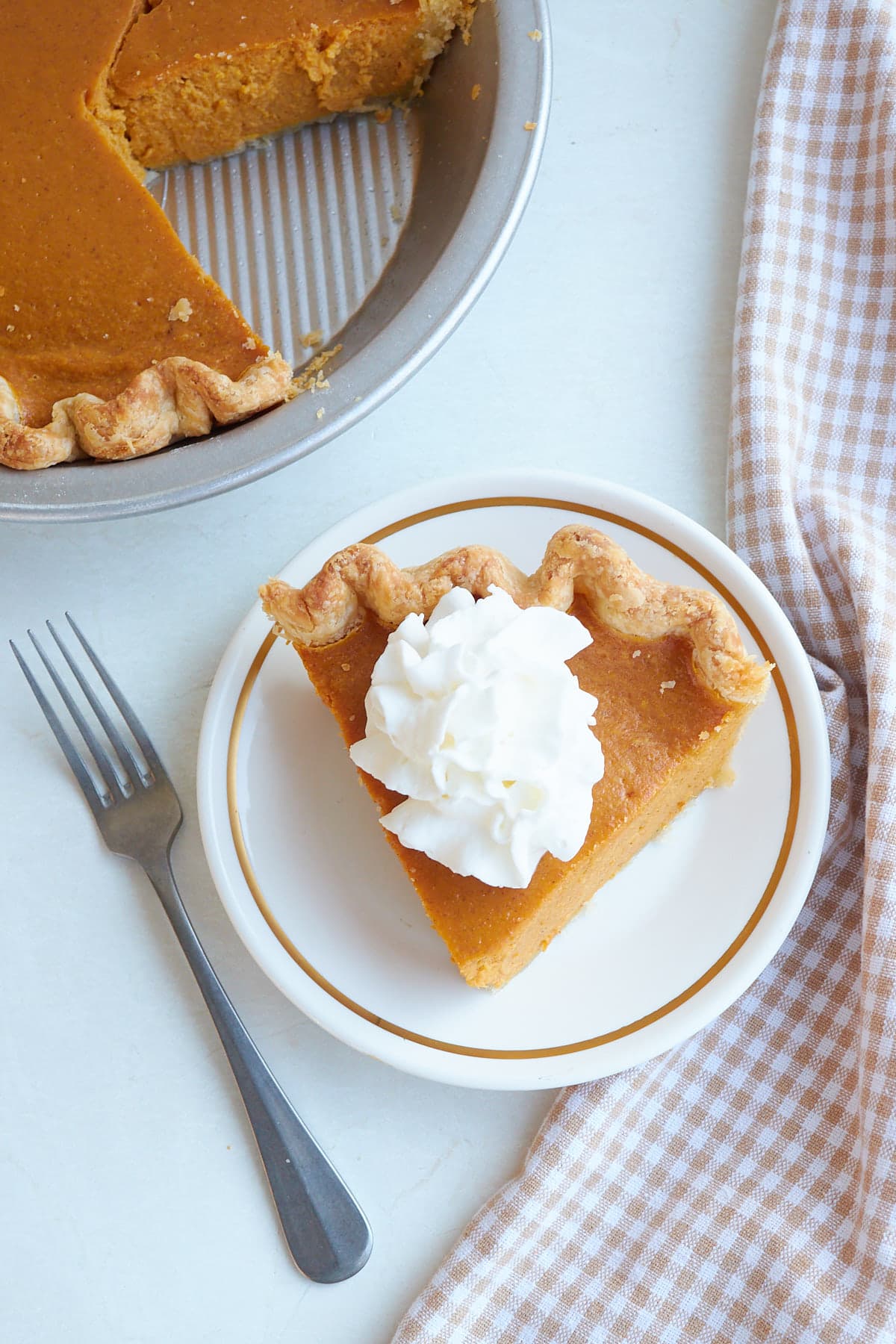
- Bake: Bake at 425°F (220°C) for 15 minutes, then reduce to 350°F (175°C) and bake for another 33–35 minutes. If the crust browns too quickly, cover the edges with foil or a pie shield. I covered mine the last 15 minutes.The pie is done when the center is mostly set with just a slight jiggle (175°F (79°C) internally). Cool on a wire rack for 2 hours before cutting. Cover and refrigerate. Top with whipped cream before serving.
Notes
- Don’t overwork the dough. It will still be a little dry but when you press it together it should easily clump together.
- Use really cold butter and discard to ensure that the butter doesn’t melt, ensuring a flaky crust.
- Don’t Overbake the Pie. Overbaking the pie can lead to cracking. When you remove it from the oven, the outside of the filling should look set while the center still has a light jiggle. The internal temperature should be about 175°F (79°C).
- If the edges of your pie crust are browning faster than the filling is baking, loosely cover them with foil or add a pie crust shield.
- Let It Cool Completely so the pumpkin custard has plenty of time to finish setting before slicing.
- I recently switched to metal pie pans from ceramic and really like how the crust bakes up. Plus, you don’t have to worry about putting a cold pan directly into the oven.
- Recipe adapted from Allrecipes Perfect Pumpkin Pie
Nutrition
Nutrition information is automatically calculated, so should only be used as an approximation.

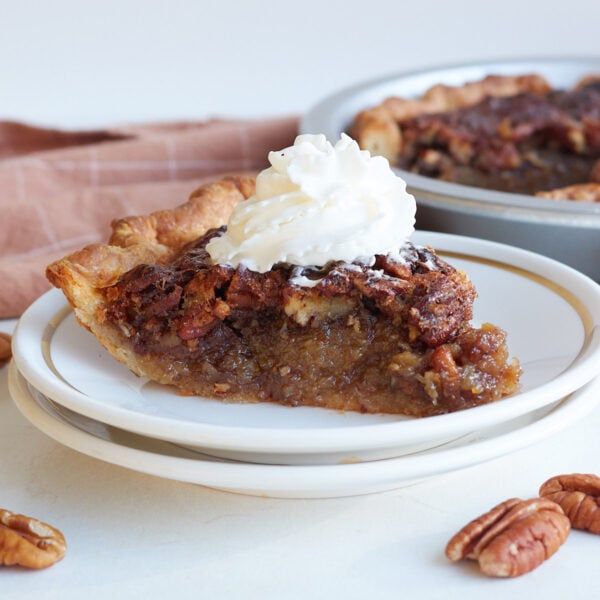


This recipe converted me from a pumpkin pie hater to lover! The filling is so smooth and delicious and the crust is buttery and flaky.