
This post may contain affiliate links . Read my full Disclosure Policy.



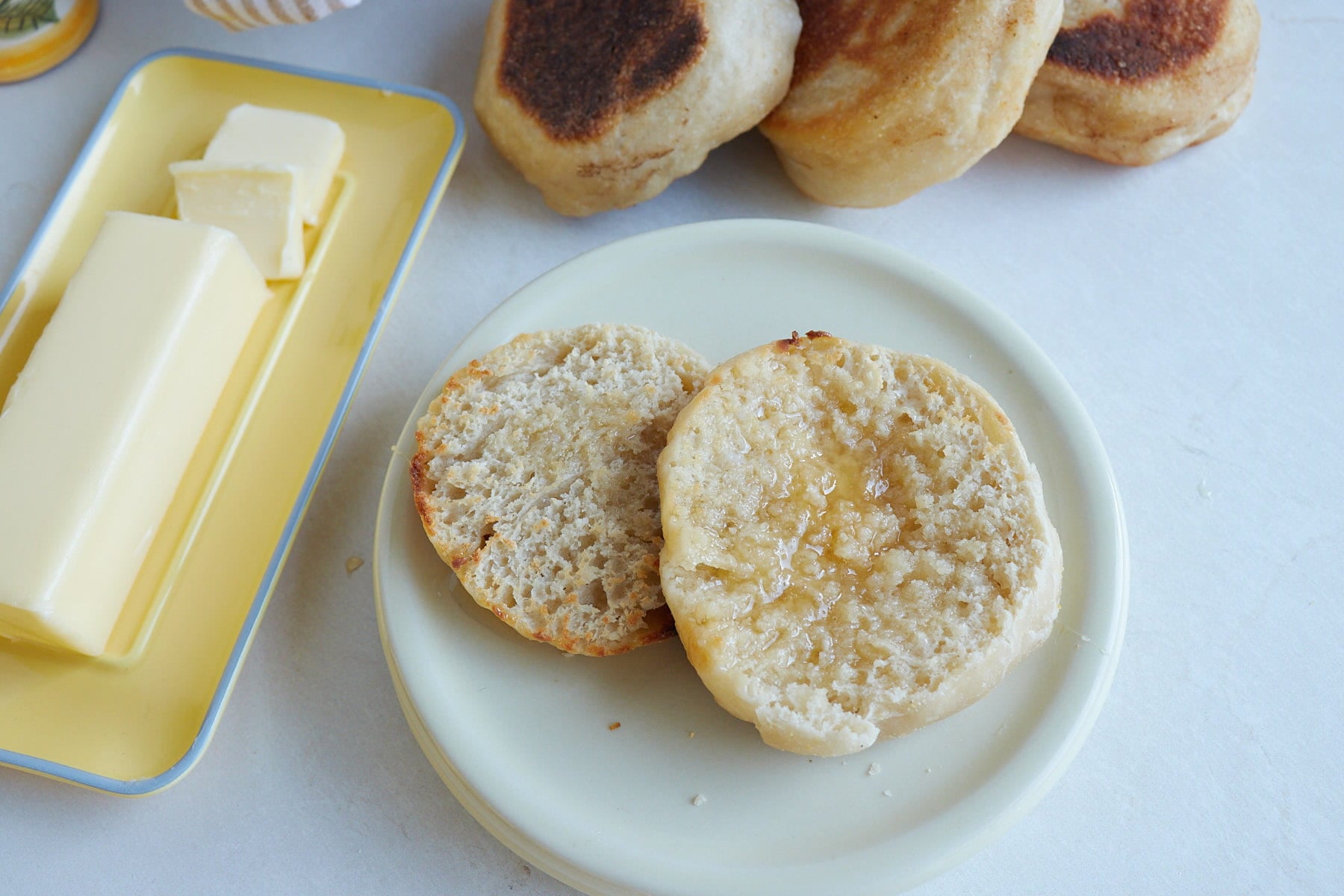
These Sourdough English Muffins have been one of my most requested recipes, and after several rounds of testing, I’m so excited to finally share them! They’re light, airy, and buttery with crisp tops and all those delicious nooks and crannies. Made with active sourdough starter, they rise overnight and cook right on the stovetop.
Save & Summarize
Getting the texture just right took a little trial and error. My first batch was denser than I wanted, so I increased the milk to create a lighter, fluffier crumb while keeping the dough easy to work with. I also experimented with the amount of starter to make sure the dough would rise at just the right pace overnight. The end result is everything I was hoping for, and I can’t wait for you to make them!
Table of Contents
Why you will love this recipe
- Overnight recipe. – Just like my Sourdough Bagels, you mix the dough the night before and let it rise while you sleep! Then shape and bake the next morning.
- Easy to make – Just like all my beginner-friendly sourdough bread recipes, I wanted to make sure these Sourdough English Muffins were easy to work with.
- No oven required – This recipe is pan-fried on the stovetop, just like my Sourdough Naan, so no need to turn on your oven!
Important Ingredients and Substitutions
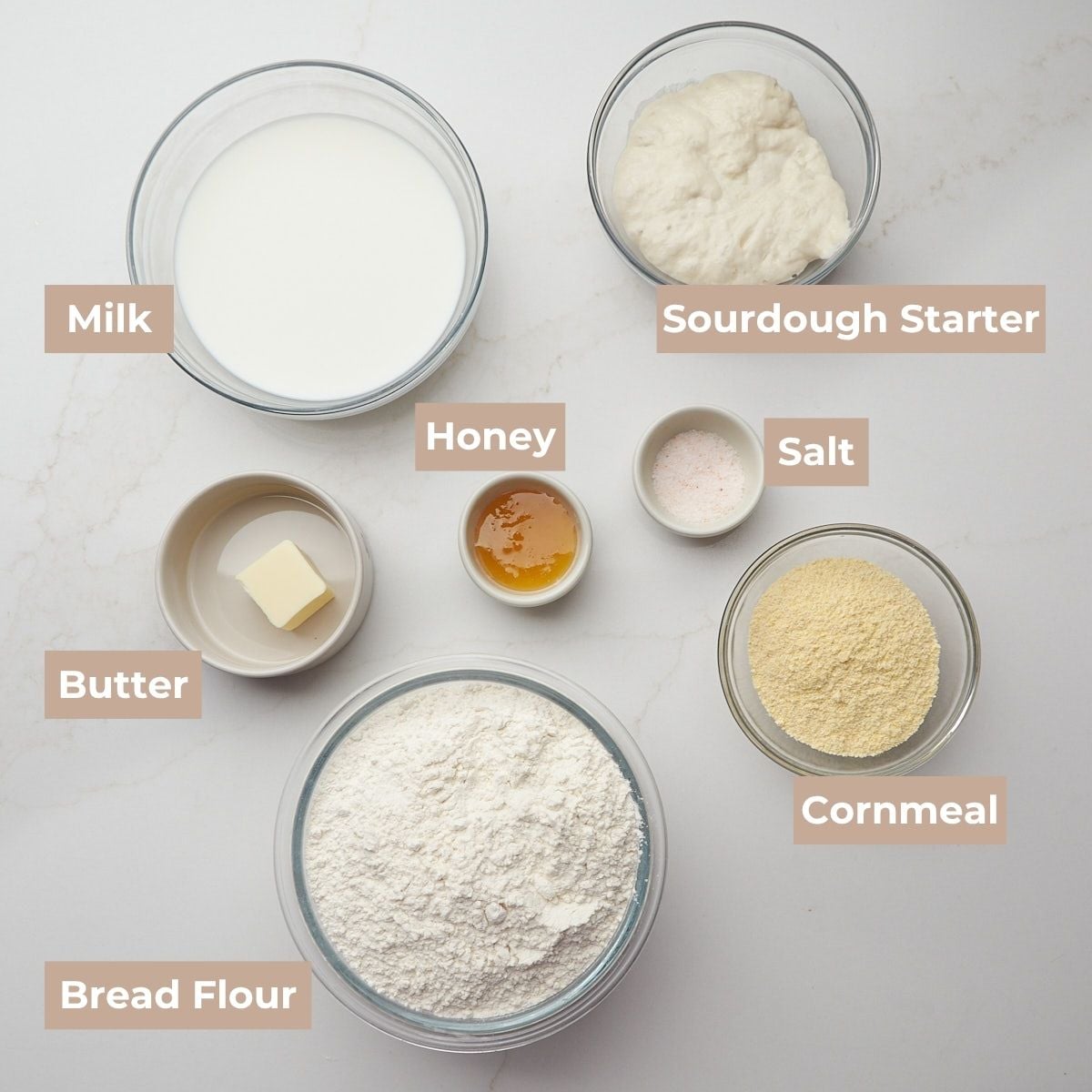
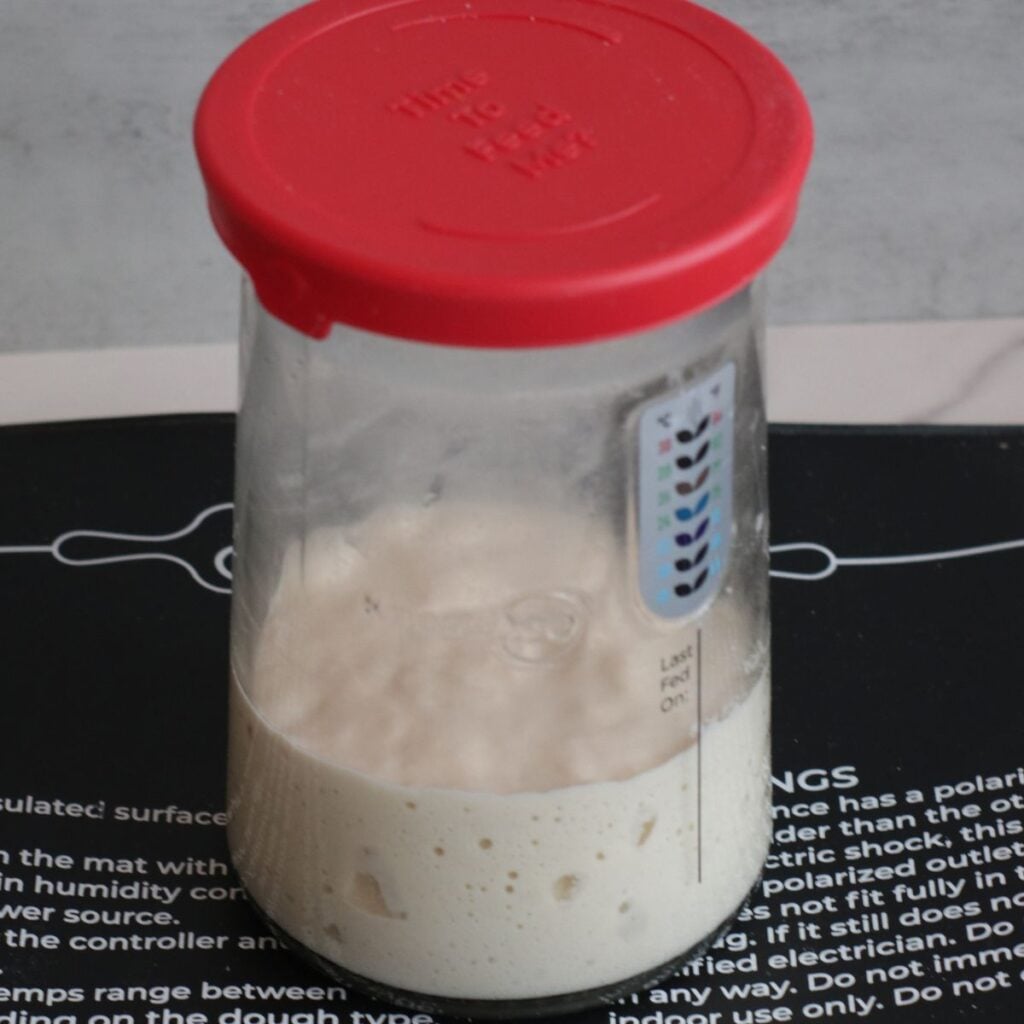
- Sourdough starter – Use an active sourdough starter that has recently been fed, has doubled in size, and is bubbly.
- Bread flour – Because this is a higher-hydration dough, bread flour works best because it absorbs more liquid than all-purpose. You can use all-purpose flour in this recipe; you may just need to add a little more flour if the dough is too sticky when kneading.
- Butter – In the recipe, butter is used twice, once in the dough and then also when frying the English Muffins to create a delicious buttery flavor.
- Honey – If you prefer not to use honey, you can swap it out for an equal amount of pure maple syrup or granulated sugar.
- Cornmeal – Just like with my Sourdough Pizza crust, the cornmeal helps prevent the dough from sticking. It also adds the signature flavor and texture to the outside of the English Muffins. You can also use semolina flour if you’d like or use all-purpose flour instead when shaping and cutting the dough.
See all the ingredients and amounts in the recipe card below.
Instructions to make Sourdough English Muffins
Step 1 – Feed sourdough starter
About 4 hours before making the Sourdough English Muffins, build a levain or feed your sourdough starter at a 1:1:1 ratio (50 grams starter: 50 grams flour: 50 grams water). Cover and let it rest at 80°F (27°C) until bubbly and doubled in size.
If you don’t have extra starter, add an extra 5–10 grams to each portion (starter, flour, and water) so you have enough to bake with and still keep your starter going.
Skip this step if your starter is already activated and ready to bake with.
Note: If you want to feed your starter 10–12 hours in advance, use a 1:5:5 ratio (15 g starter: 75 g flour: 75 g water). Leave it at 70–72°F (21-22°C) until bubbly and doubled.
Step 2 – Mix & Knead the dough
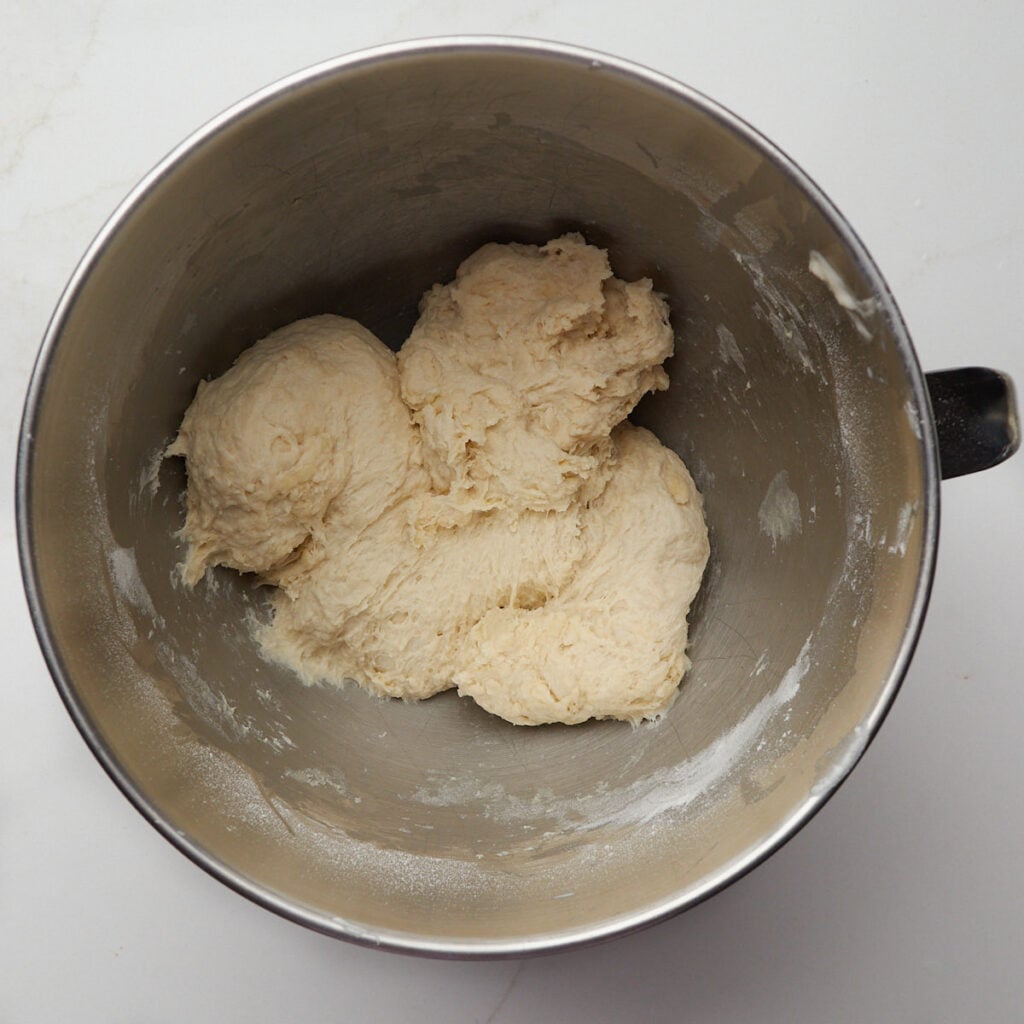
Add the active sourdough starter, warmed milk, honey, slightly cooled melted butter, bread flour and salt to the bowl of a stand mixer or a large mixing bowl.
Knead for about 3–4 minutes with the dough hook attachment, until the dough is well combined. The dough will still feel tacky, but it should hold together and pull away from the sides of the bowl.
Step 3 – Bulk ferment overnight
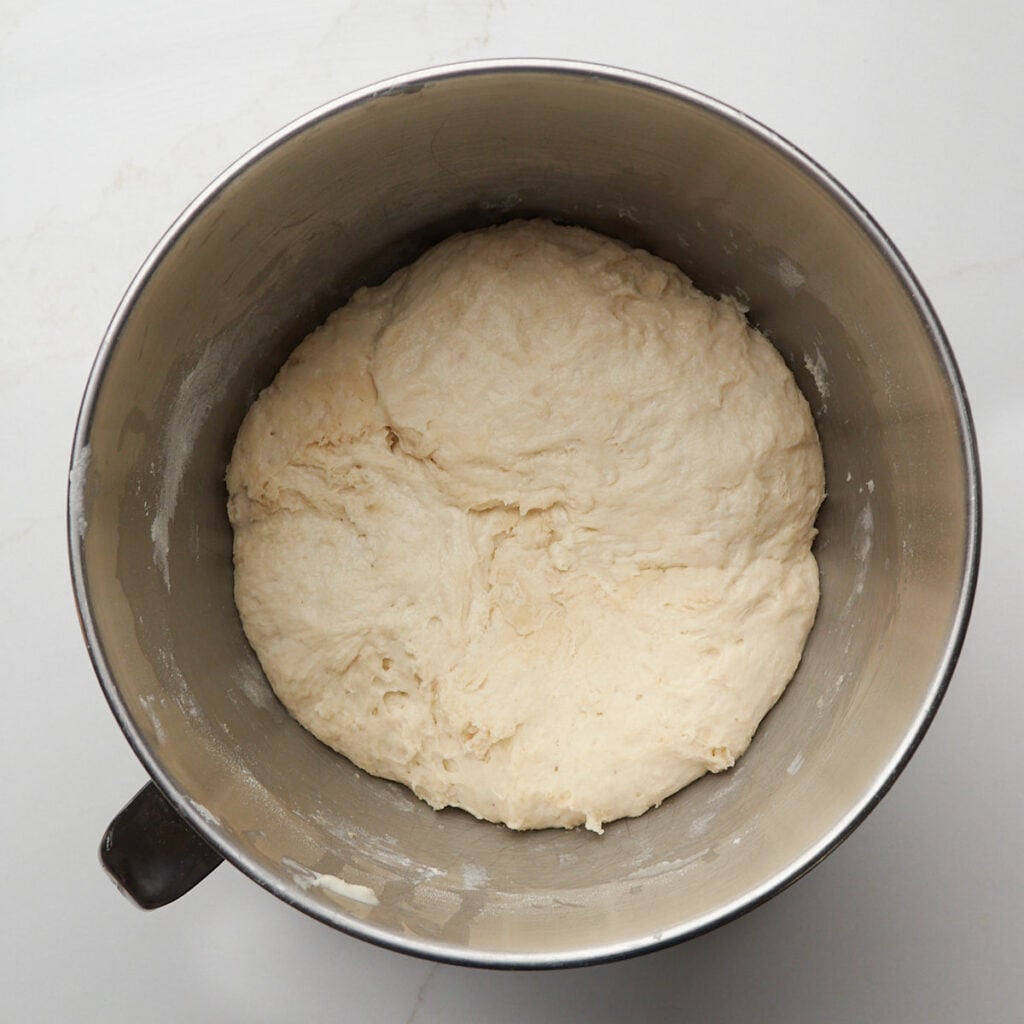
Cover the dough and let it rise at room temperature until it has doubled in size. At around 68–70°F (20–21°C), this will likely take about 8–10 hours.
Step 4 – Shape the English muffins
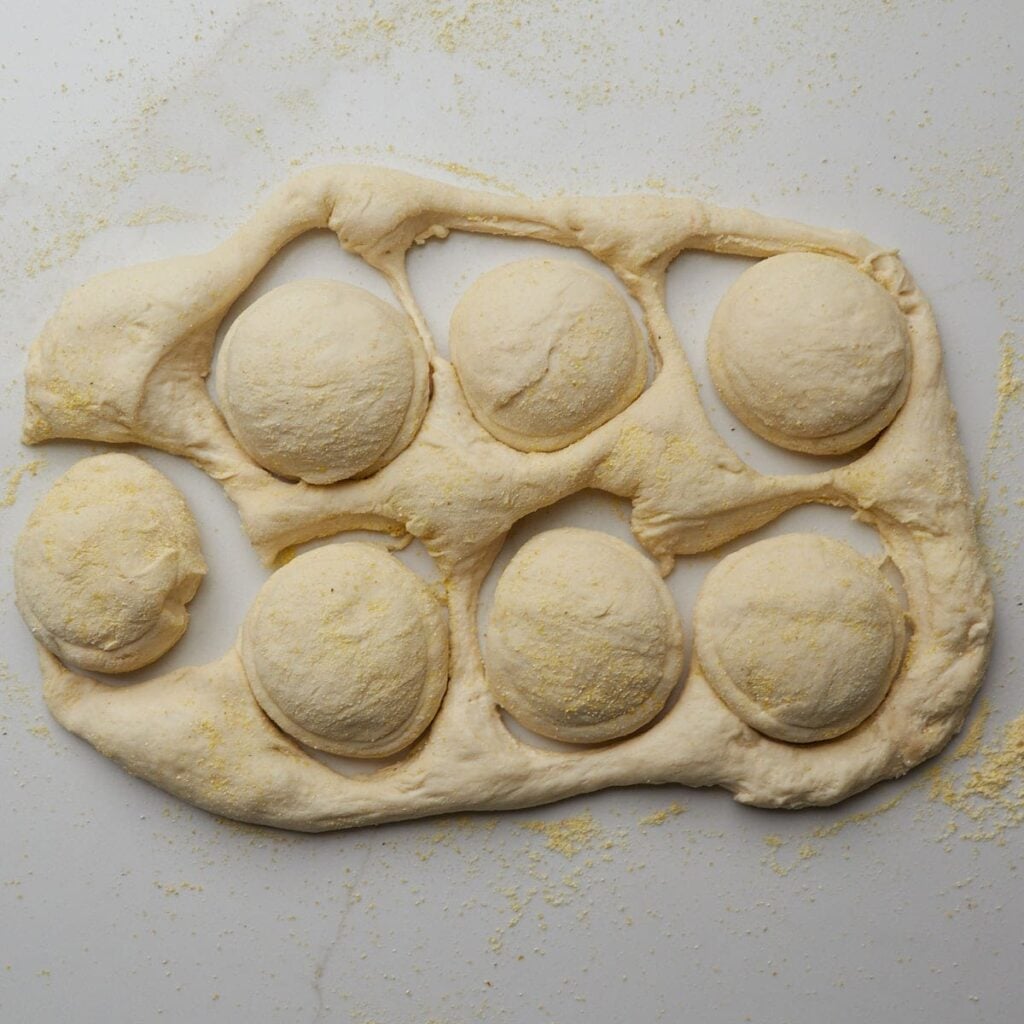
Lightly sprinkle your work surface with cornmeal and turn the dough out onto it. If you’re not using cornmeal, you can lightly flour the surface instead. Gently press the dough into an rectangle with your hands, keeping it about ¾ inch thick.
Use a 2½- to 3-inch round cutter to cut out the English muffins. I like to use a regular-mouth canning jar ring, which is 2¾ inches in diameter and makes 12 English muffins. Gently press the scraps back together and cut out additional rounds, being careful not to overwork the dough.
Step 5 – Coat with cornmeal
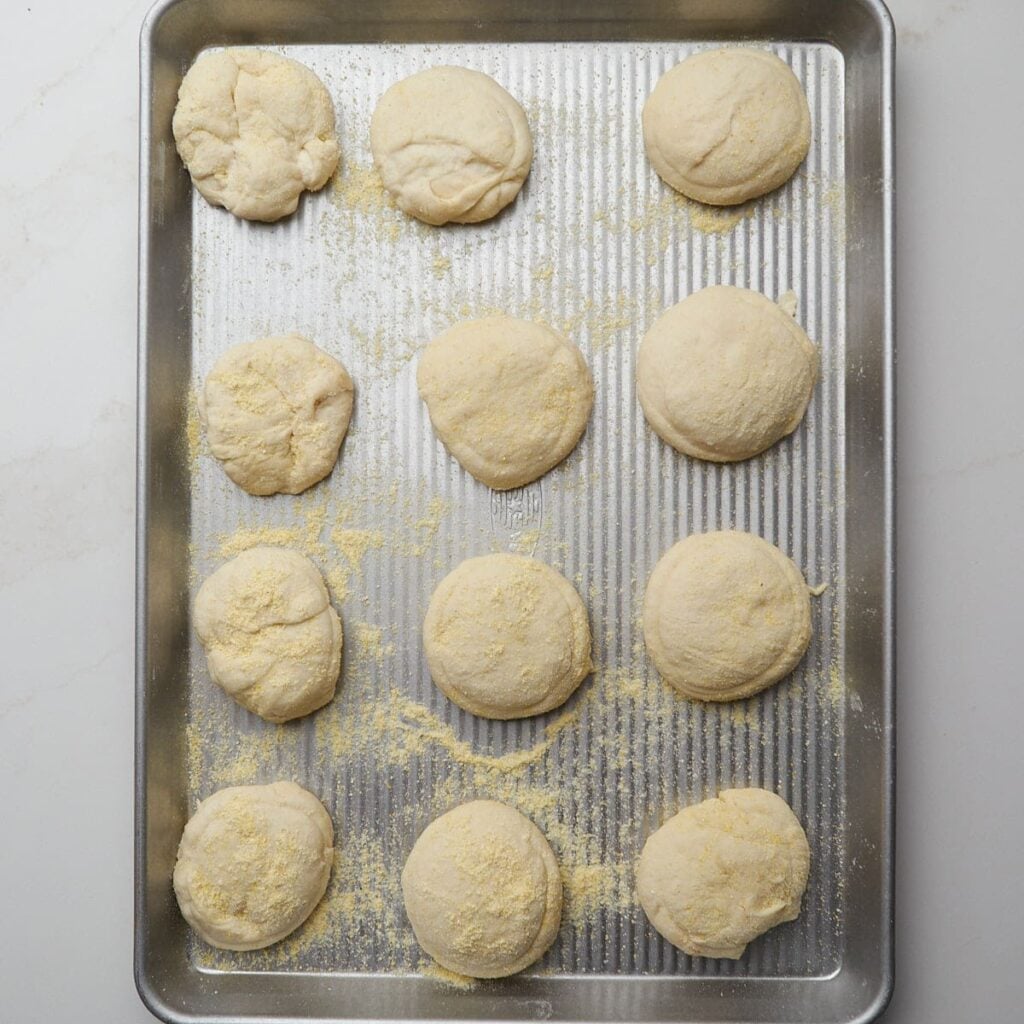
Generously sprinkle a sheet pan with cornmeal or semolina. Place the English muffins on the pan and sprinkle additional cornmeal over the tops.
Step 6 – Second rise
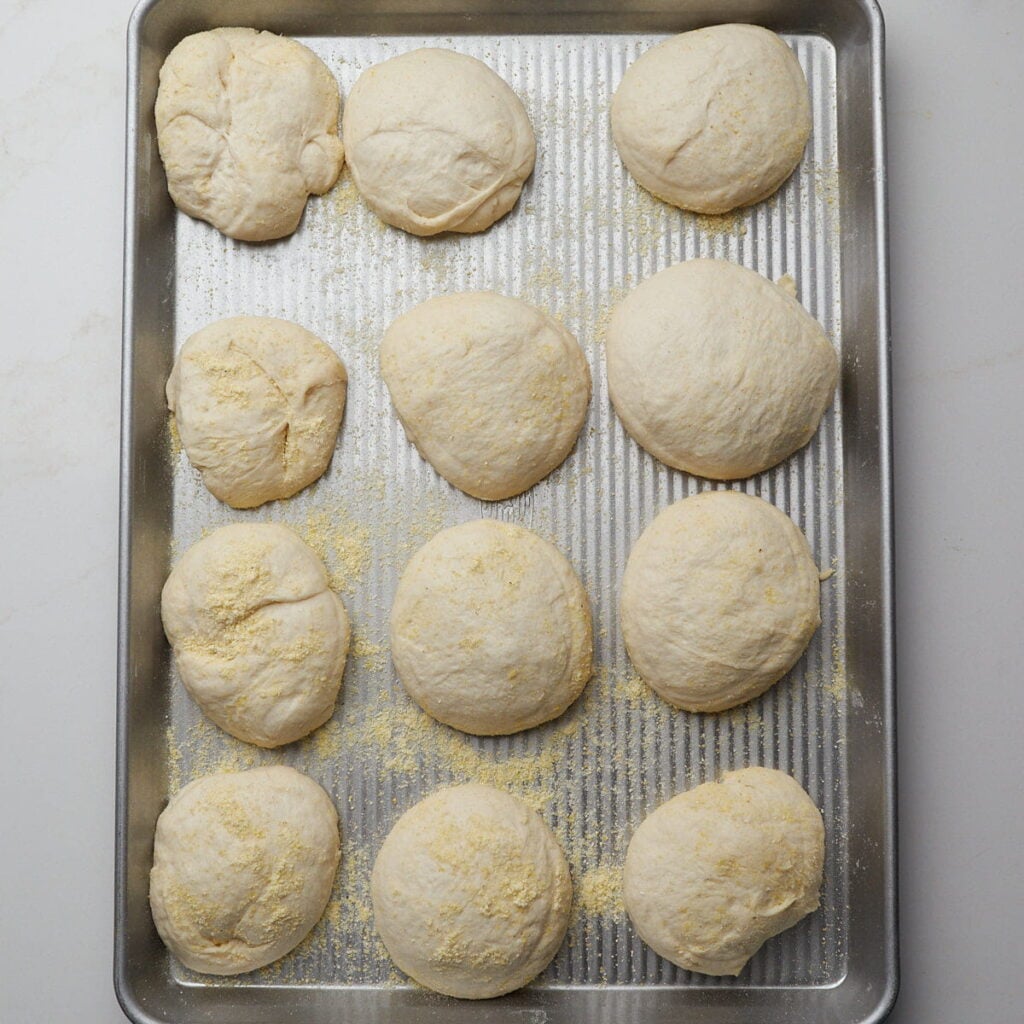
Cover and let them rise in a warm spot for about 1–2 hours, or until noticeably puffy.
To refrigerate before cooking: If you need to delay cooking the English muffins, let them rise at room temperature for about 1 hour before transferring them to the refrigerator. About 30–60 minutes before cooking, remove them from the fridge and place them in a warm spot to come to room temperature and finish rising if they aren’t already puffy.
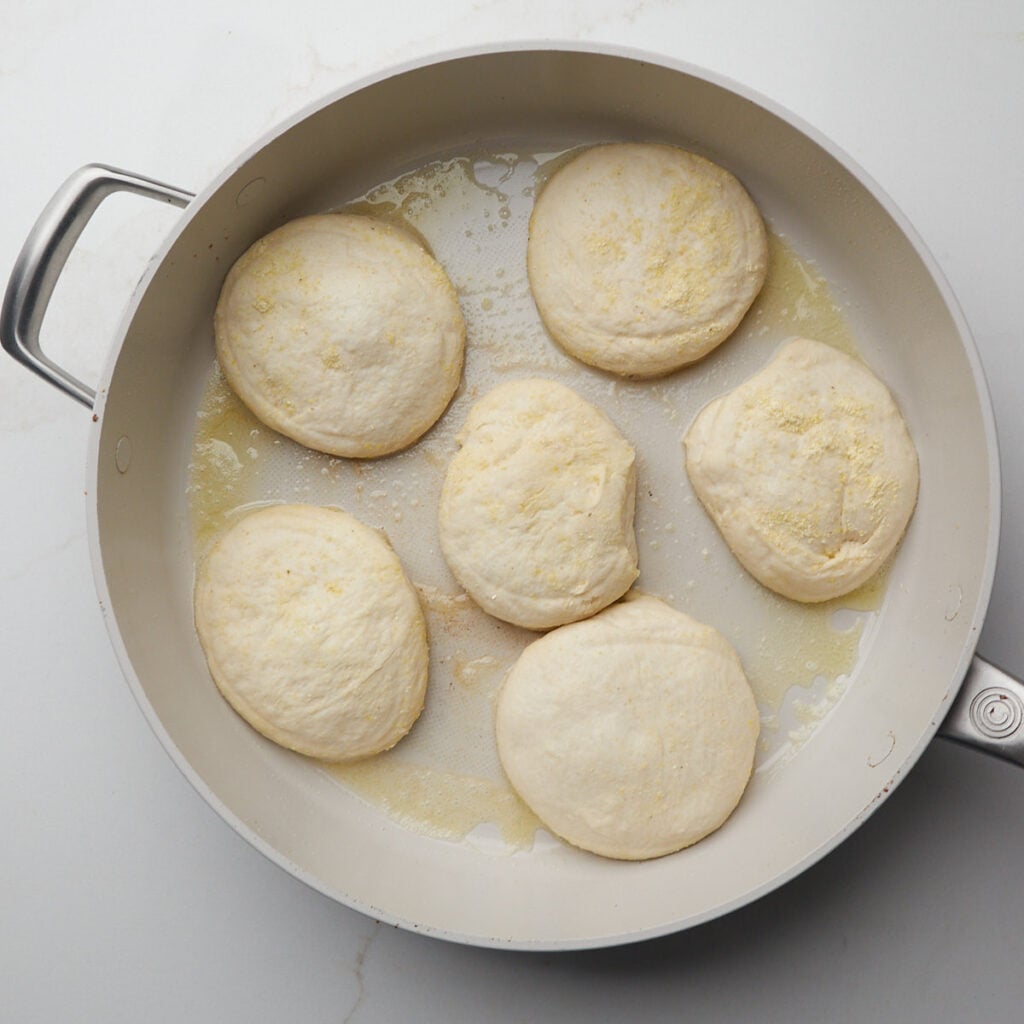
Step 7 – Cook the English muffins
Preheat a large heavy skillet with a lid over medium heat for about 5 minutes or until really warm. Melt 1-2 tablespoons of butter in the pan.
Transfer the English muffins to the preheated skillet, leaving space between each one. I can fit 6 at a time in my 12-inch skillet. If you’re unsure whether your pan is at the right temperature, I recommend cooking one English muffin first to test the heat.
Cover the skillet with a lid and cook for 5 minutes without moving the English muffins. If the bottoms are burning or browning too quickly, your pan is too hot, so reduce the heat before cooking the remaining batches.
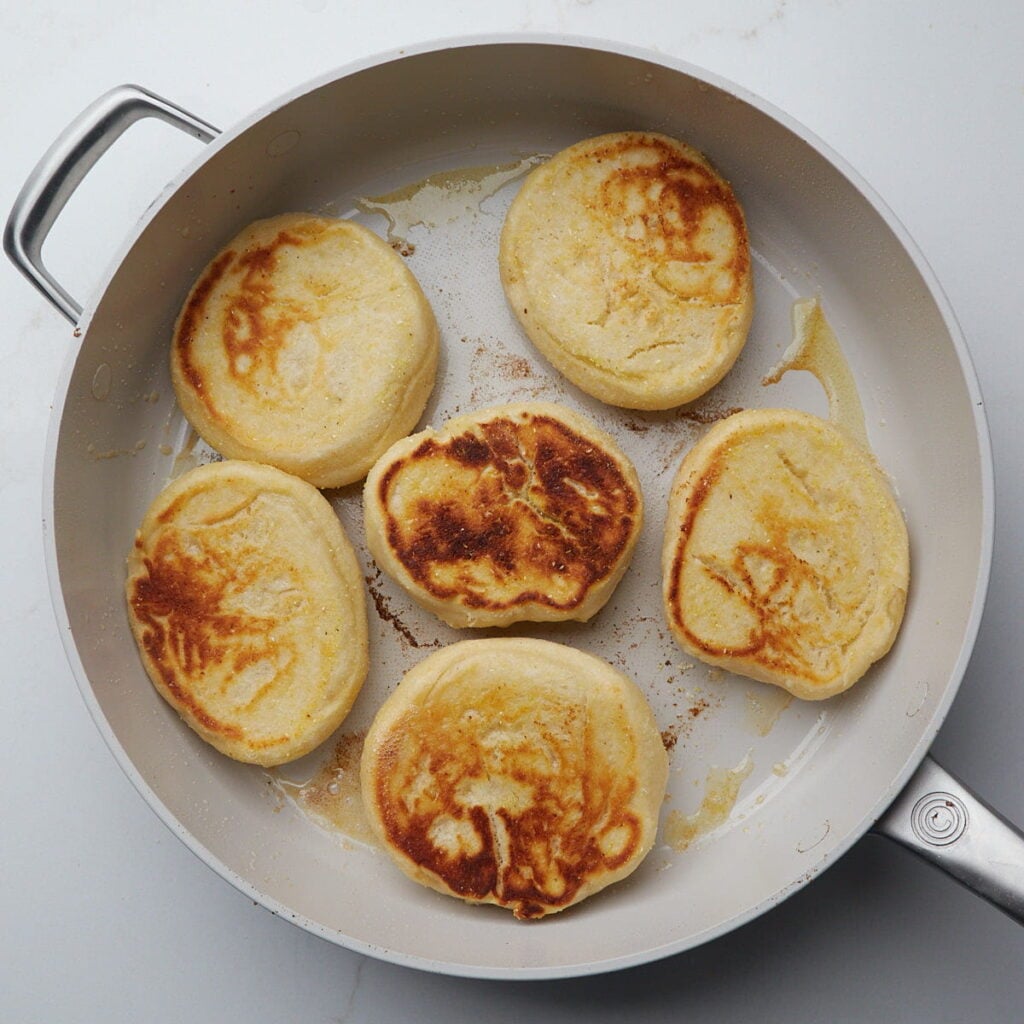
Step 8 – Flip
Flip the English Muffins and cook for an extra 4-5 minutes with the lid on until cooked through. Before adding another batch of English muffins to the skillet, melt another 1-2 Tablespoons of butter.
The English muffins are finished when the centers reach about 200°F (93°C). If the outsides are browning too quickly before the centers are done, reduce the heat.
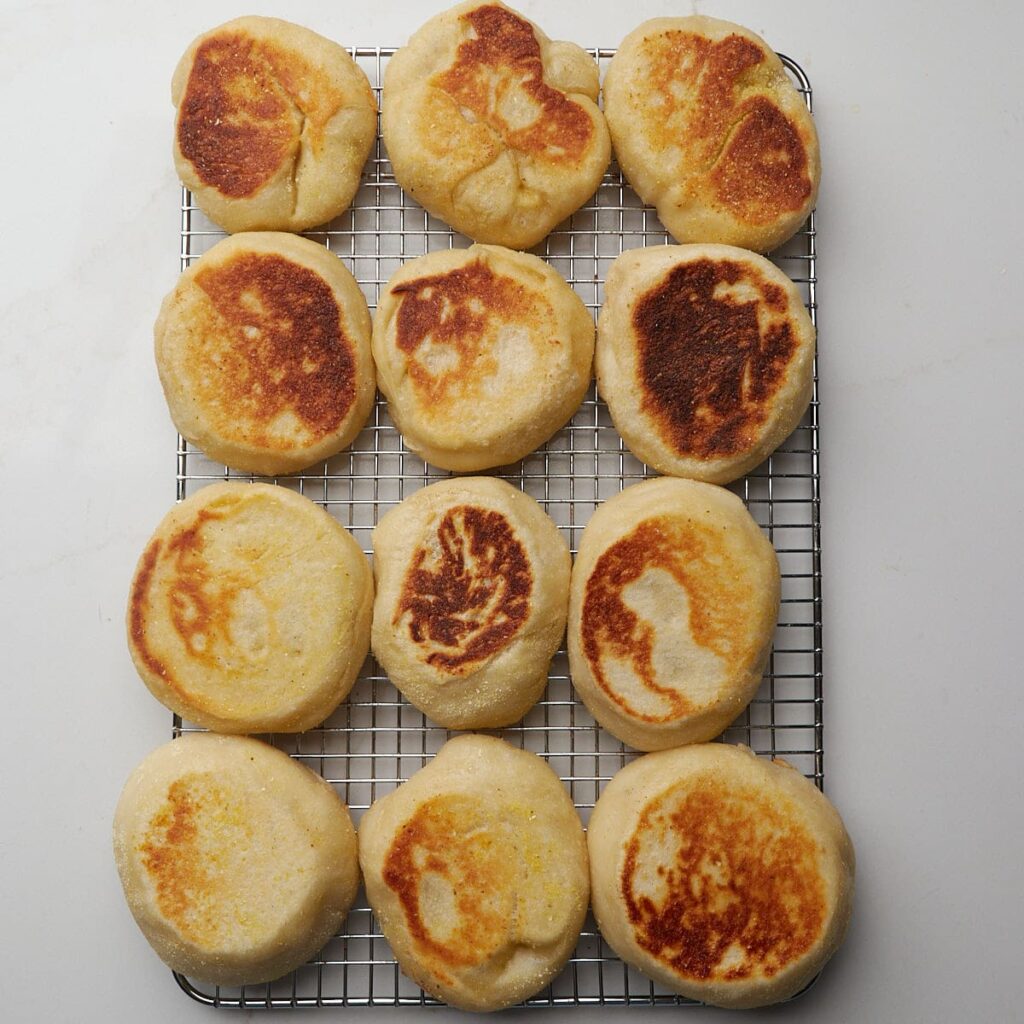
Step 8 – Cool and split
Transfer the English muffins to a cooling rack and let them cool before opening. For the best nooks and crannies, use a fork to poke around the edges and gently pull the muffin apart rather than slicing it with a knife.
Recipe Tips
- Make sure the pan is preheated before adding the sourdough English muffins. If the pan is not warm enough, the English muffins will not puff up as much, leading to a flatter muffin.
- Add butter between each batch to give the English Muffins a buttery and crispy outer layer.
- Use a pan with a lid to create steam and help them puff up and keep the crust soft while rising. If you don’t have a pan with a lid you could cover the top with a sheet pan. It can also be done without a lid, they just may not puff up as well.
- Use a cutter 3 inches or less. During my first test, I used a wide mason jar, and they turned out way too big. I found the regular-mouth canning jar ring, which is 2¾ inches in diameter, makes the perfect-sized muffins, but you can use whatever size cutter you’d prefer.
Sample Schedule
Here is a sample schedule for baking these Sourdough English Muffins. The timeline can depend on the temperature and the activity of your starter, so your time may vary.
*Note: If you need a longer rise time than 10 hours, use cooler ingredients when mixing the dough or reduce the amount of starter in the recipe by 25 grams.
| Step | Time |
| Feed starter a 1:1:1 ratio and leave at 80°F (27°C) (50 g starter: 50 g flour: 50 g water) | Day one: 6 pm |
| Mix the dough together and leave overnight at 68–70°F (20–21°C). First rise | Day one: 10 pm |
| Shape the English Muffins Second rise | Day two: 7 am |
| Pan-fry the English Muffins | Day two: 9 am |
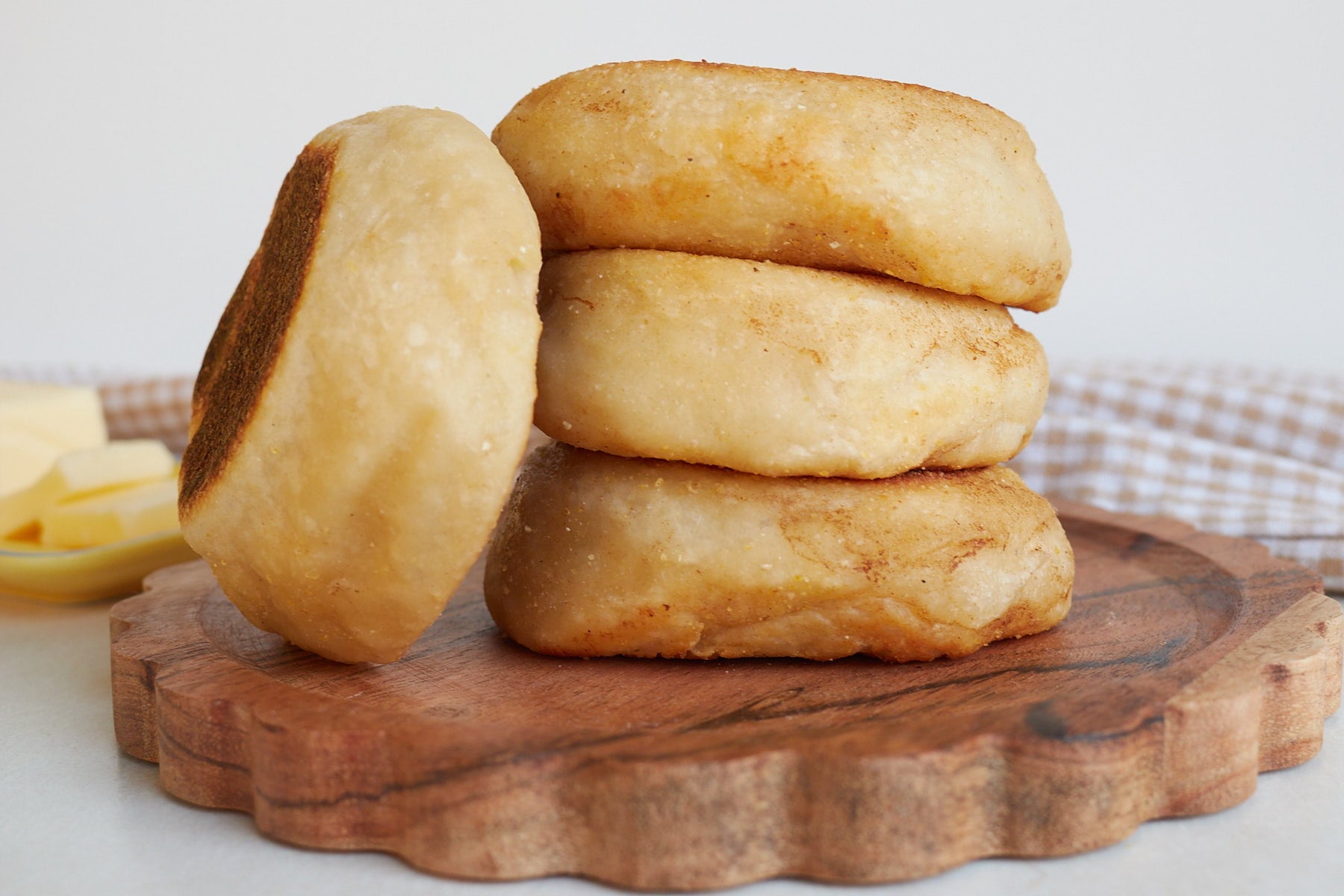
How to store Sourdough English Muffins
Store your Sourdough English Muffins in a plastic bag or airtight container at room temperature for 3–5 days. For longer storage, you can freeze them for up to 3 months. Store them in a freezer-safe gallon bag and toast from frozen or thaw at room temperature before reheating.
Recipe FAQ
Dense English muffins are often a sign that the dough hasn’t risen long enough or your sourdough starter wasn’t active enough. Make sure your starter is bubbly and active before mixing the dough, and allow the English muffins to rise until they’re noticeably puffy before cooking.
If your English muffins are golden brown on the outside but still doughy inside, your skillet is likely too hot. Reduce the heat to help prevent this from happening. Check the temperature of the English Muffins to know when they are fully cooked inside at 200°F (93°C).
To salvage the ones that are doughy, place them on a baking sheet in the oven at 350°F (175°C) for an additional 5-10 minutes until cooked through.
I prefer to use bread flour because it helps yield a light and airy texture, but in a pinch, you can use all-purpose flour you may just need to add extra flour to the dough if it is too sticky.
If you need to delay cooking the English muffins, let them rise at room temperature for about 1 hour before transferring them to the refrigerator. About 30–60 minutes before cooking, remove them from the fridge and place them in a warm spot to come to room temperature and finish rising if they aren’t already puffy. I don’t recommend leaving them longer than 18 hours or they may begin to overproof.
If your Sourdough English Muffins didn’t puff up while cooking, there are two common reasons why:
1. Your skillet wasn’t preheated enough. It’s common for the first batch of English muffins to not puff up as much as the second batch because the skillet hasn’t fully heated up. Make sure to give your pan plenty of time to preheat before adding the English muffins so they get a good rise while cooking.
2. Your proofing time was too long or too short. If your English muffins puffed up during the second rise but then started to deflate and become very sticky, they likely overproofed, meaning they rose for too long. On the other hand, if they never became noticeably puffy after shaping, they likely needed more time to rise or a warmer spot before cooking. The English muffins should look visibly puffy and airy before going into the skillet.
Make-Ahead Breakfast Sandwiches
One of my favorite ways to use these Sourdough English Muffins is to make a big batch of breakfast sandwiches to keep in the freezer for busy mornings! You can customize them with whatever fillings you like, but here’s how I make my favorite combination.
- Prepare the eggs: Bake a batch of eggs in a 9×13-inch pan. I like to mix eggs, cottage cheese, diced peppers, and spinach. I loosely follow this baked egg recipe, but leave out the cheddar cheese. Once baked and cooled, cut the eggs into 12 equal pieces.
- Cook your protein: Prepare your favorite breakfast protein, like bacon or chicken sausage. Bacon is my favorite, but you can also skip the meat altogether!
- Assemble the sandwiches: Split your Sourdough English Muffins in half and layer each one with a slice of cheese (I love Gouda or Swiss), a piece of the baked eggs, and your cooked protein. Wrap each sandwich individually in parchment paper. Here’s a helpful tutorial showing how to wrap them.
- Freeze and reheat: Place the wrapped sandwiches in a large freezer-safe bag and store them in the freezer. When you’re ready to eat, simply reheat a sandwich in the microwave, toaster oven, or oven until heated all the way through.
These are such an easy way to have a delicious homemade breakfast ready to go without having to cook every morning!
More sourdough Breakfast Recipes
Sourdough Bread Recipes
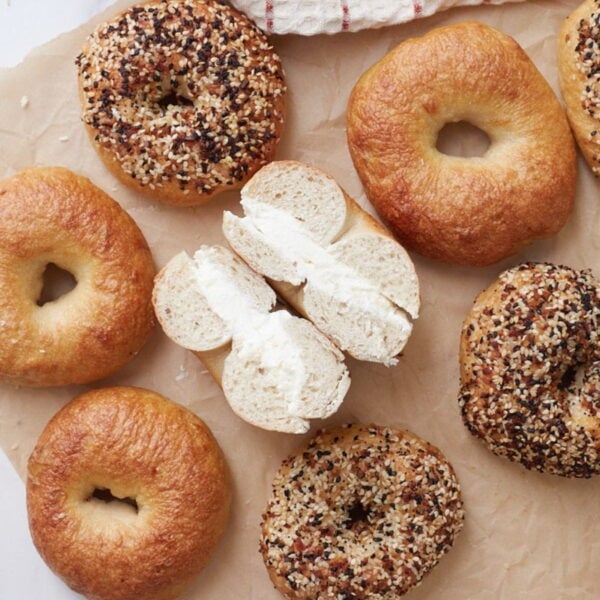
Chewy Sourdough Bagels Recipe

Sourdough Bread Recipes
Sourdough Breakfast Casserole

Recipes with Sourdough Discard
Fluffy Sourdough Discard Pancakes

Sourdough Breakfast Recipes
Fluffy Sourdough Discard Waffles
Tried these Sourdough English Muffins or another recipe from the site? I’d love to hear about it! Drop a star rating and share your thoughts in the comments—can’t wait to see what you’re baking!

Sourdough English Muffins
Ingredients
Feed sourdough starter
- 50 grams sourdough starter, ¼ cup
- 50 grams all-purpose flour, ⅓ cup + 1 Tablespoon
- 50 grams water, ¼ cup
English Muffins
- 150 grams active sourdough starter, ⅔ cup
- 330 grams milk, 1⅓ cups
- 20 grams honey, 1 Tablespoon
- 30 grams butter, melted and slightly cooled, 2 Tablespoons
- 500 grams bread flour, 3½ cups
- 10 grams salt, 2 teaspoons
- Cornmeal or semolina, for dusting
- 4 Tablespoons butter, optional for cooking
Instructions
- Feed sourdough starter: About 4 hours before making the English Muffins, build a levain or feed your sourdough starter at a 1:1:1 ratio (50 grams starter: 50 grams flour: 50 grams water). Cover and let it rest at 80°F (27°C) until bubbly and doubled in size. 50 grams sourdough starter, 50 grams all-purpose flour, 50 grams waterIf you don’t have extra starter, add an extra 5–10 grams to each portion (starter, flour, and water), so you have enough to bake with and still keep your starter going.Skip this step if your starter is already activated and ready to bake with.
- Prep the ingredients: Melt the butter and let it cool slightly until no longer hot to the touch. Warm the milk in the microwave for 20-30 seconds so it is slightly warmed, not hot. 30 grams butter, 330 grams milk
- Mix the dough: Add the melted butter, warmed milk, active sourdough starter, honey, bread flour, and salt to the bowl of a stand mixer or a large mixing bowl.150 grams active sourdough starter, 20 grams honey, 500 grams bread flour, 10 grams salt
- Knead the dough: Knead for about 3–4 minutes with the dough hook attachment, until the dough is well combined. The dough will still feel tacky, but it should hold together and pull away from the sides of the bowl.If you don't have a stand mixer, mix the dough with a dough whisk until fully combined.
- Bulk ferment overnight: Cover the dough and let it rise at room temperature until it has doubled in size. At around 68–70°F (20–21°C), this will likely take about 8–10 hours.
- Shape the English muffins: Lightly sprinkle your work surface with cornmeal and turn the dough out onto it. If you’re not using cornmeal, you can lightly flour the surface instead. Gently press the dough into a rectangle with your hands, keeping it about ¾ inch thick.Cornmeal or semolina
- Cut the English muffins: Use a 2½- to 3-inch round cutter to cut out the English muffins. I like to use a regular-mouth canning jar ring, which is 2¾ inches in diameter and makes 12 English muffins. Gently press the dough scraps back together and continue cutting out rounds until there isn't enough dough left to make another.
- Second rise: Generously sprinkle a sheet pan with cornmeal or semolina. Place the English muffins on the pan and sprinkle additional cornmeal over the tops. Cover and let rise in a warm spot for about 1–2 hours, or until noticeably puffy.
- Cook the English muffins: Preheat a large, heavy skillet with a lid over medium heat for about 5 minutes or until really warm. Melt 1-2 tablespoons of butter in the pan. Transfer the English muffins to the preheated skillet, leaving space between each one. I can fit 6 at a time in my 12-inch skillet. If you’re unsure whether your pan is at the right temperature, I recommend cooking one English muffin first to test the heat.Cover the skillet with a lid and cook for 5 minutes without moving the English muffins. If the bottoms are burning or browning too quickly, your pan is too hot, so reduce the heat before cooking the remaining batches.Flip them and cook for an extra 4-5 minutes with the lid on until cooked through. Before adding another batch of English muffins to the skillet, melt another 1-2 Tablespoons of butter.
- Cool and split: Transfer the English muffins to a cooling rack and let them cool before opening. For the best nooks and crannies, use a fork to poke around the edges and gently pull the muffin apart rather than slicing it with a knife.
Notes
- Make sure the pan is preheated before adding the sourdough English muffins. If the pan is not warm enough, the English muffins will not puff up as much, leading to a flatter muffin.
- Add butter between each batch to give the English Muffins a buttery and crispy outer layer. While this is optional, I love how delicious they are with the butter.
- Use a pan with a lid to create steam and help them puff up and keep the crust soft. If you don’t have a pan with a lid, you could cover the top with a sheet pan. It can also be done without a lid, they just may not puff up as well.
- Use a cutter 3 inches or less. During my first test, I used a wide mason jar, and they turned out way too big. I found the regular-mouth canning jar ring, which is 2¾ inches in diameter, makes the perfect-sized muffins, but you can use whatever size cutter you’d prefer.
Nutrition
Nutrition information is automatically calculated, so should only be used as an approximation.


These Sourdough English Muffins are so easy and delicious! We have made these several times over the last few weeks and they get devoured every time. We’ve been making them into breakfast sandwiches to freeze for a quick grab-and-go breakfast and they are perfect!