
This post may contain affiliate links . Read my full Disclosure Policy.



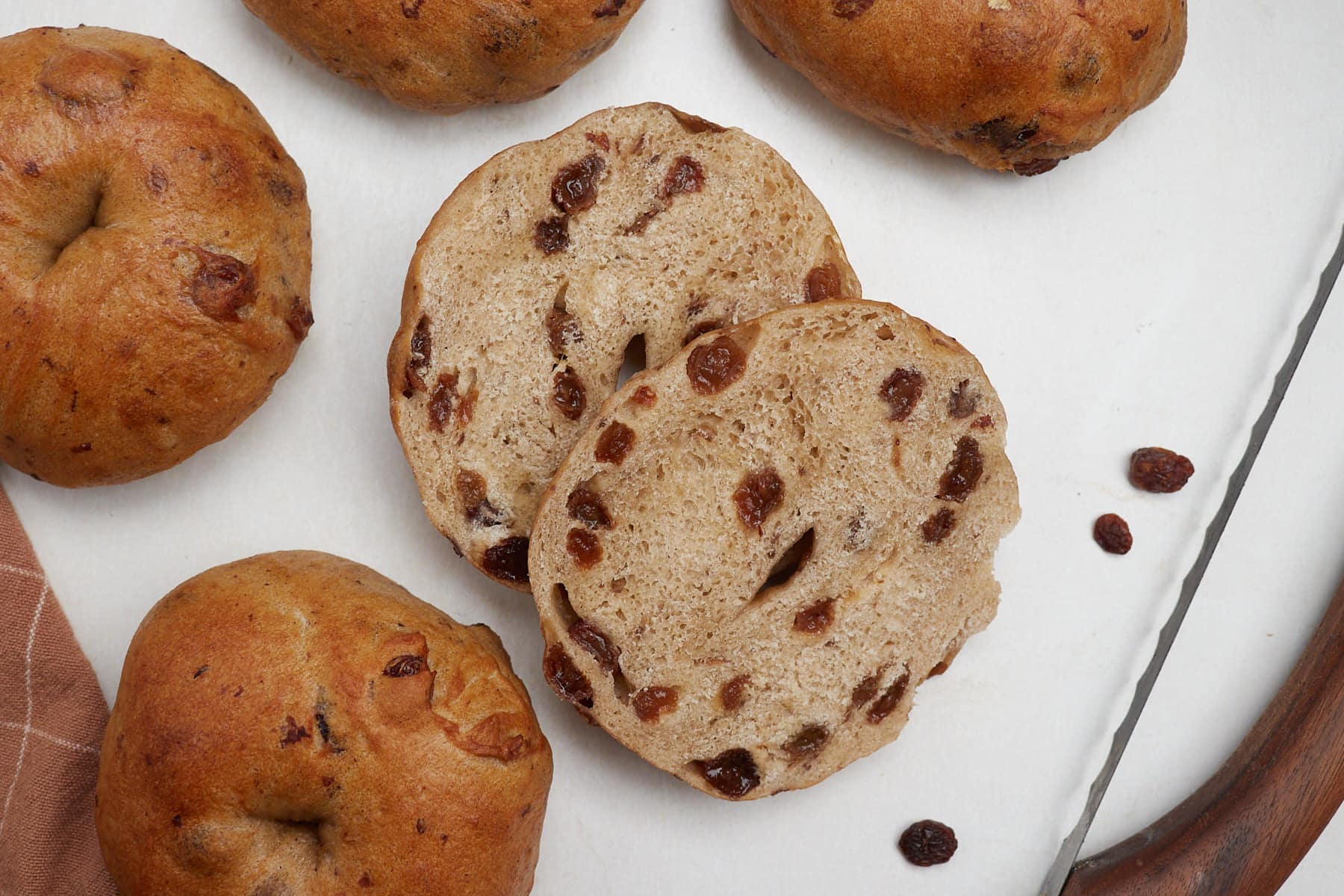
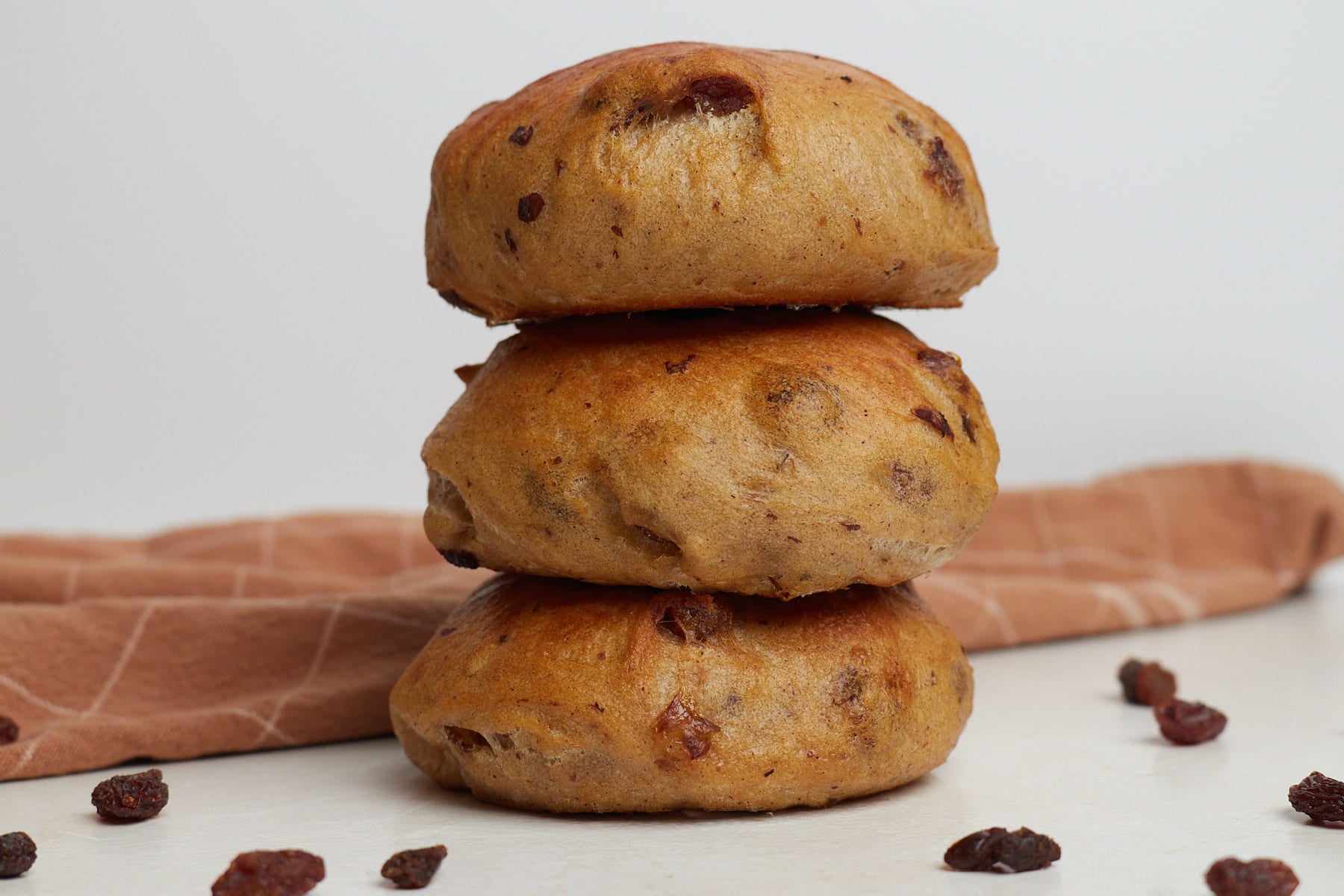
These Cinnamon Raisin Sourdough Bagels are perfectly chewy and spiced with warm cinnamon, filled with plump raisins and a hint of brown sugar for just the right amount of sweetness. Made from the base of my Sourdough Bagel recipe, these bagels have been tested multiple times to guarantee they will turn out delicious every time.
Save & Summarize
When I made this recipe, I wanted the bagels to have just the right balance of flavors. At first, I only used a touch of brown sugar, but I felt like it needed a little more sweetness, so I increased the amount. The result is well balanced with sweetness from the brown sugar and raisins, warmth from the cinnamon, and tang from the sourdough, just like my Sourdough Cinnamon Raisin Bread.
While testing this recipe, I found that these bagels took longer to rise than my original recipe because the added sugar and cinnamon slow down fermentation. So I increased the amount of sourdough starter to help keep the timeline similar and allow the bagels to reliably rise overnight. If you love overnight recipes, be sure to also try my Overnight Sourdough Cinnamon Rolls!
Table of Contents
- Why you will love this recipe
- Important Ingredients and Substitutions
- How to Make Cinnamon Raisin Sourdough Bagels
- Recipe Tips
- Sourdough Bagels Sample Schedule
- How to store and freeze Sourdough Cinnamon Raisin Bagels
- Recipe Frequently Asked Questions
- More sourdough Breakfast recipes
- Cinnamon Raisin Sourdough Bagels Recipe
Why you will love this recipe
- Overnight recipe – This recipe is mixed the night before and rises while you sleep so you can shape and bake the bagels the next morning.
- Chewy texture – Boiling the bagels in baking soda gives them a delicious, chewy texture.
- Balance of flavors – Warm cinnamon and sweet raisins pair perfectly with the subtle tang of sourdough for a well-balanced flavor.
Important Ingredients and Substitutions
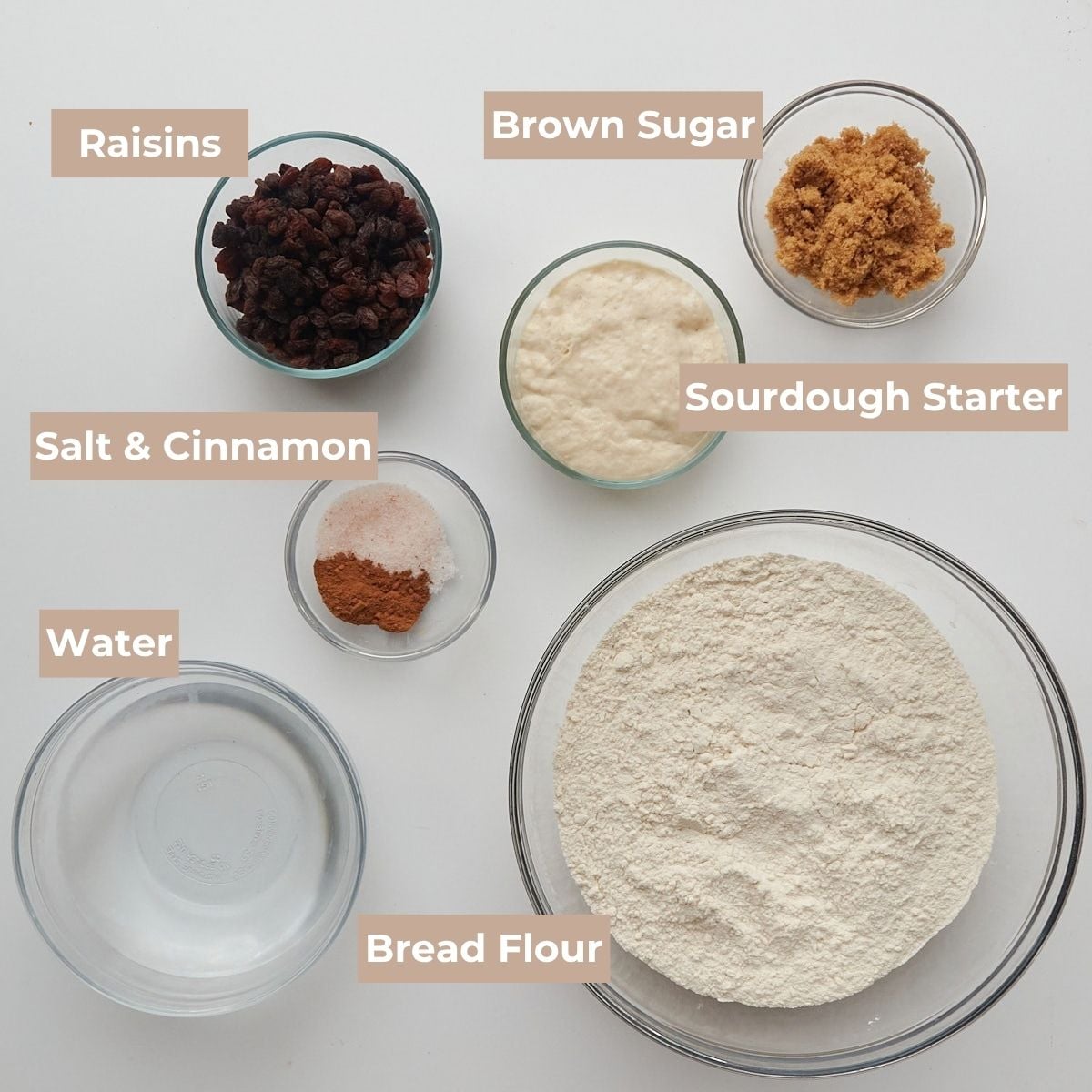
- Bread flour- I like to use bread flour for this recipe to get the best chewy texture. In a pinch, you can use all-purpose flour but I recommend reducing the water by 25 grams.
- Active Starter – This replaces commercial yeast in the recipe and is what leavens the dough. An active starter means that it has been recently fed, is bubbly, and has doubled in size. For a quick yeast hybrid version, you can use my Sourdough Discard Bagel recipe with the addition of cinnamon and raisins.
- Raisins – You will add the raisins right in with the dough while kneading. No need to soak them before adding them to the dough; I find that the raisins are already soft enough.
See all the ingredients and amounts in the recipe card below.
How to Make Cinnamon Raisin Sourdough Bagels
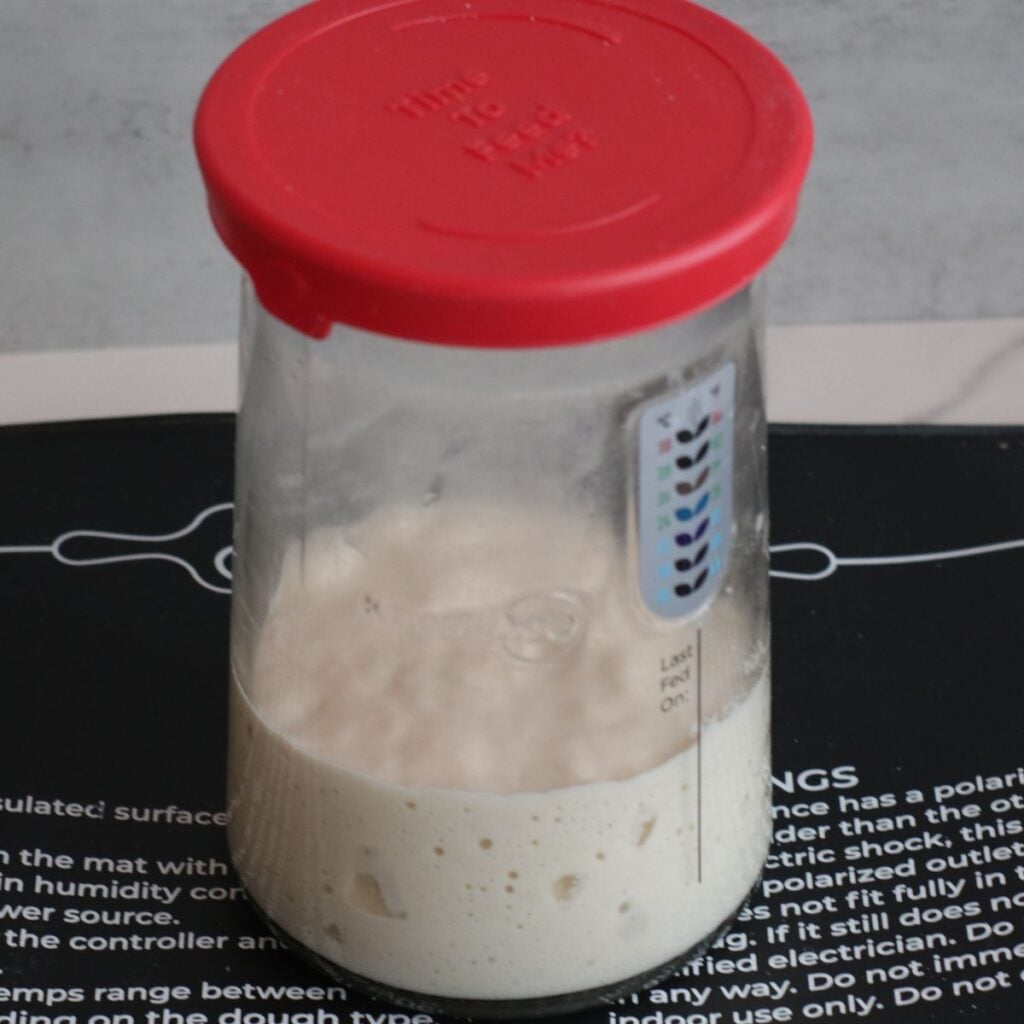
Step 1 – Feed sourdough starter
About 4 hours before making the bagels build a levain or feed your sourdough starter at a 1:1:1 ratio (75 grams starter: 75 grams flour: 75 grams water). Cover and let it rest at 80°F (27°C) until bubbly and doubled in size.
Skip this step if your starter is already activated and ready to bake with.
Note: If you want to feed your starter 10–12 hours in advance, use a 1:5:5 ratio (25 g starter: 125 g flour: 125 g water). Leave it at 70–72°F (21-22°C) until bubbly and doubled.
Step 2 – Mix & Knead
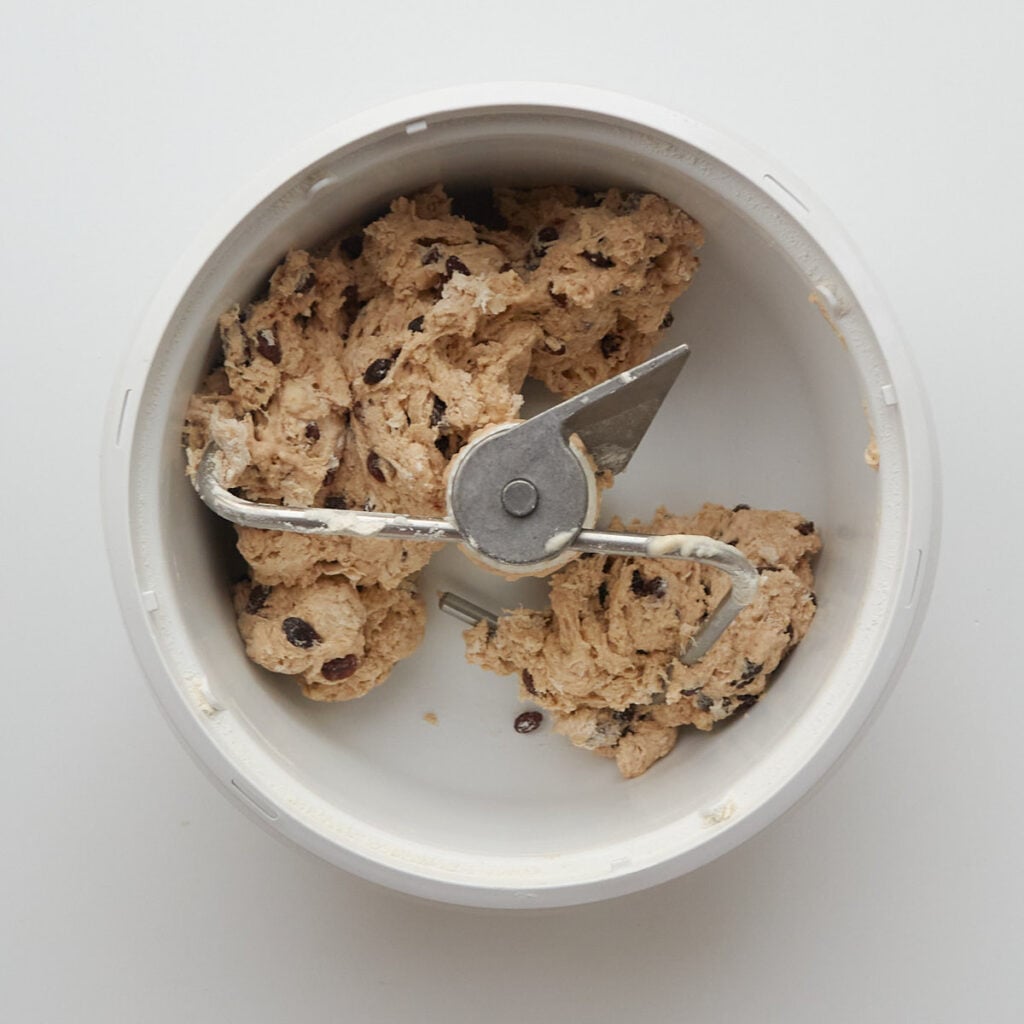
Add all the dough ingredients to the bowl of a stand mixer. Using your dough hook, knead the dough for about 15-20 minutes or until the dough can pass the windowpane test. Over time the dough will become smooth and pliable to work with.
You can also mix this dough in a bowl and then knead it by hand.
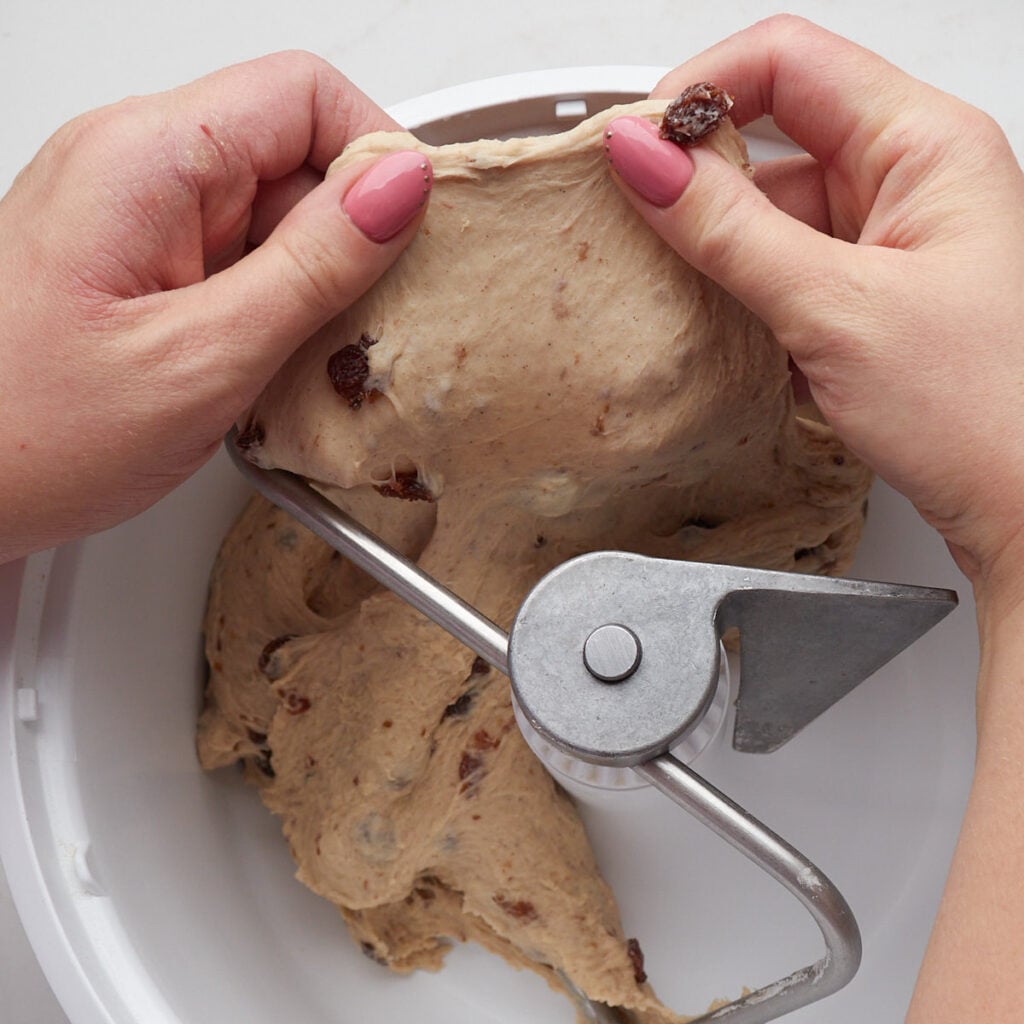
Step 3- Windowpane test
The windowpane test is used to see how well the gluten has developed. When the dough is able to stretch thin enough that you can see light through, without it tearing, it has passed.
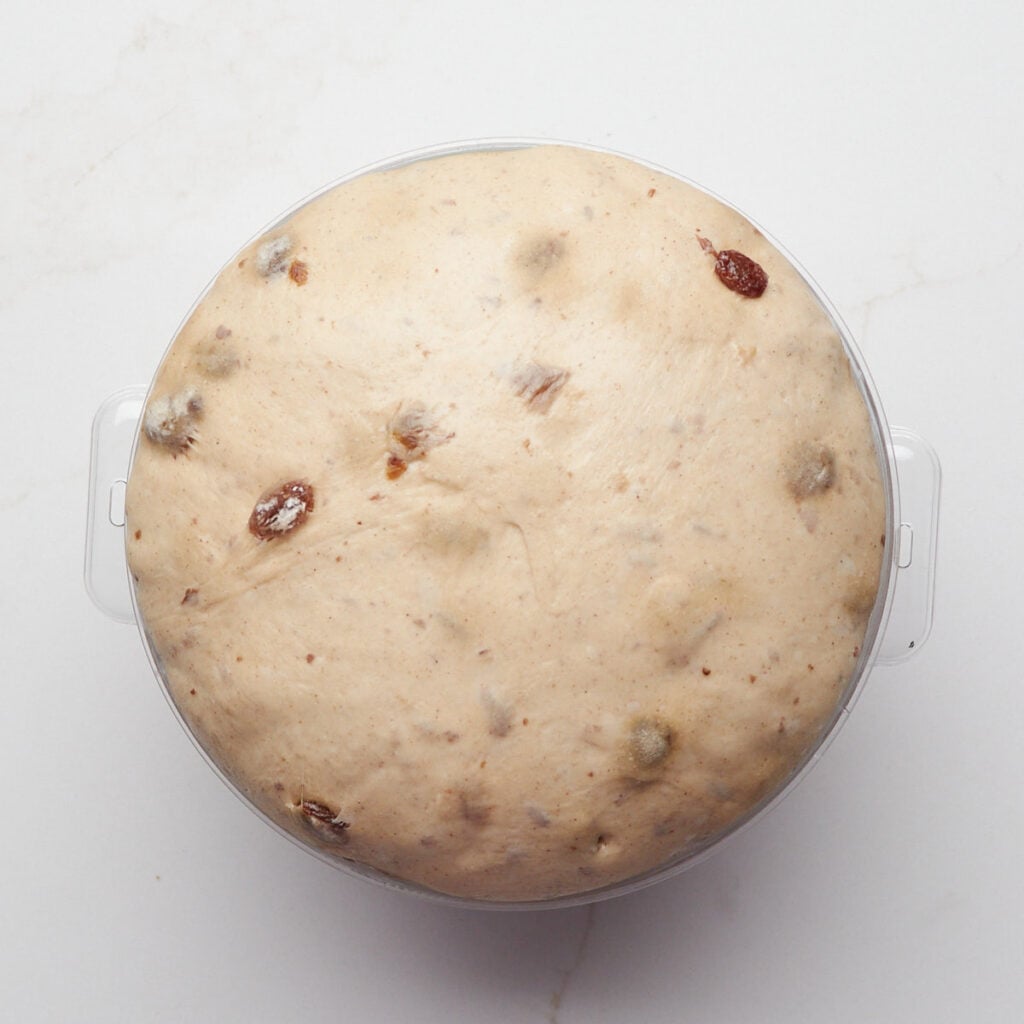
Step 4- Bulk Fermentation (First Rise)
Transfer the bagel dough to a bowl or straight-edge container and let it rise on the counter overnight, covered, until doubled in size. This will take about 8 hours, depending on the temperature of your house. At 72°F, my dough doubled in 8 hours.
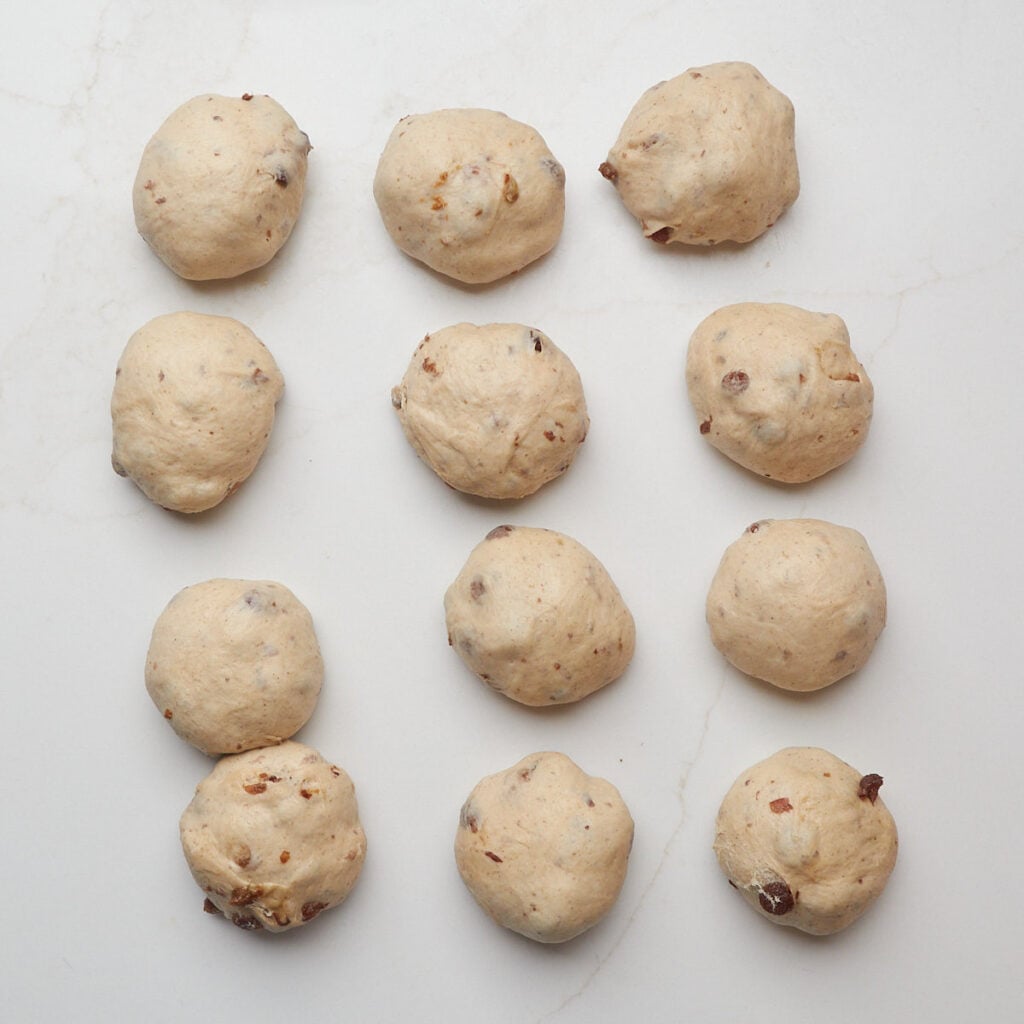
Step 5 – Divide & Form into balls
Once doubled in size, punch down the dough and divide it into 12 equal pieces, about 133 grams each. I like to use a bench scraper for this.
Taking one section at a time, form the dough into a ball by pulling the sides to the middle of the dough and then flipping it over. With your hand in a cupping shape, rotate the dough ball a few times in a circle. Repeat with the remaining 11.
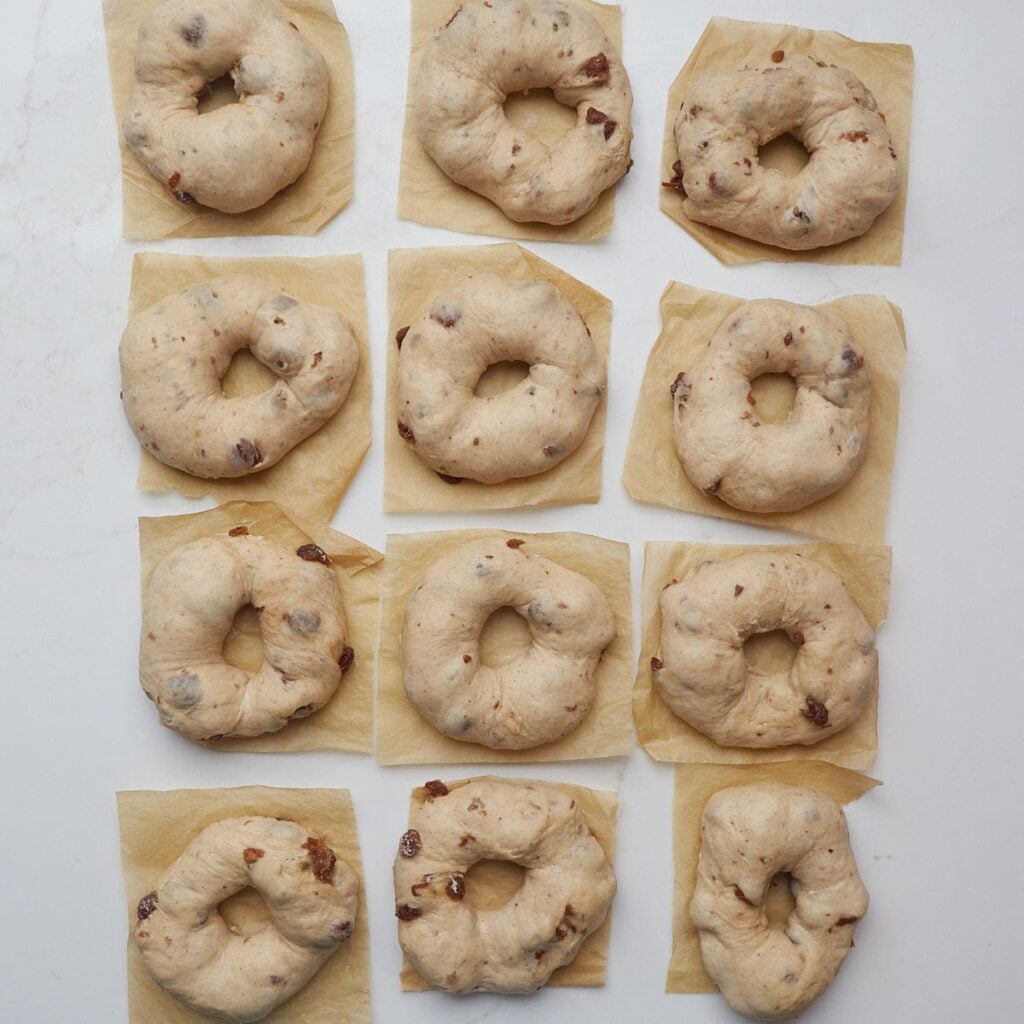
Step 6 – Shape into bagels
Cut twelve 4×4-inch squares of parchment paper.
Poke a hole in the middle of the dough and then, using both pointer fingers inserted on each side, rotate your fingers around each other, making a hole in the middle of the dough. Ideally you want the size of the hole to be 1.5-2 inches.
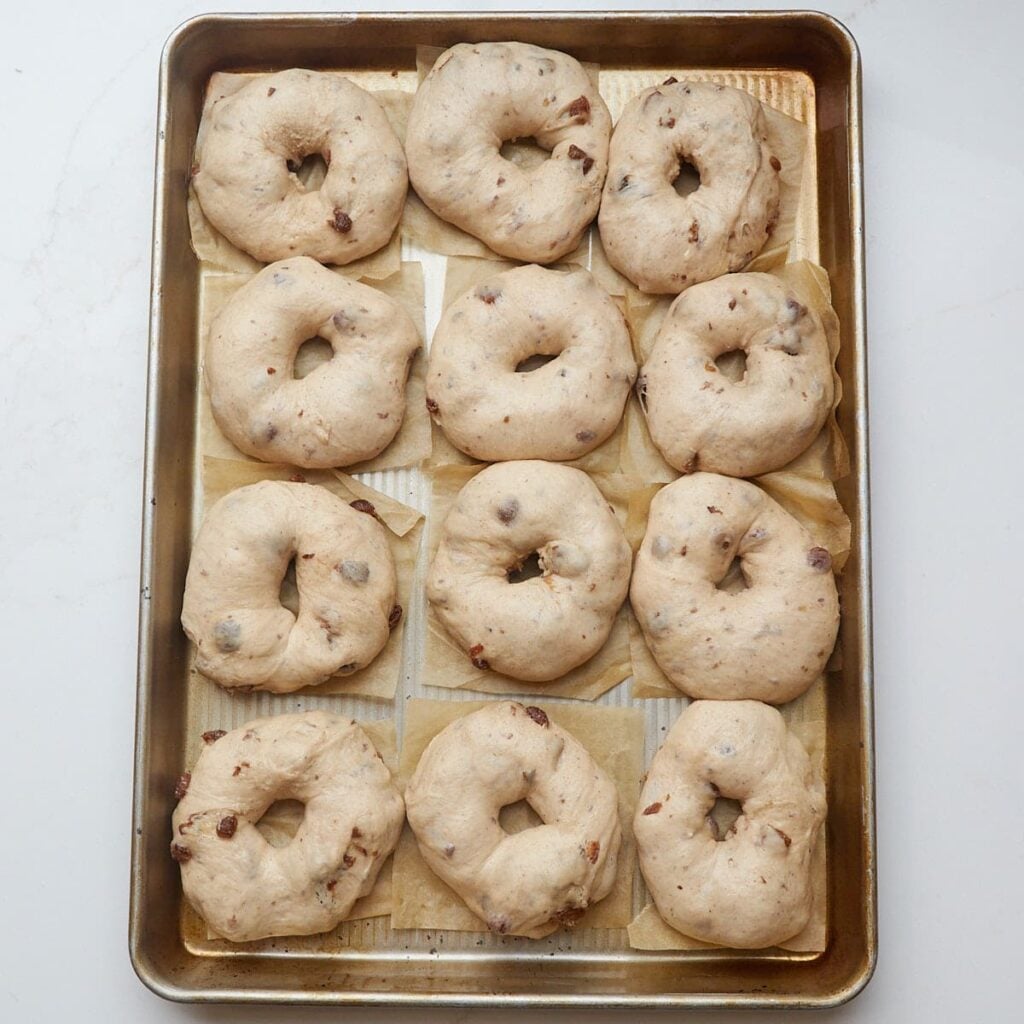
Place a shaped bagel on each piece of parchment paper, and then place all 12 of them on a large baking sheet and cover.
Step 7 – Second rise
Let the bagels rise for about 1.5-2 hours to relax and puff up; they do not need to double in size.
Alternatively, you can place all 12 of them on a silicone mat, but when you pick them up to boil them the shape of the bagel can change.
Step 8 – Boil
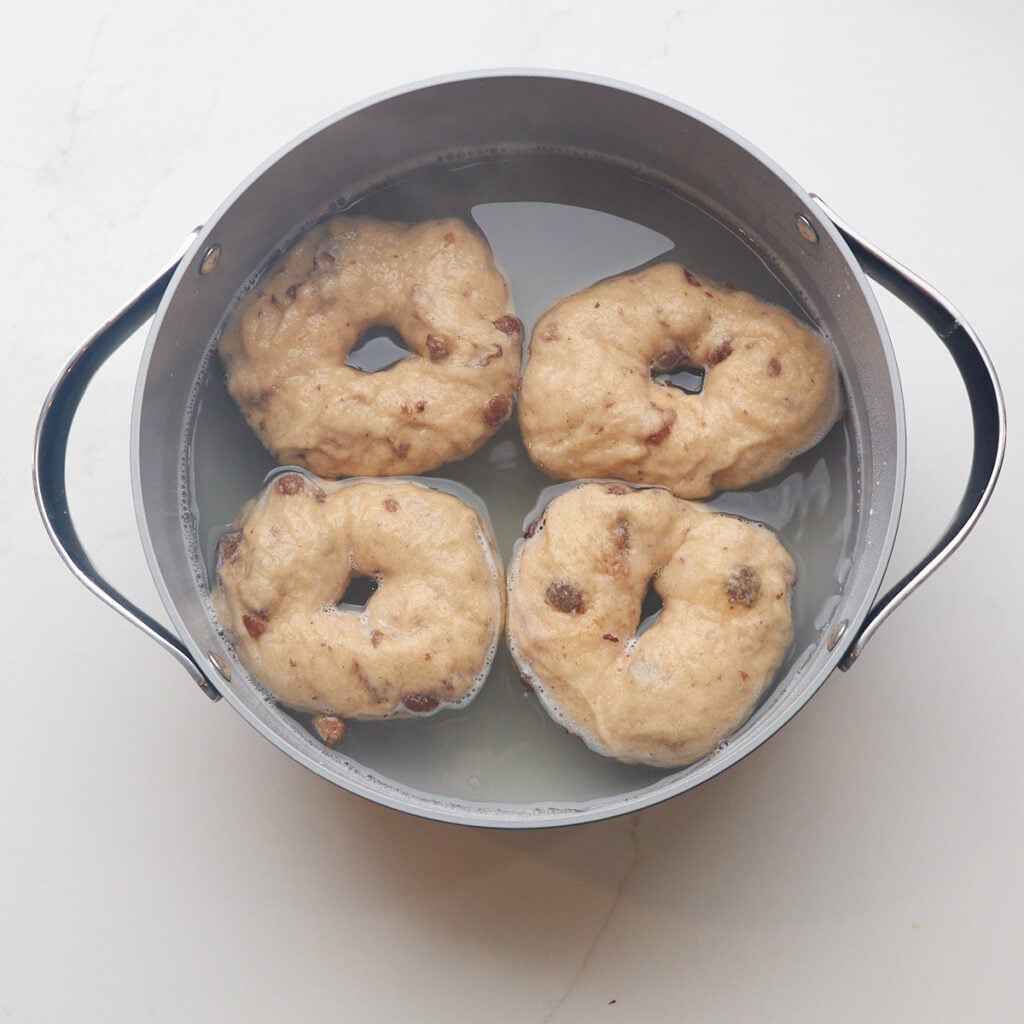
After the bagels have had a chance to rise, preheat your oven to 425°F. Bring a large pot of water to a boil (about 12 cups of water) with 1 tablespoon of baking soda.
Add 3-4 bagels at a time to the boiling water, parchment paper side up, and boil them for about 1 minute on each side. Once the bagels are in the water, you can easily remove the parchment paper from the dough with tongs. Use a slotted spoon or spatula to remove the bagels from the water and drain excess liquid. Transfer to a cooling rack to remove excess water.
Step 9 – Bake
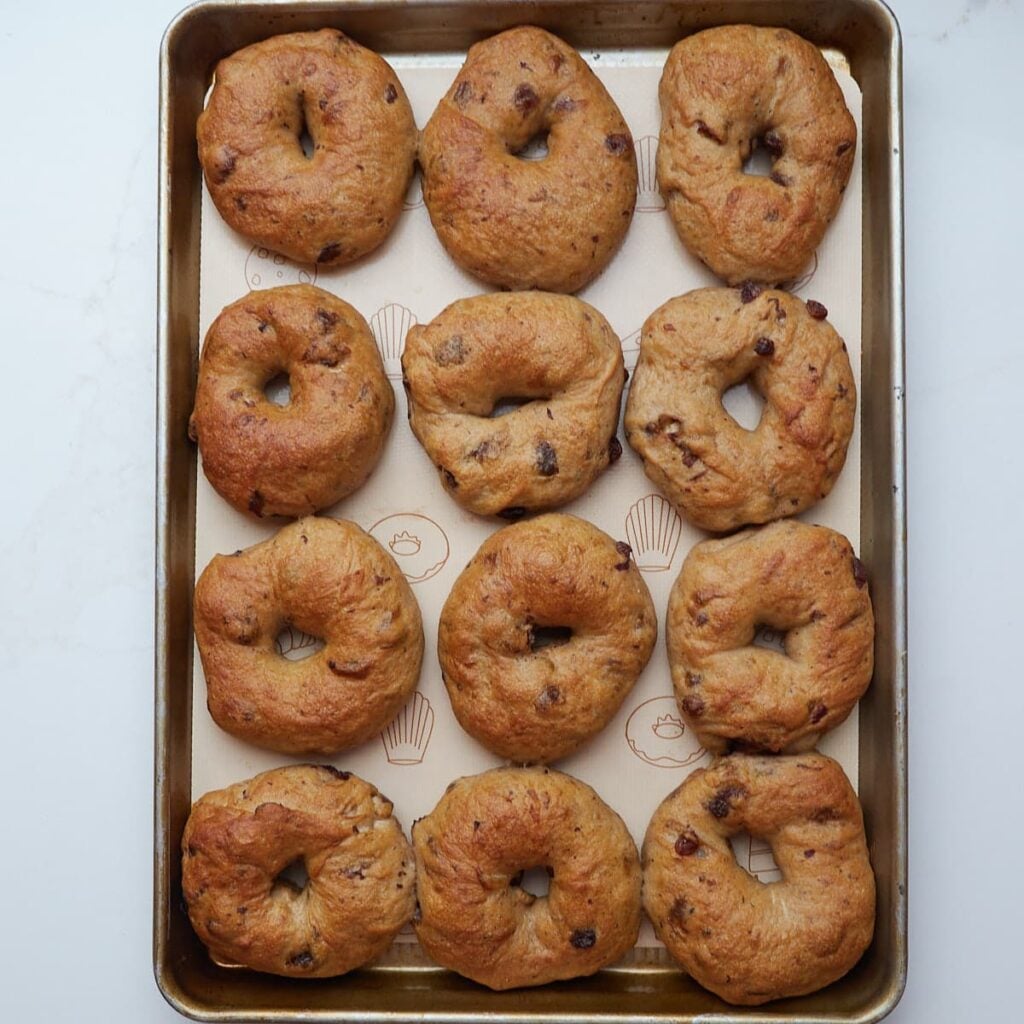
Transfer the bagels to a lined baking sheet. Bake for 18- 20 minutes or until golden brown.
Let the bagels cool on a wire rack and then enjoy them with butter or cream cheese.
Recipe Tips
- I highly recommend making individual parchment paper squares for the bagels to rise on. It makes it easier to put the bagels into the boiling water without messing up the shape.
- If room temperature is 65°F or lower, use a temperature-regulated dough mat (use code country10 for 10% off) or proofing box to keep it warmer. Learn more about tips to keep your dough warm here.
- Knead the dough until it passes the windowpane test. This ensures proper gluten development in the dough.
- Use your sourdough starter at peak. Using a bubbly and active starter will set you up for success and help your dough to rise. Learn more about how to feed and care for your sourdough starter.
Sourdough Bagels Sample Schedule
Here is a sample schedule for baking the sourdough bagels. The timeline can depend on the temperature and the activity of your starter, so your time may vary. This schedule assumes the temperature is around 72°F.
* Note: If you mix the dough in a mixer, your dough temperature will likely start higher, in my Bosch it’s around 85-90°F, which will help boost fermentation. If you are mixing the dough by hand, your dough may take longer than 8 hours to rise because the starting temperature will be cooler. Using slightly warmer water to mix the dough can help warm it up.
| Step | Time |
| Feed starter a 1:1:1 ratio and leave at 80°F. (75 g starter: 75 g flour: 75 g water) | Day one: 5 pm |
| Mix the dough together First rise | Day one: 10 pm |
| Shape the bagels Second rise | Day two: 6 am |
| Boil the bagels Bake | Day two: 8 am |
How to store and freeze Sourdough Cinnamon Raisin Bagels
You can store these bagels on the counter in a plastic or paper bag for about two to four days. To store the bagels longer, you can freeze them for three to four months. You can either freeze them whole or sliced, and then add them to a freezer gallon bag. To defrost the bagels, pop them in your toaster, microwave, or oven on a low setting.
Recipe Frequently Asked Questions
Similar to my sourdough pretzel bites, bagels are boiled in water and baking soda before baking. This gives bagels that chewy texture and shiny crust we all love.
You can add honey or maple syrup instead of sugar in the recipe. I would recommend starting with 60 grams or 1/4 cup. This will add more moisture to the dough, so I would also reduce the water by 25 grams and note that you may need to add extra flour if the dough feels really sticky.
I prefer to use bread flour because it helps yield a chewy texture, but in a pinch, you can use all-purpose flour and reduce the water by 25 grams.
Yes, you can put the dough or the bagels in the fridge before baking. I prefer to refrigerate the shaped bagels so that they are ready to go the next day. Just be sure to allow the bagels to rise and become puffy before baking.
I have a 5qt KitchenAid mixer, and mine is not strong enough to knead this dough. Unless you have one of the more powerful KitchenAid mixers, I don’t recommend it, as it can burn up the motor. I use my Bosch mixer to knead this dough. Or you can knead by hand.
This can be a sign of overproofing. When the dough is left to rise for too long it can overproof, which deflates the dough, leading to a flatter, wrinkly bagel. Shortening the second rise time will solve this issue.
Yes, if you’d like to use yeast and sourdough discard, you can add 7 grams of yeast and follow the instructions for Sourdough Discard Bagels recipe. Keep in mind that the cinnamon and sugar can slow down rise times so they may take a little longer than what is written.
If your dough sat overnight and did not rise, it either needed to be in a warmer spot to rise, or your sourdough starter needs to be strengthened. You can find tips on maintaining and strengthening your sourdough starter here.
More sourdough Breakfast recipes
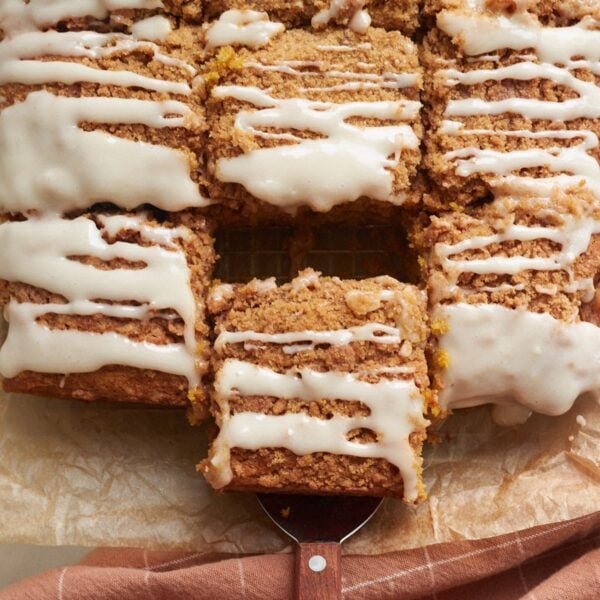
Fall Sourdough Recipes
Sourdough Pumpkin Coffee Cake
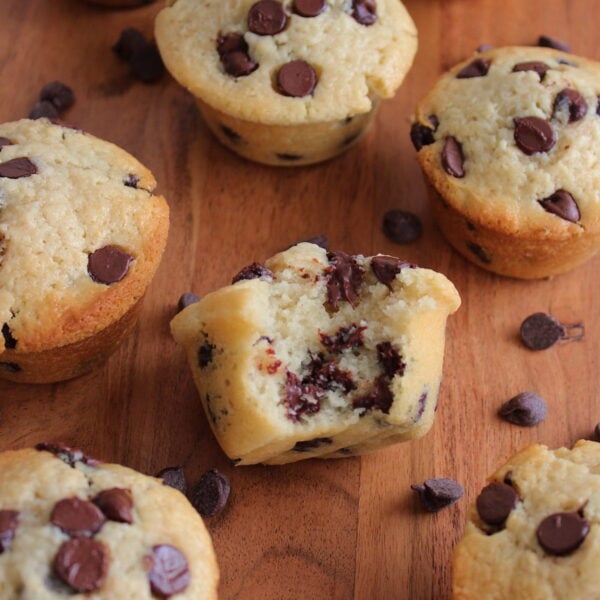
Sourdough Quick Bread Recipes
Sourdough Chocolate Chip Muffins
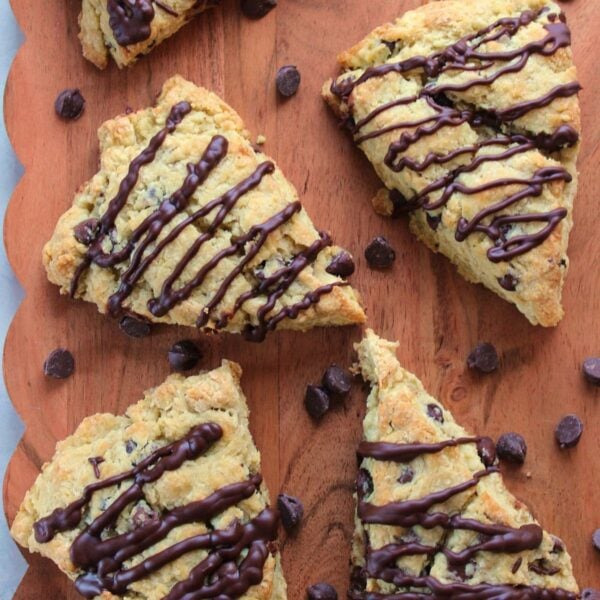
Recipes with Sourdough Discard
Chocolate Chip Sourdough Scones

Recipes with Sourdough Discard
The 9 Best Sourdough Discard Scone Recipes
Tried this Cinnamon Raisin Sourdough Bagel or another recipe from the site? I’d love to hear about it! Drop a star rating and share your thoughts in the comments—can’t wait to see what you’re baking!
Cinnamon Raisin Sourdough Bagels
Equipment
Ingredients
Active Sourdough Starter (Levain)
- 75 grams sourdough starter, ⅓ cup
- 75 grams flour, ½ cup + ½ teaspoon
- 75 grams water, 5 Tablespoons
Dough
- 350 grams room temperature water, 1⅓ cups + 2 Tablespoons
- 225 grams active sourdough starter, scant 1 cup
- 75 grams brown sugar, ⅓ cup
- 15 grams salt, 2½ teaspoons
- 1½ teaspoons ground cinnamon
- 715 grams bread flour, 5¼ cups
- 240 grams raisins, 1½ cups
Water Bath
- 2840 grams water, 12 cups
- 14 grams baking soda, 1 Tablespoon
Instructions
- Feed sourdough starter: About 4 hours before making the bagels build a levain or feed your sourdough starter at a 1:1:1 ratio (75 grams starter: 75 grams flour: 75 grams water). Cover and let it rest at 80°F (27°C) until bubbly and doubled in size.75 grams sourdough starter, 75 grams flour, 75 grams waterSkip this step if your starter is already activated and ready to bake with. If you don't have extra sourdough starter, use 80 grams of each so you have some leftover. Note: If you want to start the dough in the morning, feed your starter 10–12 hours in advance using a 1:5:5 ratio (25 g starter: 125 g flour: 125 g water). Leave it at 70–72°F (21-22°C) until bubbly and doubled.
- Mix & Knead: Add all the ingredients to the bowl of a stand mixer. Using your dough hook, knead the dough for about 15-20 minutes or until the dough can pass the windowpane test.You can also mix this dough in a bowl and then knead it by hand. If mixing by hand, I recommend using warm water. 350 grams room temperature water, 225 grams active sourdough starter, 75 grams brown sugar, 15 grams salt, 1½ teaspoons ground cinnamon, 715 grams bread flour, 240 grams raisins
- Bulk Fermentation (First Rise): Transfer the bagel dough to a bowl or straight-edge container and let it rise on the counter overnight, covered, until doubled in size. This will take about 8 hours, depending on the temperature of your house. At 72°F, my dough doubled in 8 hours.
- Divide & Form into balls: Once doubled in size, punch down the dough and divide it into 12 equal pieces, about 133 grams each. I like to use a bench scraper for this.Taking one section at a time, form the dough into a ball by pulling the sides to the middle of the dough and then flipping it over. With your hand in a cupping shape, rotate the dough ball a few times in a circle. Repeat with the remaining 11.
- Prep parchment paper squares: Cut twelve 4×4-inch squares of parchment paper. This step is optional, and you can place the bagels on a silicone baking mat instead. However, I find the individual parchment squares make it much easier to transfer the bagels into the boiling water without stretching or losing their shape.
- Shape into bagels: Poke a hole in the middle of the dough and then, using both pointer fingers inserted on each side, rotate your fingers around each other, making a hole in the middle of the dough. Ideally you want the size of the hole to be 1.5-2 inches.Place a shaped bagel on each piece of parchment paper, and then place all 12 of them on a large baking sheet and cover.
- Second rise: Let the bagels rise for another 1.5-2 hours to relax and get puffy. The bagels will not double in size.
- Preheat oven: After the bagels have had a chance to rise, preheat your oven to 425°F.
- Boil: Bring a large pot of water to a boil (about 12 cups of water) with 1 tablespoon of baking soda. 2840 grams water, 14 grams baking sodaAdd 3-4 bagels at a time to the boiling water, parchment paper side up, and boil them for about 1 minute on each side. Once the bagels are in the water, you can easily remove the parchment paper from the dough with tongs. Use a slotted spoon or spatula to remove the bagels from the water and drain excess liquid. Transfer to a cooling rack to remove excess water.
- Bake: Transfer the bagels to a lined baking sheet. Bake for 18- 20 minutes or until golden brown.Let the bagels cool on a wire rack and then enjoy them with butter or cream cheese.
Notes
- I highly recommend making individual parchment paper squares for the bagels to rise on. It makes it easier to put the bagels into the boiling water without messing up the shape.
- If room temperature is 65°F or lower, use a temperature-regulated dough mat (use code country10 for 10% off) or proofing box to keep it warmer. Learn more about tips to keep your dough warm here.
- Knead the dough until it passes the windowpane test. This ensures proper gluten development in the dough.
- Use your sourdough starter at peak. Using a bubbly and active starter will set you up for success and help your dough to rise. Learn more about how to feed and care for your sourdough starter.
Nutrition
Nutrition information is automatically calculated, so should only be used as an approximation.

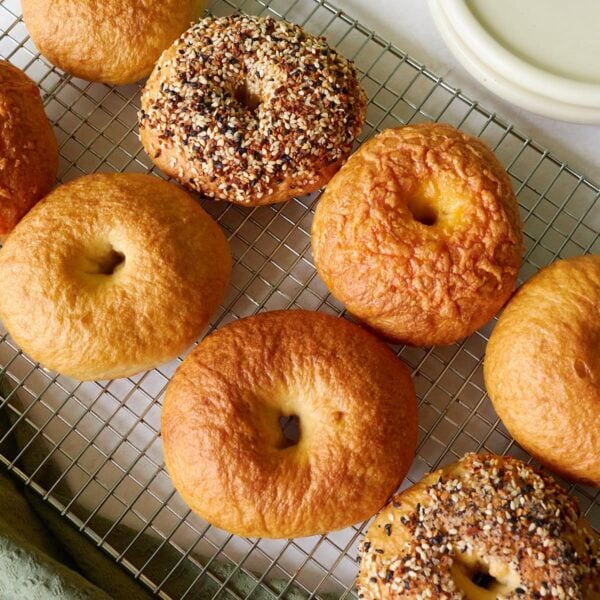


I’m not a huge raisin lover and even I can’t stop eating these cinnamon raisin bagels! They are just sweet enough and have a delicious cinnamon flavor and plenty of raisins in every bite.